.jpg) The special privileged status of Mount Athos regarding tax and customs matters is addressed in the Greek Constitution, in the Constitutional Charter of Mount Athos, and in the Legislative Decree dated September 10/16, 1926.
The special privileged status of Mount Athos regarding tax and customs matters is addressed in the Greek Constitution, in the Constitutional Charter of Mount Athos, and in the Legislative Decree dated September 10/16, 1926.
1. According to the constitution: "The law shall likewise determine the judicial power exercised by the monastic authorities and the Holy Community, as well as the customs and taxation privileges of Aghion Oros." (Article 105, paragraph 5). Given the self-governance of Athos and the fact that the judicial power exercised by the monastic authorities and the Holy Community is exclusively a matter of the Athonite state, it should be concluded that the law regulating these issues, as well as the tax privileges of Mount Athos, is not defined by anything other than the Constitutional Charter.
If one were to accept the opposite viewpoint, which holds that the provision of Article 105 of the constitution (paragraph 5) constitutes merely a legislative provision, this would lead to restrictions and ultimately to the loss of the privileged status of Mount Athos. Without the minimum requirements necessary for amending the Charter, the legislature would be able—at any time and at its own discretion—to intervene in the Charter with modifications, even in matters concerning the self-governance of Athos, such as those related to the exercise of judicial authority.
Even if we were to agree with the view that the Constitution refers merely to a legislative provision, it would still be unacceptable to adopt a position that contradicts the broader principles of the Constitution, as well as the Charter, which holds superior legal authority.
2. The first section of the Charter of Mount Athos, entitled "General," contains the following definition: "Mount Athos enjoys, according to the ancient established customs, special privileges and tax immunities that are clearly set out in the present Constitutional Charter." (Article 12 of the Charter).
From this text, it is clear that Mount Athos enjoys "historically preserved" privileges, meaning that according to its ancient established status, on one hand, it has special privileges, and on the other hand, an exemption from taxes. Since Byzantine times, in addition to tax benefits and privileges granted only in special cases, there has also been a complete exemption from taxes. The exemption of monasteries and monastic communities from state taxation was typically associated with their independence, self-administration, and freedom, such that they could, in a certain sense, be considered autonomous entities within the Byzantine state.
In addition to the chrysobulls concerning the exemption from taxes for specific monasteries of Mount Athos, such as the Holy Monastery of Great Lavra, Iviron, Amalfinon, and others, there exists a decree from the Emperor Alexios I Komnenos from 1094 or 1109, which clearly states that "Mount Athos is free, and the monks residing there bear no tax burden until the end of the world."
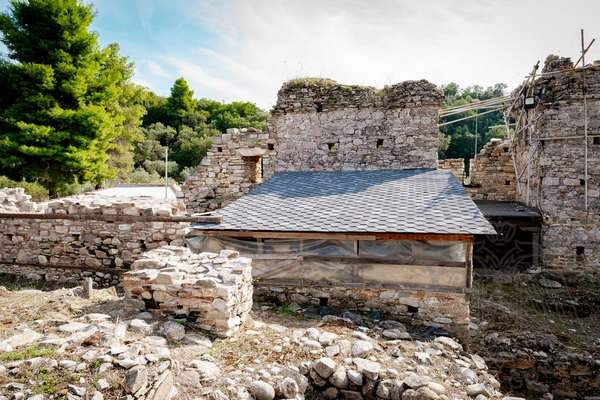 It is this state of complete tax freedom, which was granted to the Athonite monasteries by Byzantine emperors as a privilege. It was later preserved under the term ‘asydosia’, which appears in the early 19th century and literally means "refusal to contribute."
Therefore, the Charter of Mount Athos, in addition to special privileges, numerous and diverse (judicial, spiritual, personal, customs, etc.), also speaks of the complete exemption of the Athonite monasteries from taxes.
II. Regarding the Legislative Decree of September 10/16, 1926, which, as noted, not only affirms but also amends the Constitutional Charter of Mount Athos, it is contained (in the first chapter, entitled "Privileges and Tax Immunities of Mount Athos") only one article with the following content: "Mount Athos is granted customs and tax privileges: a) The customs privileges consist in... b) The tax privileges of Mount Athos are as follows:..." (Article 2).
This article contradicts both Article 12 of the Charter and its own title, which refers on the one hand to privileges and on the other to tax exemptions. The article itself, however, mentions only tax and customs privileges, which are described in detail. As a result, the broader application of full tax exemption, as defined in the Charter, is thereby limited.
In conclusion, the legislative decree of September 10/16, 1926 contains provisions that distort, omit, and ultimately restrict the regulations of the Athonite Charter concerning taxation—regulations which, on the contrary, were supposed to affirm. This implies that these provisions are contrary to the spirit of the Charter and call into question the ancient privileged status of Athos, which has been recognized and guaranteed by all state authorities throughout more than a thousand years of Athonite history. Moreover, the monasteries' fiscal freedom and independence in managing their property—wherever it may be located, whether within Athos or outside it as a dependency—are also brought into question, despite the fact that such areas fall under the jurisdiction of Athonite self-governance.
III. In recent decades, a system has developed that exempts Mount Athos from various general and specific taxes—a system that, as demonstrated above, is incompatible with both the Constitution and the Athonite Charter, which holds superior legal authority. It therefore constitutes an unconstitutional and unlawful arrangement.
1. Thus, Mount Athos has, in various indicative cases, been exempted from: (a) corporate income tax (Article 6 of legislative act No. 3843/1958); b) inheritance and gift tax (Articles 1, 34, and 43 of legislative act No. 118/1973); c) property tax (Articles 21 and 2 of law No. 1249/1982); d) value-added tax (VAT) (Article 1, paragraph 2 of law No. 1642/1986); (e) real estate transfer tax (Article 14, paragraph 7 of law No. 1882/1990); (f) automatic capital gains tax (Article 16, paragraph 7 of law No. 1882/1990); (g) property-related fees (Article 24, paragraph 7, paragraph 2 of law No. 2130/1993); (h) large real estate tax (Article 23, paragraph 12 of law No. 2459/1997); and (i) the special property tax (Article 15 of law No. 3091/2002 as it stands today).
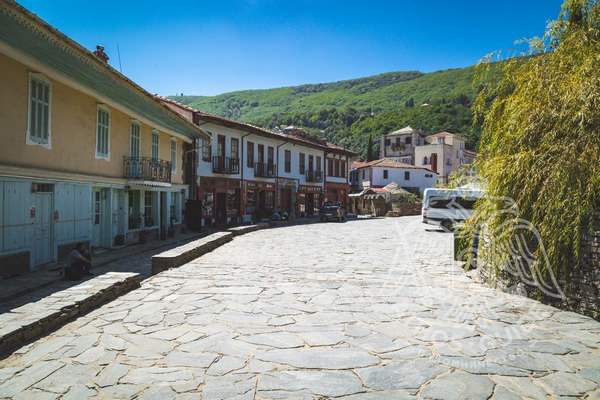 2. Exemption of Mount Athos from certain taxes has changed in recent years due to the prolonged financial decline in the Greek state, leading to the imposition of some taxes, such as: a) a value-added tax (VAT) of 19% on the first sale of new buildings (Article 1 of law No. 3427/2005); b) an annual property tax for properties owned by Athonite monasteries outside Mount Athos, that are used by others, with a coefficient of 0.1% of the property's objective value (Article 11 of law No. 3634/2008); c) property tax for properties owned by Athonite monasteries outside Mount Athos, that are used by others, with a coefficient of 0.3% of the property's value (introduced after the cancellation of the annual property tax from January 1, 2010) (Article 36, paragraphs 2 and 3 of law No. 3842/2010); d) a 20% tax on income from leasing buildings and land (Article 12 of law No. 3842/2010); e) an extraordinary special tax on energy supply for properties owned by Athonite monasteries and used by others (Article 53 of law No. 4021/2011).
3. The only consistent position of the Greek state could be considered the full exemption from taxation of land located within the Athonite state, as mandated by the ancient privileged status of Mount Athos, the Constitution, and the Charter. This exemption is not hindered by the provisions of the Legislative Decree of September 10/16, 1926.
In any case, Greek legislation could take as a model the special relationship formed between Athos and the European Union, which, when issuing various regulations, excludes Mount Athos from any law or does not include it therein. That is, it should be specifically stated in all laws concerning taxation that these regulations do not apply to the Athonite territory due to its special privileged status.
IV. Regarding customs privileges, those (Article 2, paragraph 2 of the Legislative Decree of September 10/16, 1926) nclude the exemption from import duties on goods necessary to meet the needs of the monasteries and other institutions of Athos, up to the amount of one thousand gold drachmas per monk annually (Article 167 of the Charter); the value of a "golden drachma" today is equivalent to 2.5 euros. Goods imported beyond this amount, as well as for commercial purposes, are subject to mandatory customs duties.
Products exported from Mount Athos, including timber, are also exempt from any duties or fees (Article 168 of the Charter).
Finally, any agreement concluded by the authorized monastic authorities or the Holy Community concerning the granting of rights over immovable property within the territory of Mount Athos is exempt from stamp duties (Article 2, paragraph 4 of the Legislative Decree of September 10/16, 1926).