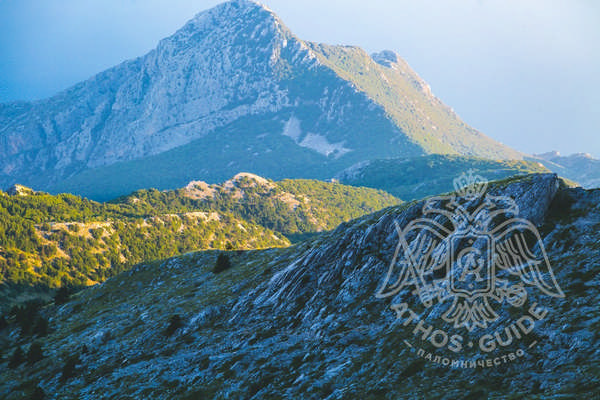
 According to tradition, in the easternmost of the three peninsulas of Chalkidiki, where Mount Athos is located, there were not only hermits but also organized monastic communities as early as the 4th century. However, historically reliable information about the spread of monasticism in this area appear only from the 9th century onwards. By the middle of this century, there can be found accurate testimonies regarding the presence of monks, while by the end of it, there are references to the first organized monastery, founded by John Kodon near Ierissos.
Emperor Basil I the Macedonian (867-886) granted a kind of independence from local civil and ecclesiastical authorities to the monks of the Holy Mountain through a chrysobull in 883. Meanwhile, the monks, whose number was rapidly increasing in this region (considered to be a great location and rich in natural beauty), established a central administration around the middle of the 10th century and convened meetings with the heads of the monastic communities of the Holy Mountain three times a year. They would gather in Karyes for Easter, the Feast of the Dormition, and Christmas.
I. The emergence of communal living and the establishment of the first cenobitic monasteries is primarily associated with the name of Athanasios the Athonite, who, with the help of Emperor Nikephoros Phokas (963-969), founded the Holy Monastery of Great Lavra.
During this period there also appeared the first legal documents (typikon) regarding the status of the Holy Mountain. The first one was the Typikon of Athanasios the Athonite (circa 970), structured according to the statute of the Studion Monastery in Constantinople. This was followed by a series of equivalent documents with statutory character, until the establishment of the Typikon of Emperor John Tzimiskes (972), also known as "Tragos" (goat), as it was written on parchment made from goat skin. This typikon addressed important administrative issues as well as matters related to the status of the entire Holy Mountain. It also established the self-governance of Mount Athos and of all its monasteries.
II. During the Byzantine era, other typika concerning the legal nature of life in Mount Athos also appeared. One was issued by the Emperor Constantine IX Monomachos in 1045, and another by Manuel II Palaiologos in 1406. The first addressed primarily economic issues that caused disputes among the monks of the Holy Mountain. The second, which became the last legislative document of the Byzantine Empire concerning the governance of Mount Athos, raised the issue of idiorrhythmic monasticism. This phenomenon emerged for the first time during this period. It referred to the possibility for monks to live by their own, in their own property, and with a distinct way of life, which contradicted the rules of communal living.
III. Following a brief period of Serbian rule during the reign of Stefan Dušan (1331-1355) and the return to the Byzantine imperial authority in 1350 under John Kantakouzenos, there began the era of Ottoman rule, which lasted for four centuries.
 However, even before the Ottomans reached this area, Athos managed to negotiate with Sultan Murad II, ensuring that all privileges and properties would be preserved, allowing it to exist peacefully under the Ottoman rule. Therefore, when the Holy Mountain finally came under the control of the Ottoman Empire in 1423-1424, the new authority maintained the monasteries' right to self-governance. Additionally, the monks asked for the sultan to issue decrees confirming all their rights and privileges.
Nonetheless, all these concessions came at a cost. The monasteries were forced to heavy taxes, forcing the fathers of the Holy Mountain to seek assistance, both financial and non-financial, primarily from the Orthodox rulers of the Danubian states. Although they gladly responded to requests for help, the economic pressure became so unbearable that soon the Holy Mountain experienced an economic decline, followed by spiritual decay, leading to the disappearance of cenobitic monasteries by the 18th century.
The situation was further aggravated by the position taken by the Athonite monks during the revolution of 1821: they actively participated in the uprising that unfolded on the peninsula of Chalkidiki under the leadership of Emmanuel Papas. As a counterattack, the Ottoman army invaded Mount Athos, plundering and destroying the monasteries. For the first time, a sultan's representative was settled in Karyes, while the remaining Athonite properties were subjected to severe taxation.
IV. The relationship between the Holy Mountain and the ruling Church, particularly with the Ecumenical Patriarchate of Constantinople, has always been a delicate and complex ecclesiastical and political issue. Today, this holds only historical significance, as these relations are regulated by both the Constitution of Greece and the legislation of Mount Athos.
As previously mentioned, the monks of Mount Athos had secured autonomy and self-governance. The privilege of not being subject to any political or ecclesiastical authority had been granted to them from the very first decrees of Byzantine emperors. In this way, the independence of the monastic community was sealed, while it was also established that the local bishop of Ierissos had no right to intervene in the affairs of Mount Athos. This arrangement created tensions between the bishop (who was later renamed 'Bishop of Ierissos and Mount Athos') and the Protosynkellos of the Athonite state, who, in the early stages of its history, seemed to hold a central role.
In the early 14th century, it appears that Patriarch Athanasius I was the first to raise the issue of Mount Athos being subject to a certain ecclesiastical authority. In 1312, the Ecumenical Patriarch began to play an important role in the life of the monastic community, following the issuance of a chrysobull by the Emperor Andronicus II Palaiologos, that was in accordance with the sigillion of Patriarch Niphon, addressing the same issue. This chrysobull granted the Ecumenical Patriarch the power to approve the election of the Protosynkellos of the Holy Mountain and the right to remove him from his duties if deemed inadequate for the position.
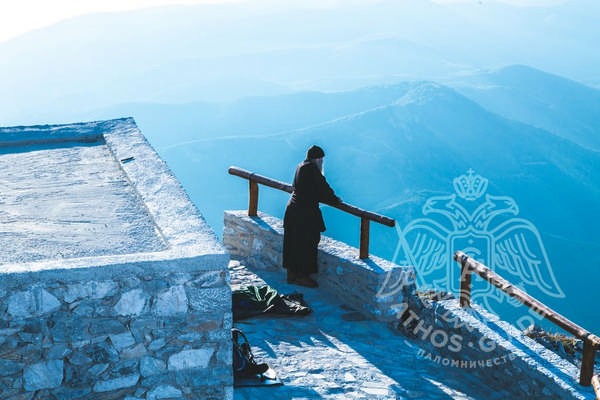 Since then, Mount Athos has been under the spiritual guidance of the Patriarch of Constantinople. However, this subordination and the extent of power of the Patriarchate of Constantinople have been repeatedly questioned both by the bishop of Ierissos and the fathers of the Holy Mountain.
After the issuance of the third typikon of Mount Athos by Manuel Palaiologos (see above II), several other typika also emerged. Their approval during the period of Ottoman rule was taken on by the Ecumenical Patriarchs. For instance, Patriarch Jeremiah II approved the fourth typikon in 1574 with a sigillion, which once again addressed the growing presence of idiorrhythmic monasticism. The fifth typikon was issued in 1784 by the Patriarch Gabriel IV and was approved a decade later, in 1793, by the Patriarch Neophytus VII. This last document dealt with statutory and economic issues.
The 19th century was marked by disputes between the Athonite fathers and the Church of Constantinople. An example of the prevailing situation is that in 1810, the Athonite monks composed the sixth typikon of Mount Athos, which they sent for approval to the Turkish governor of Thessaloniki, rather than to the Ecumenical Patriarch. This legislation introduced significant changes to the organization of the monastic life in the Holy Mountain: the governance of Athos was now appointed to the Holy Community (Hiera Koinotis) and the Holy Superintendence (Hiera Epistasia), while the position of the Protosynkellos of the Holy Mountain was abolished permanently.
Following this, the Patriarchate initiated the drafting of the "Principal Regulations (regulatory acts) of Mount Athos." The Athonites rejected this proposal and, although a corresponding act was issued in 1876 under the Patriarch Joachim II and approved by the Ottoman government, it was not accepted by the Athonite monks, who drafted their own version, which was also not implemented.
Finally, in 1912, under Joachim III, as a result of the joint efforts of the Athonite fathers and the Patriarchate of Constantinople, the "Principal Regulations" were drafted and approved by the Holy Synod of the Ecumenical Patriarchate. Howeveer, these acts were not approved by either the Ottoman Empire or the Greek state due to the onset of military actions and the subsequent liberation of Mount Athos from the Ottoman rule.