History and present days
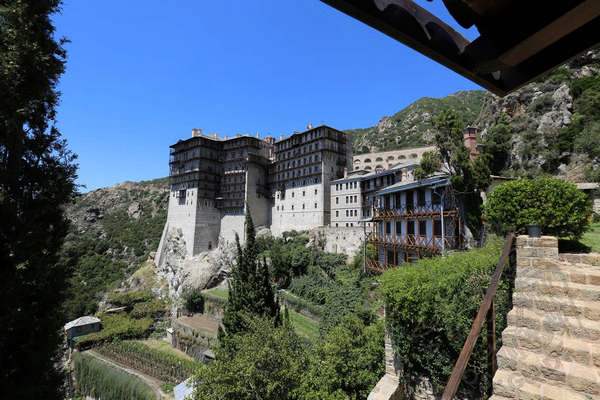
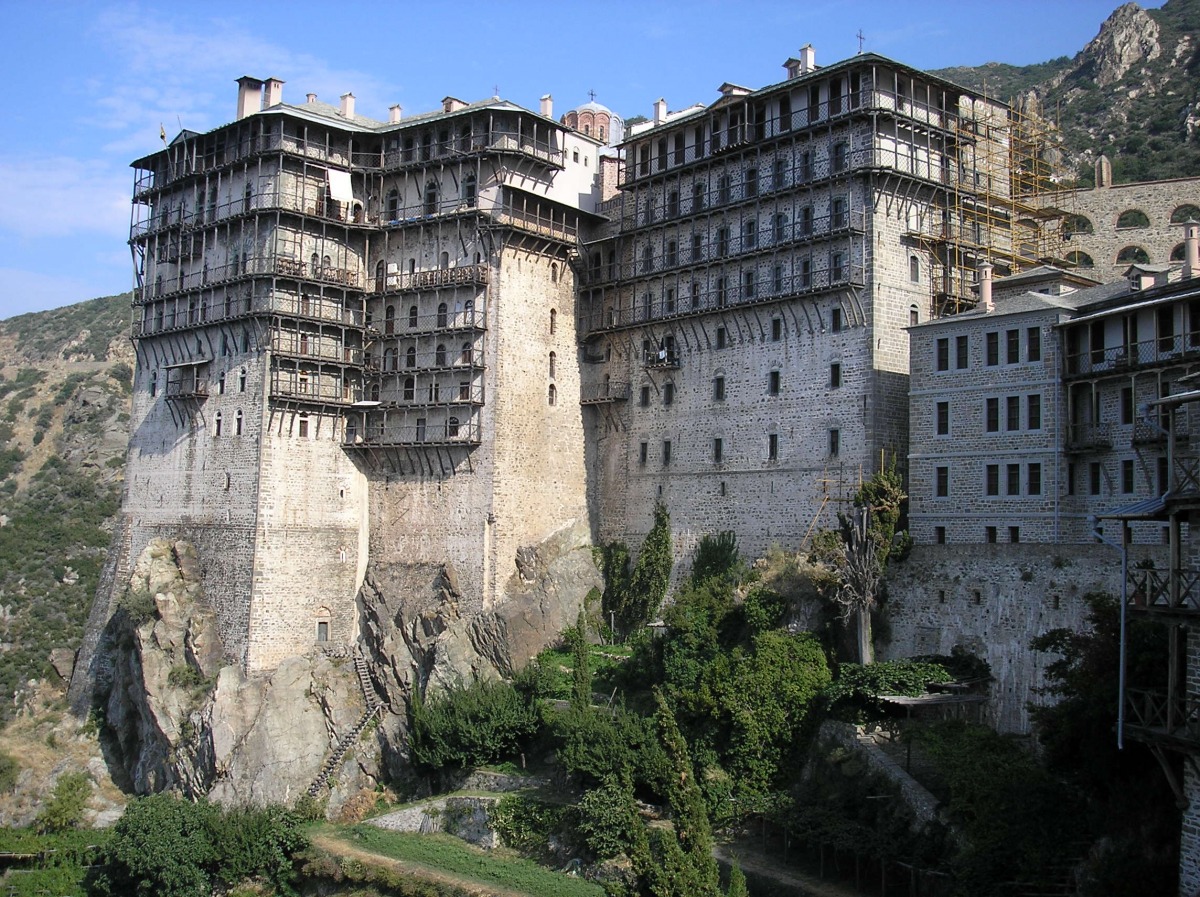
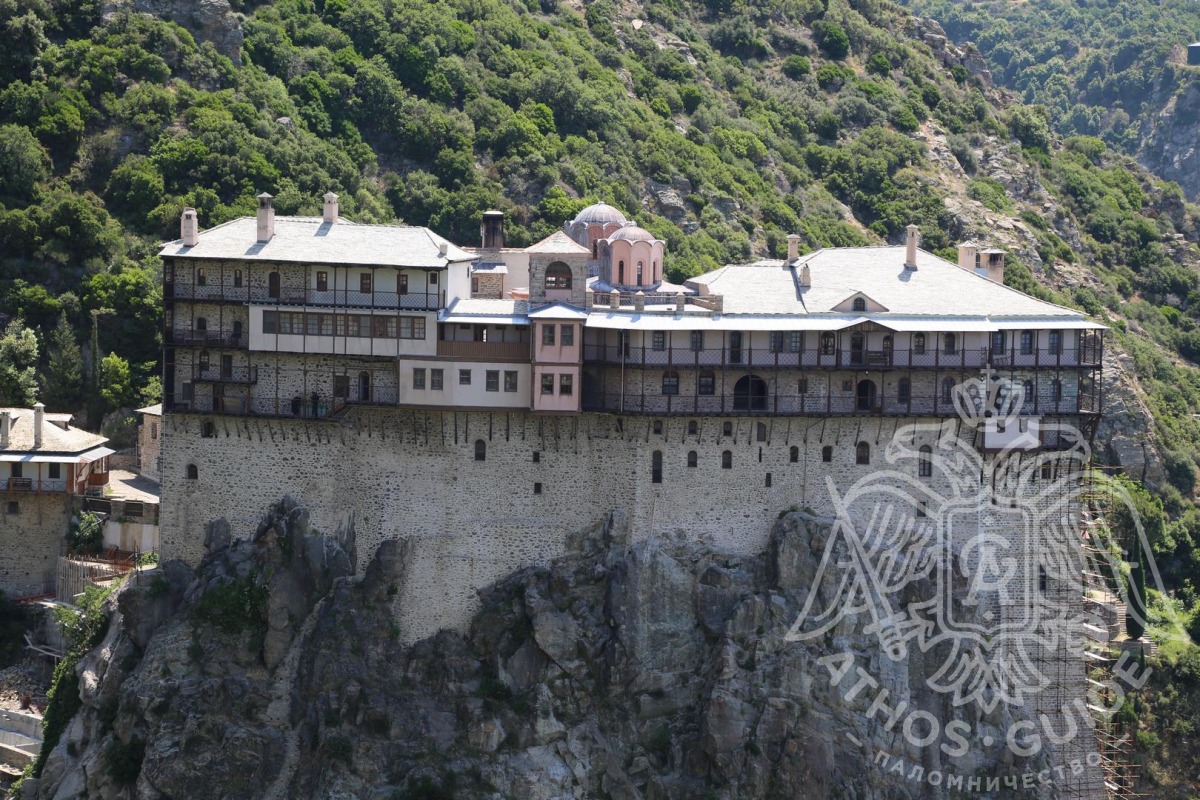
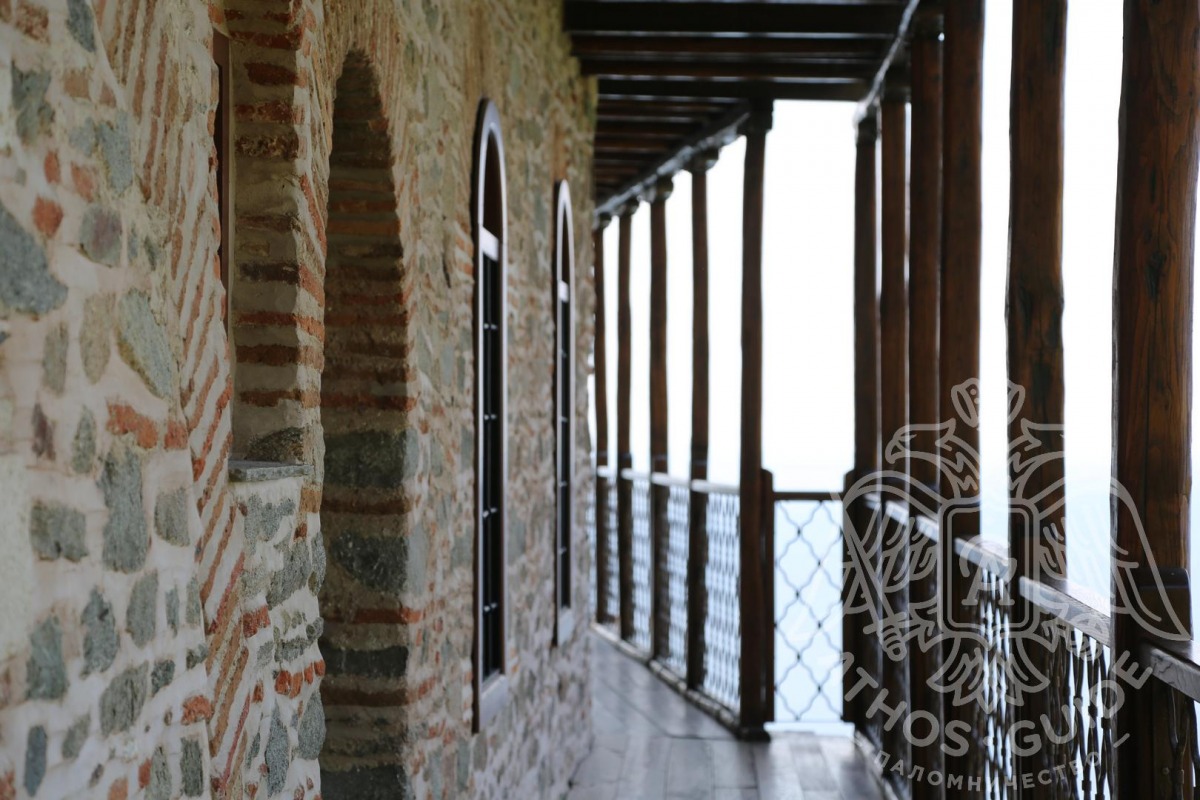
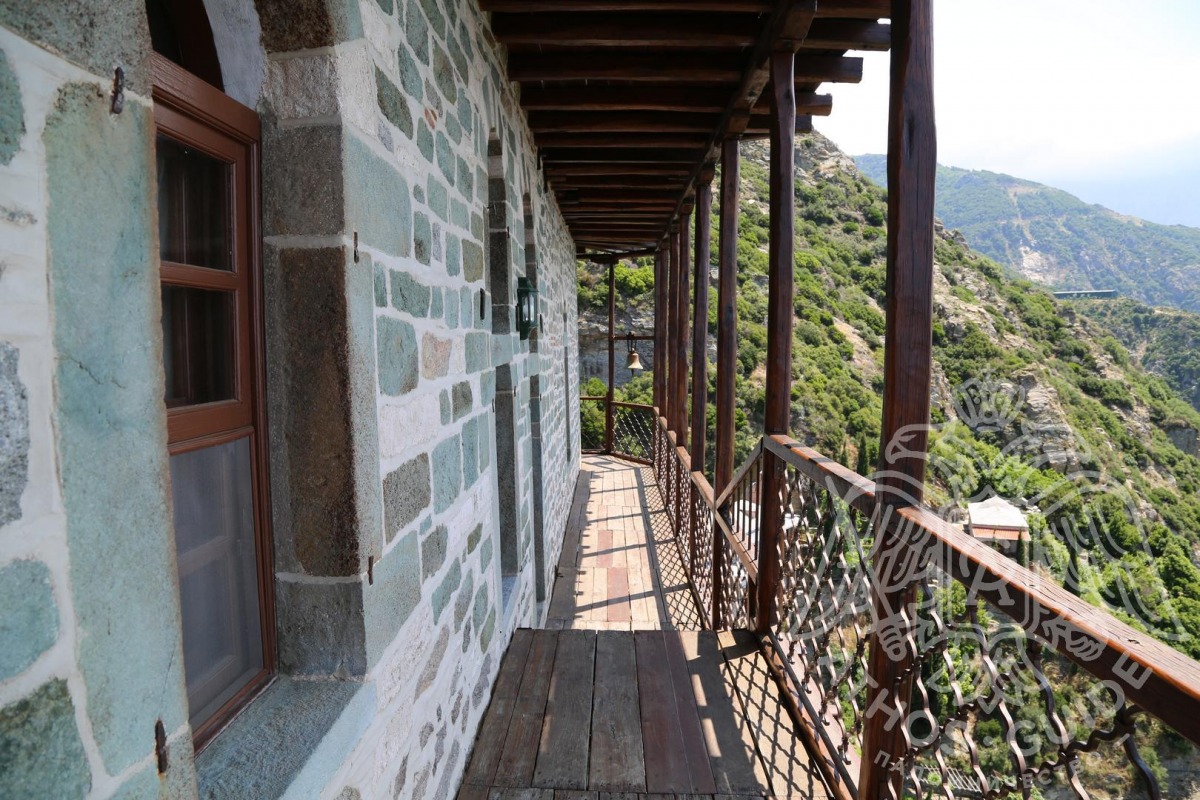
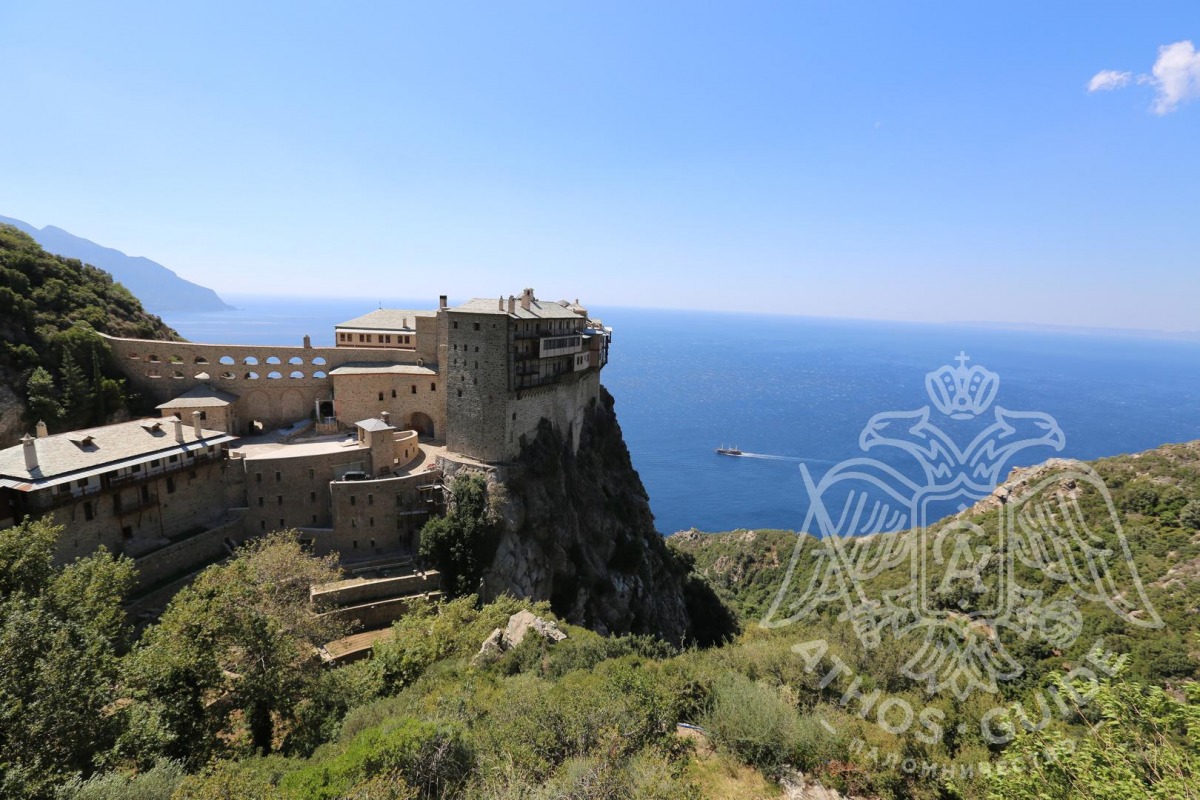
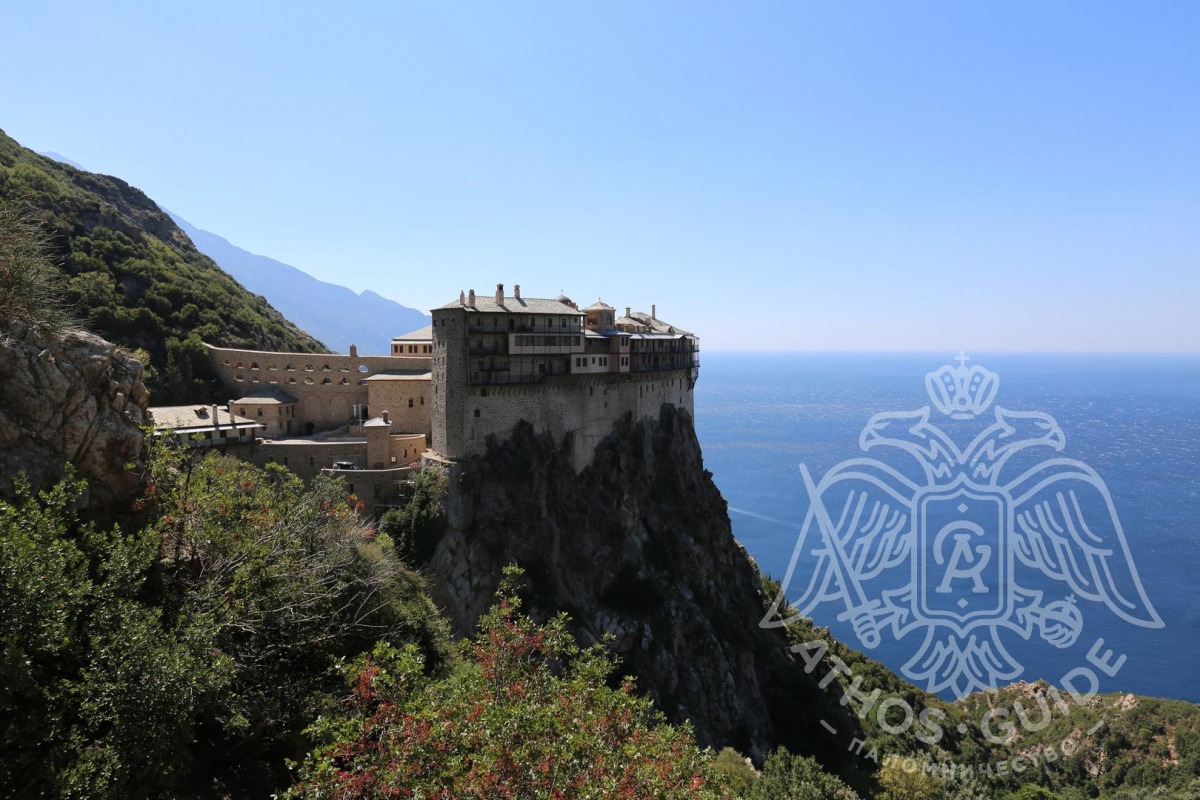
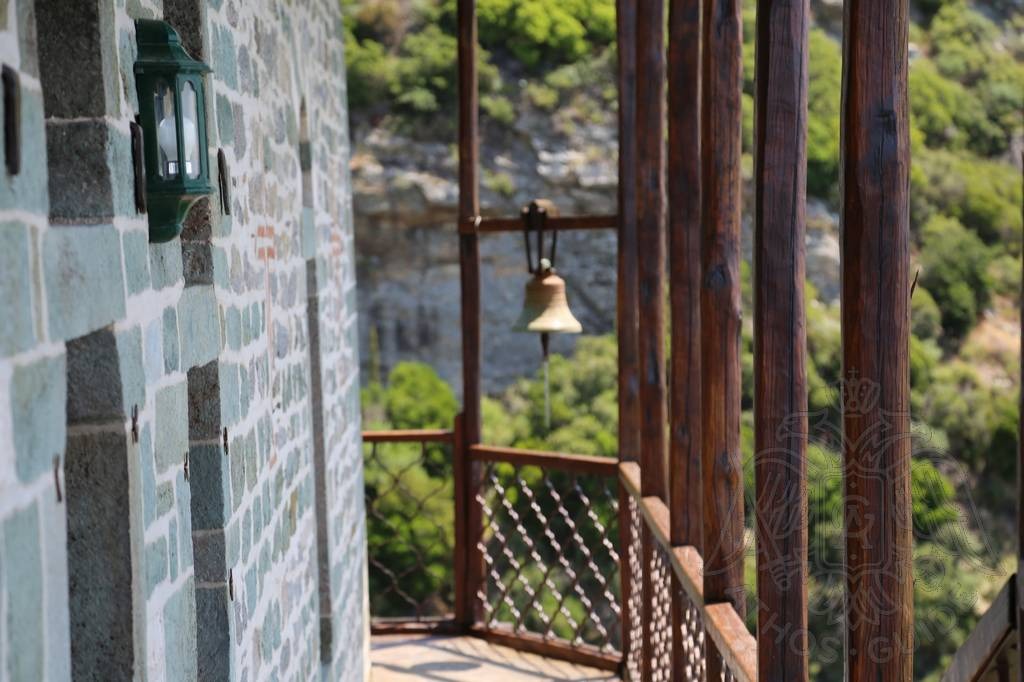
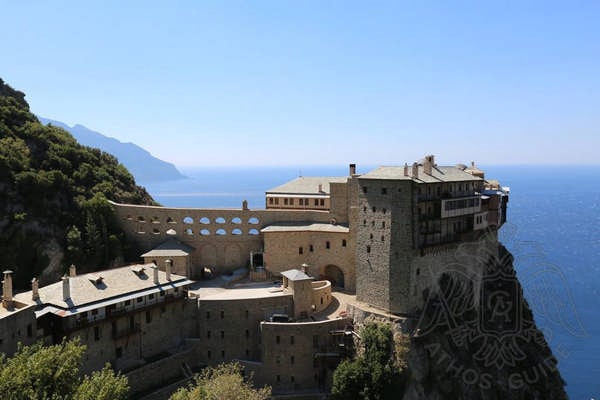
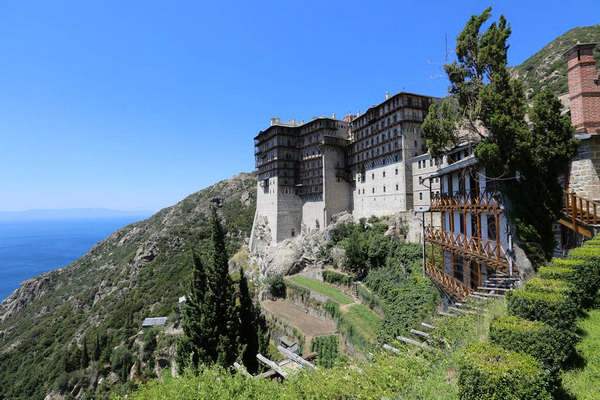
Right after Kalamitsi, one can see the most magnificent view of Mount Athos. The Monastery of Simonopetra rises towards the sky, built on a rock 300 m above the sea. It reminds us the cliffs of Meteora as it is visible from the coast. Its construction has been an incredible architectural attempt. The building has ten floors, seven of which are habitable. It is supported by walls more than 2.5 m thick, that are built on the rock. There are also balconies across the entire west side. The towers appear one after the other. The left tower in the south-west protrudes more than the rest. One can see the central tower and the right one on the east side that protrudes even less. The central tower is the oldest and constitutes part of the old core of the monastery's courtyard (late 16th -17th century). The other two were added later (southwest tower: 1862-64, east tower: 1897-1902). To the right of the eastern tower there is the aqueduct. Famous travelers such as Robert Byron (1927) likened the monastic structure of Simonopetra to that of Potala in Lhasa, Tibet.
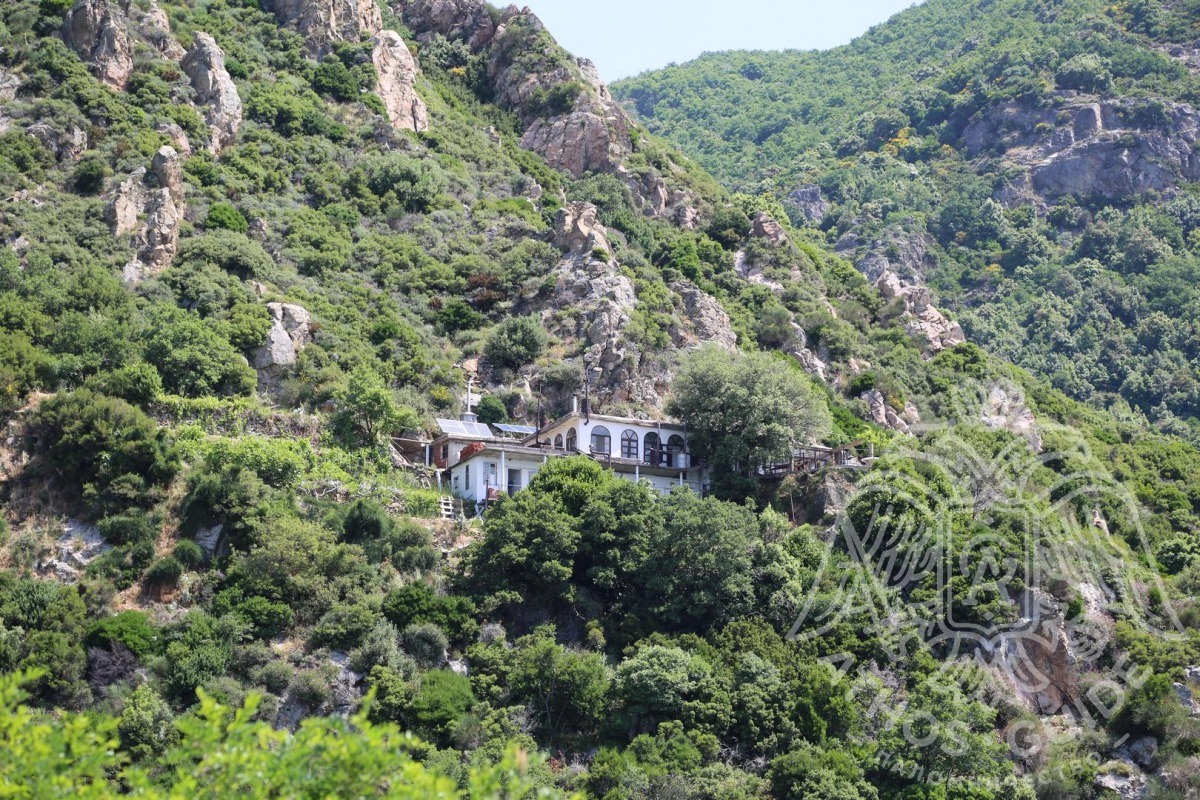
On the beach, in the middle of the ravine that descends from the rock of the monastery, there is the arsanas, while to its left, higher up the slope, there is located the kathisma of Saint John the Theologian, where great frescoes are still preserved (1702).
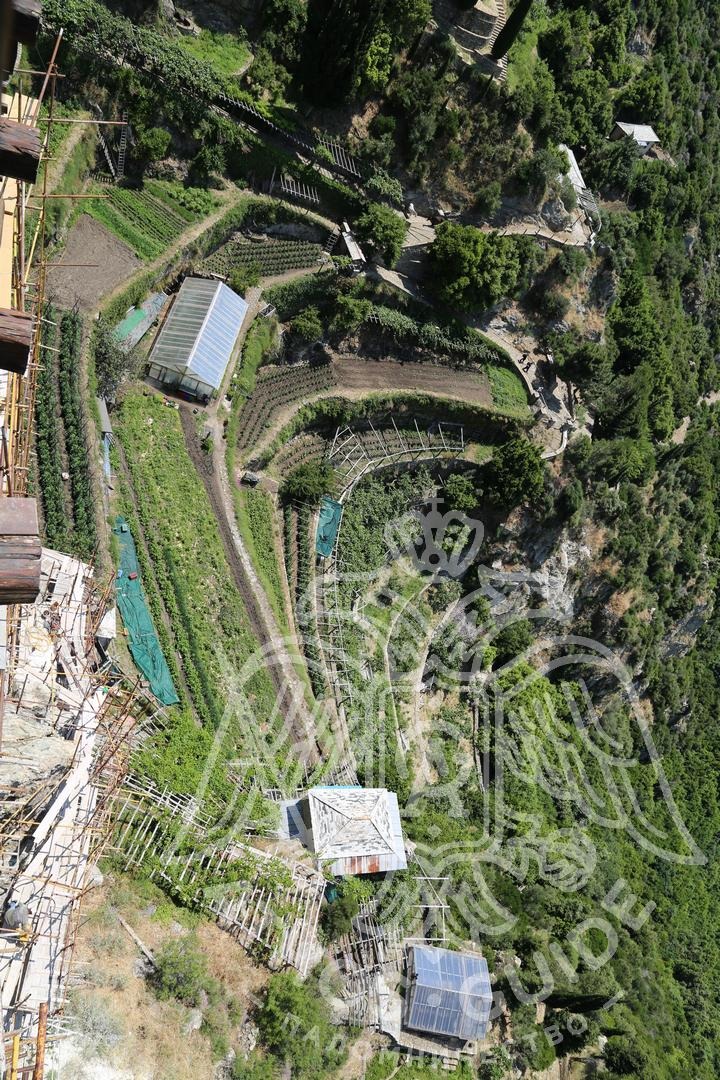
The ravine is covered with dense vegetation. However, the area around the towers has been deforested in order to be used as an open space for cultivations. This was also a necessary measure for the prevention of fires, following the devastating fire of August 1990. The disaster led to the destruction of the forest and the crops of the monastery. There were also destroyed 9 cells, including the monastery of Saint Simon. Because of the amphitheatrical shape of the hillside, the flames were always extending until they reached the balconies of the monastery. The intervention for the restoration of the physical landscape was so gentle and effective that an international award was attributed to the local authorities.
The architectural complex of the arsanas of Simonopetra includes a tower with an attached nave, a workers' house and a newer structure with living spaces on the first floor. The tower (1567) is four storeys high. It is one of the most remarkable examples of the 16th century architecture in Mount Athos. It is preserved in excellent condition. Its masonry is of well-kept stonework. In the center of the lowest level, a pillar supports the four cross vaults that cover it. The top floor was intended to host guests. It has a large fireplace, a balcony (on the south side) and the church of Saint Nicholas. Additionally, there are windows all around it. The penultimate floor was intended to be used for the defense of the monastery, as it can be seen from the two-gun ports (west and south side) that control the beach.
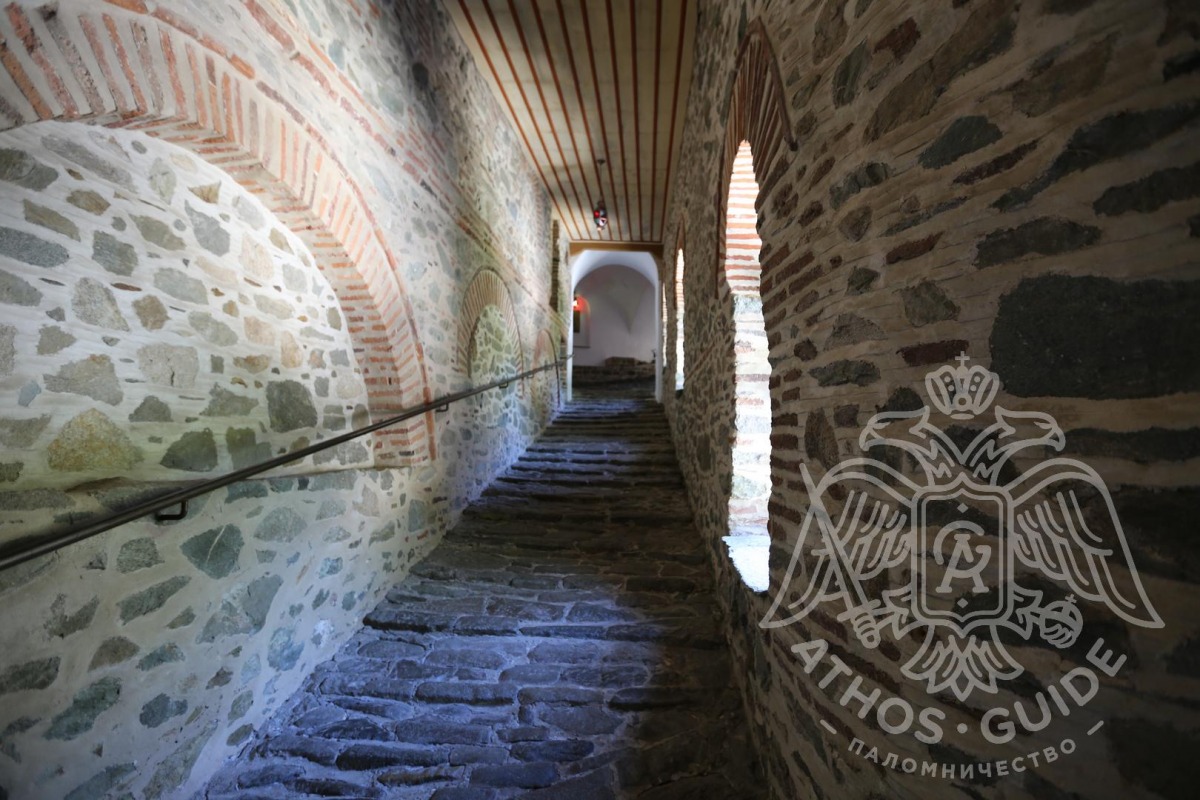
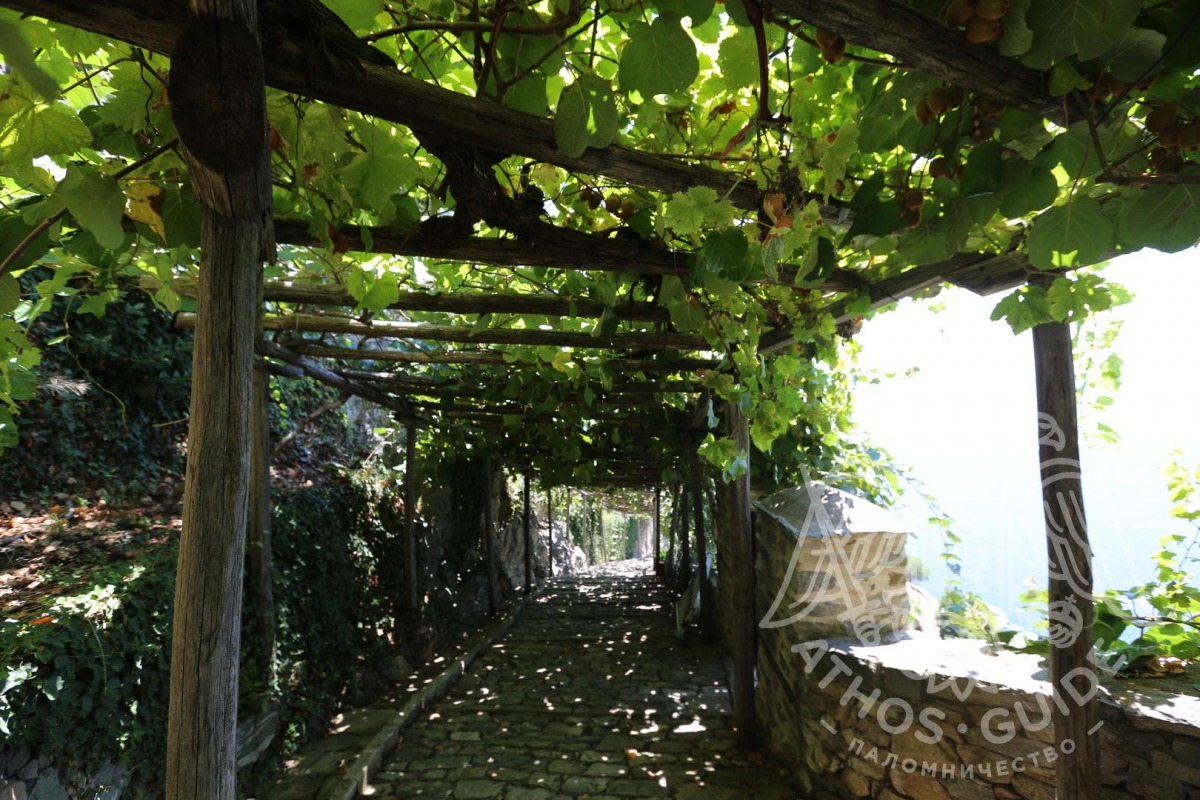
 An uphill path starts from the arsanas and leads to the monastery. The climb is not particularly easy. The Duke of Edinburgh Philip, who visited Mount Athos as the president of the World Wide Fund for Nature (WWF), needed 25 minutes to climb it, which was appreciated by the monks as an achievement.
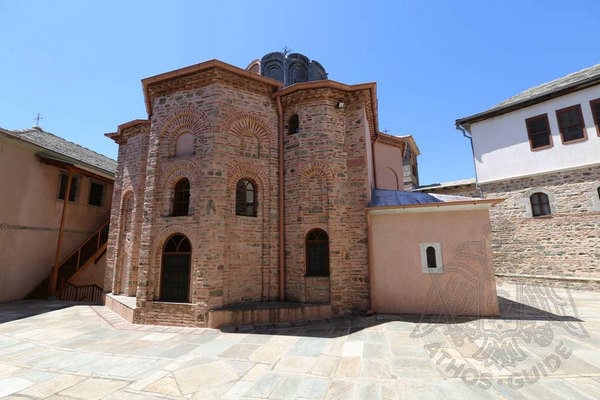
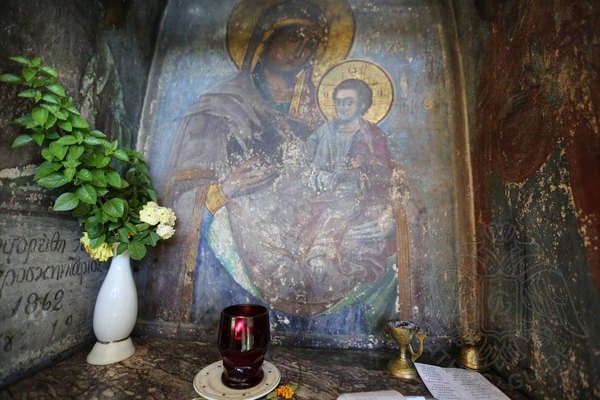
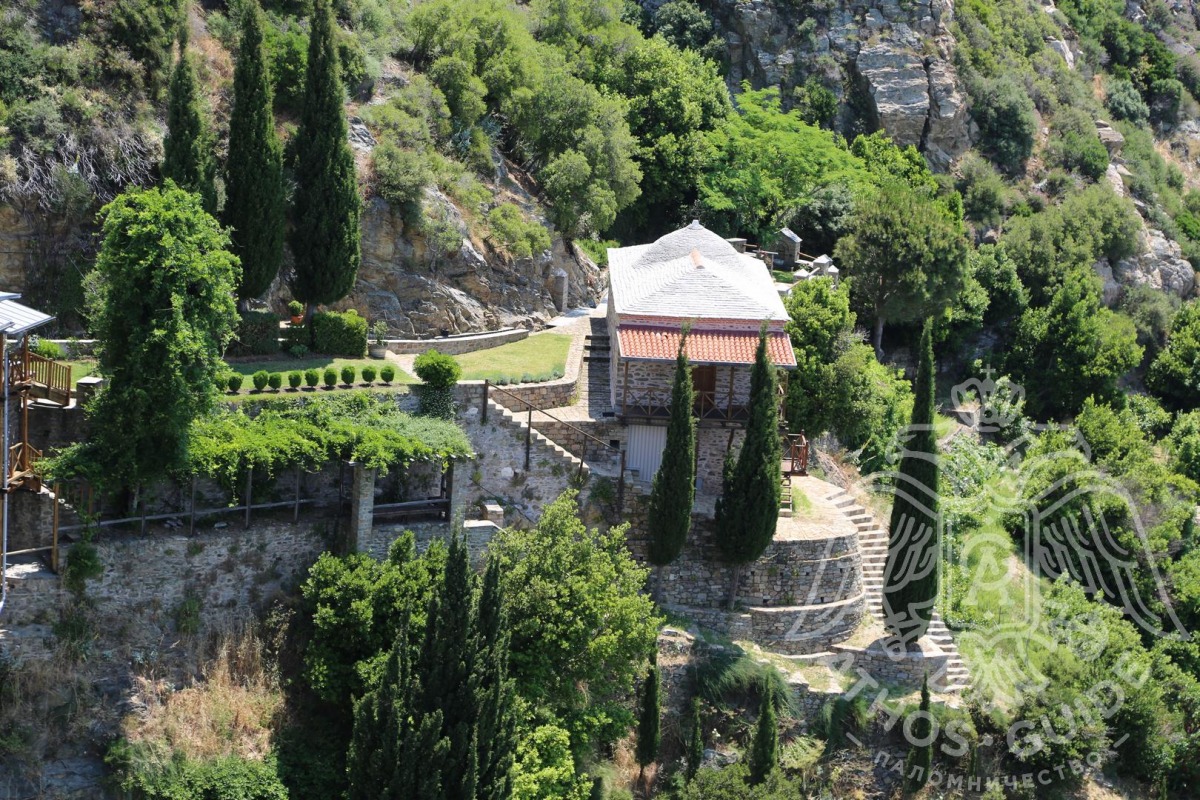
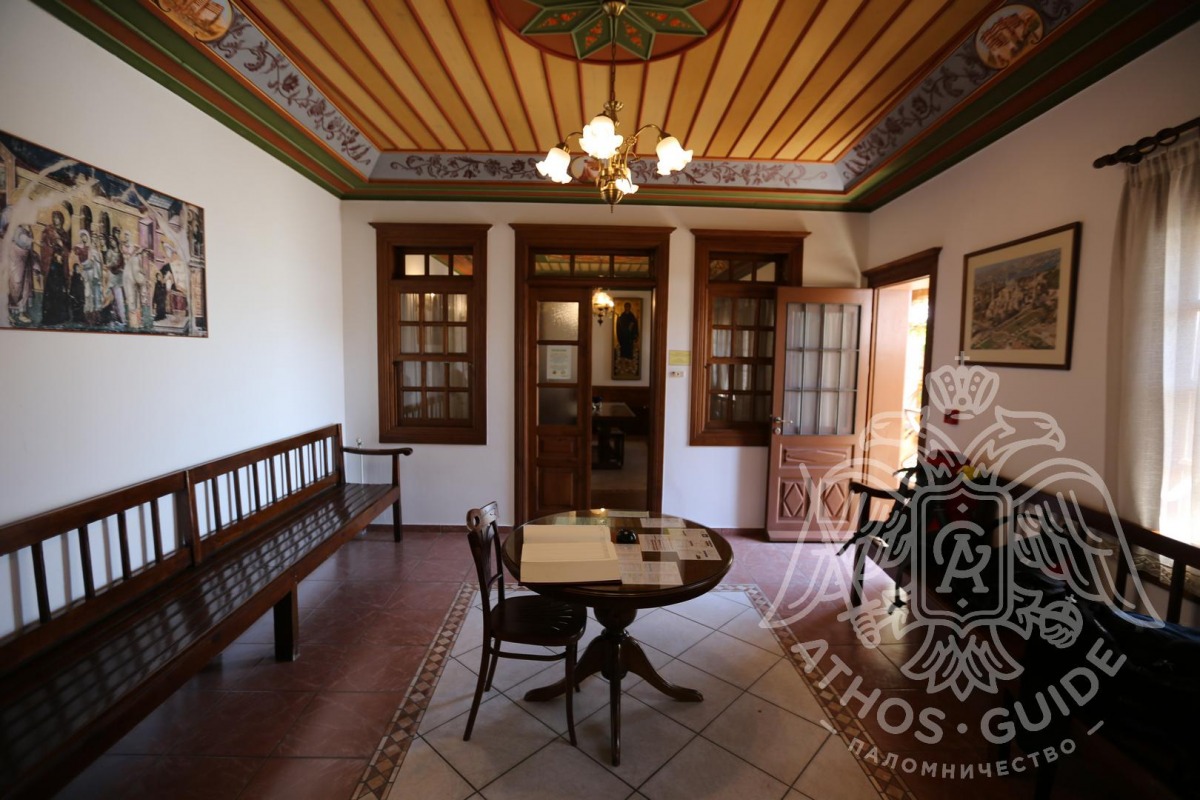
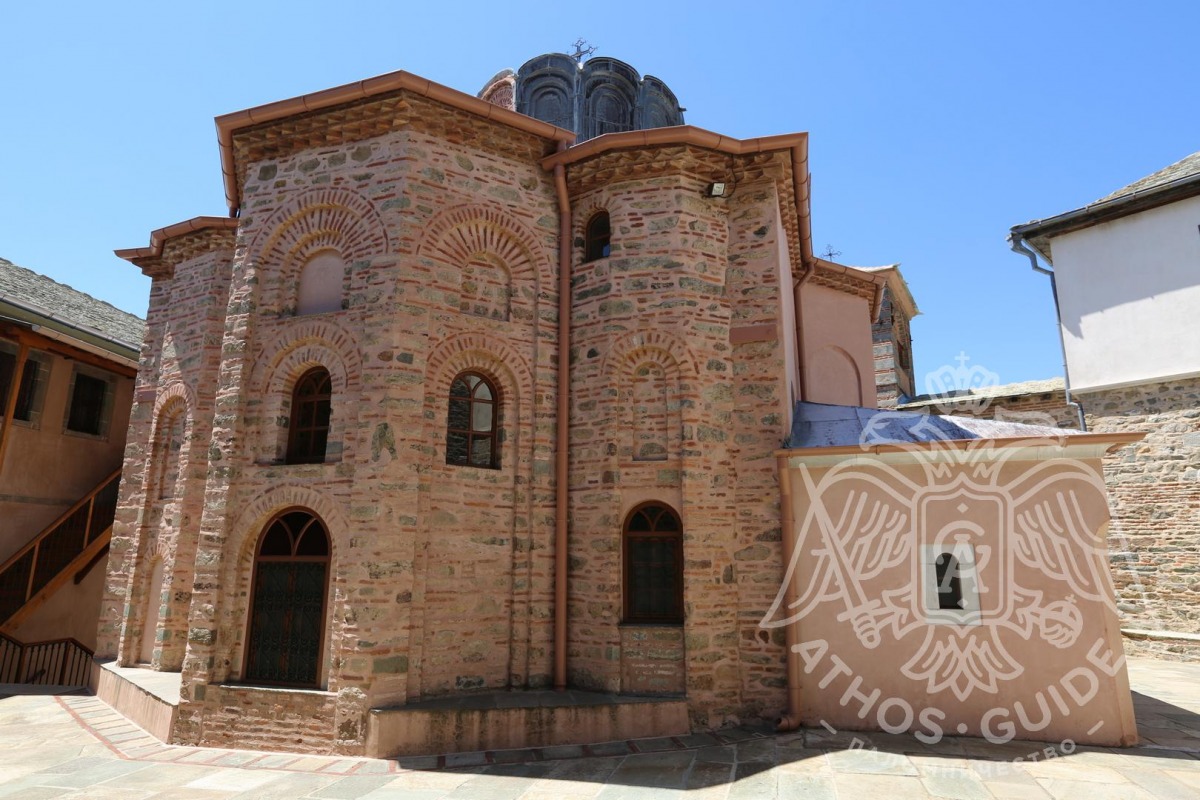
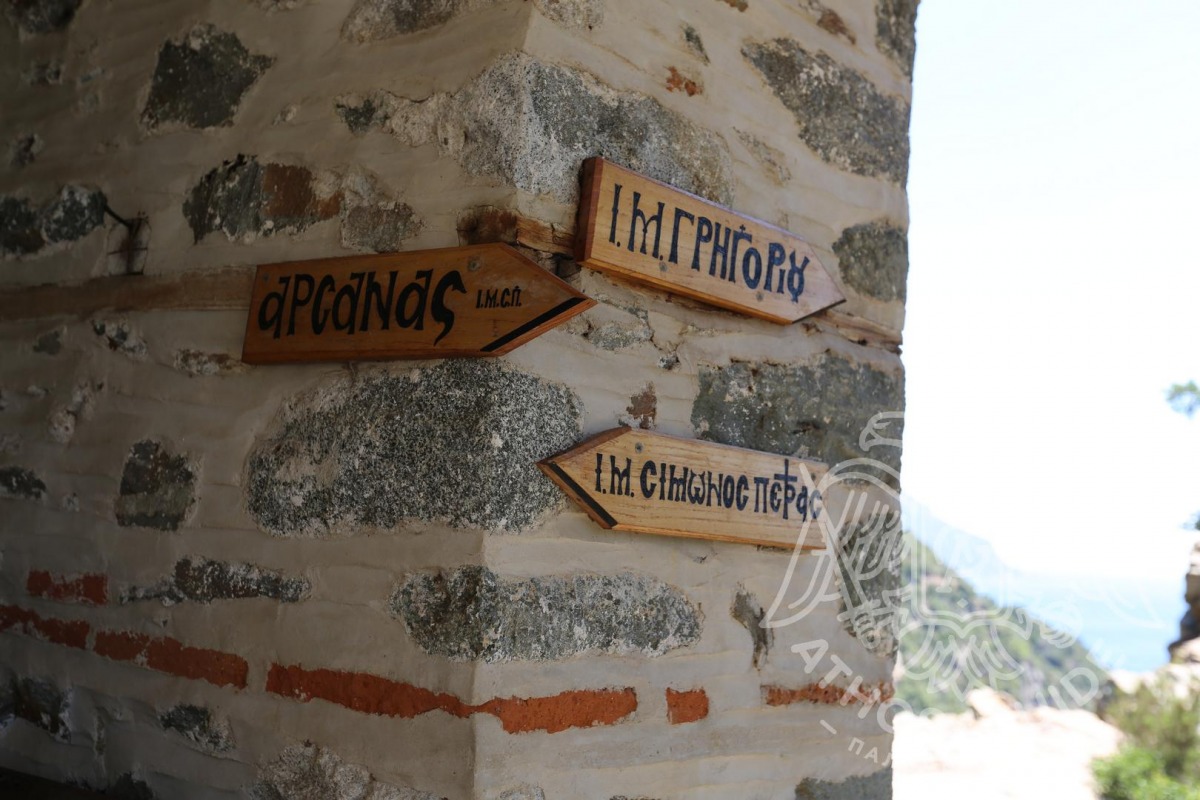
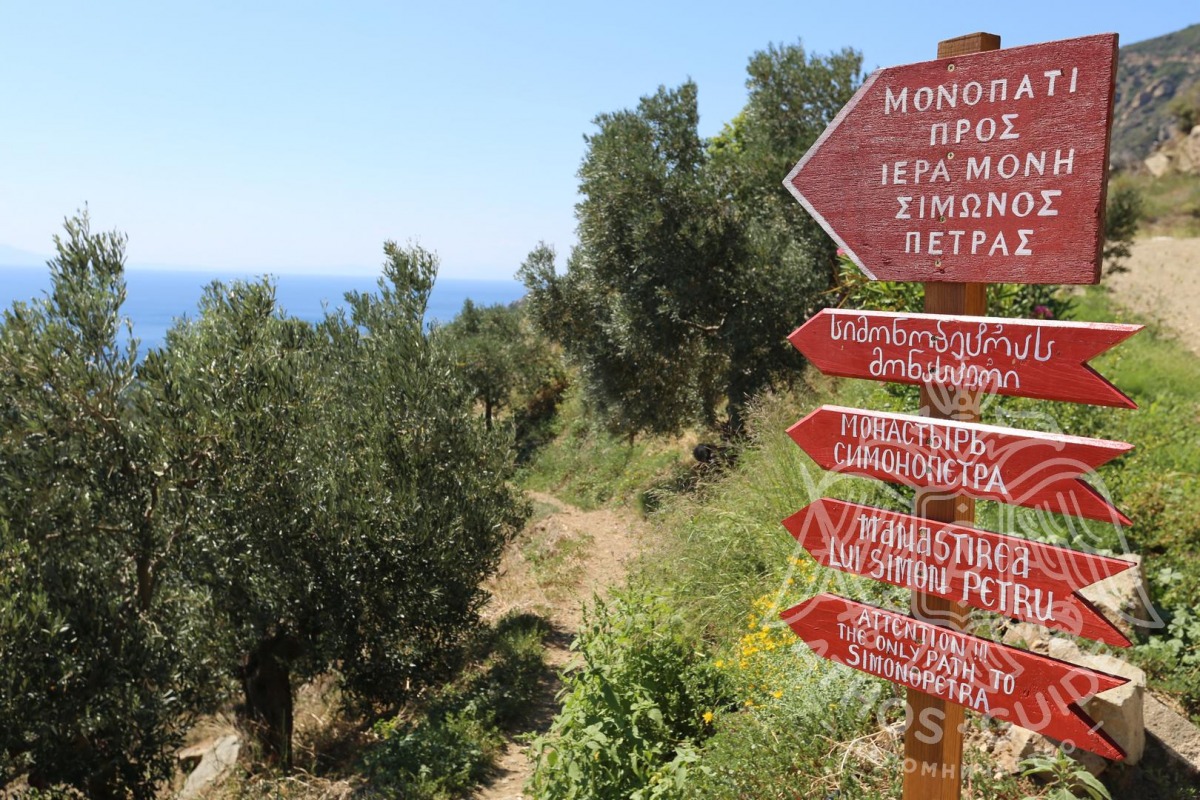
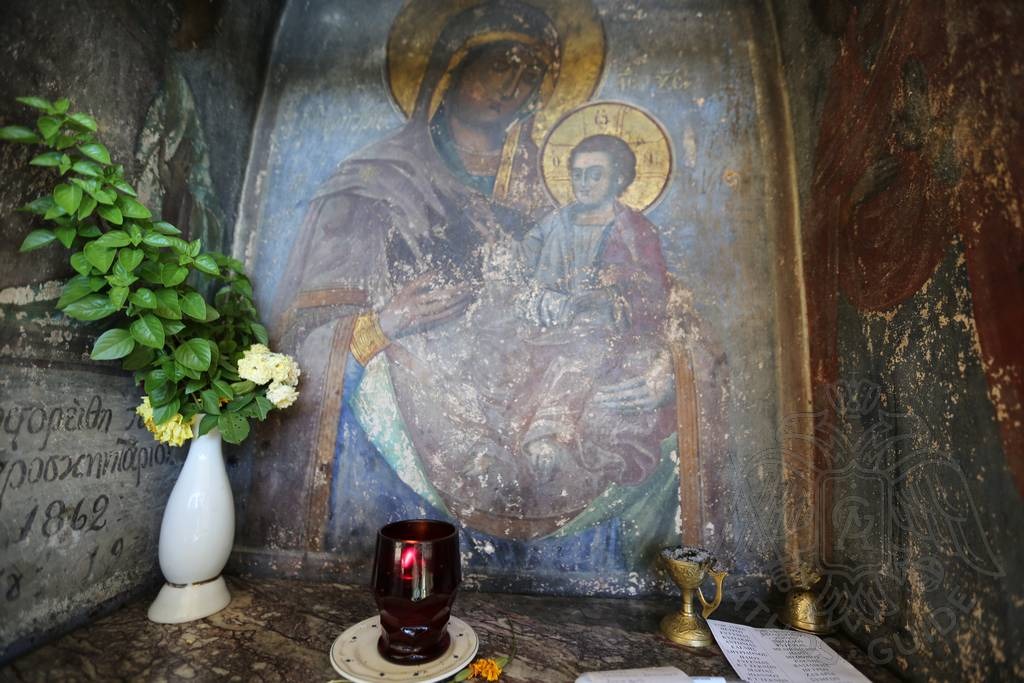
The ascent from the arsanas is the traditional route to the monastery. On the way up, one crosses an amazing landscape. Halfway along the route there is a beautiful shrine with a fresco of the Virgin Mary on its arch. There begins a path (on the right) leading to the Gregoriou Monastery. Reaching the higher level, one can see the garden house with the shrine of Saint Tryphon. It is now evident that the projecting part of the southwest and the east wing were both added later. The building complex, as it was reconstructed after the fire of 1580, was smaller. The newly built three-storey building to the right of the east wing, in front of the aqueduct, constitutes the new archontariki that is much larger and offers comfort to the visitors. To the right of the path there is a three-storey building. It used to be a workhouse, while on its ground floor there was the monastery's blacksmith's shop. Later on, it was converted into offices and workshops. The monastery's dental office is also housed there. To the right (southeast), there is the cemetery church (Dormition of the Virgin Mary, 18th century). It follows the typology of cruciform with a dome and narthex. Below the church there is the ossuary. To the right of the new archontariki, in contact with the aqueduct, there is the two-storey building, where there used to be the stables of the monastery. Today it has been converted into a guesthouse.
Another route, created in the last decades, drives from the car road that starts from the new arsanas of the monastery in Daphne. However, this route brings the visitors immediately into the vital hinterland of Simonopetra, starting from its modern part. The car road, which constitutes a very big road for Mount Athos, has different directions that lead to the kathisma of Saint Modestus, the Cell of Saint Nicholas Donta (it supplies the monastery with the necessary fruit and vegetables) and to Saint Demetrios (church and building, 1923). The road to Saint Demetrios also leads to the lake of the monastery, as well as to the hills. Approaching Simonopetra, one has a great view of its western side, while in the background near the sea, there can be seen the Gregoriou Monastery. The visitor reaches the entrance passing by the watermill, the workers' houses, the hydroelectric generator, the machine shop and the oil mill, a 19th century building with the mill press in its basement and the workers’ accommodation on the first floor. In this location one can also see the aqueduct, which is kept in excellent condition, preserving construction elements of the late Byzantine period (14th century), while other parts of it were constructed in the 16th and 19th centuries. It appears that in the period of 1530-40 the aqueduct was damaged, creating a serious problem of water shortage. The difficulties were overcome by the repair of the aqueduct, attributed to Mrs. Asanina from Thessaloniki, widow of Theodoros Gerakis.
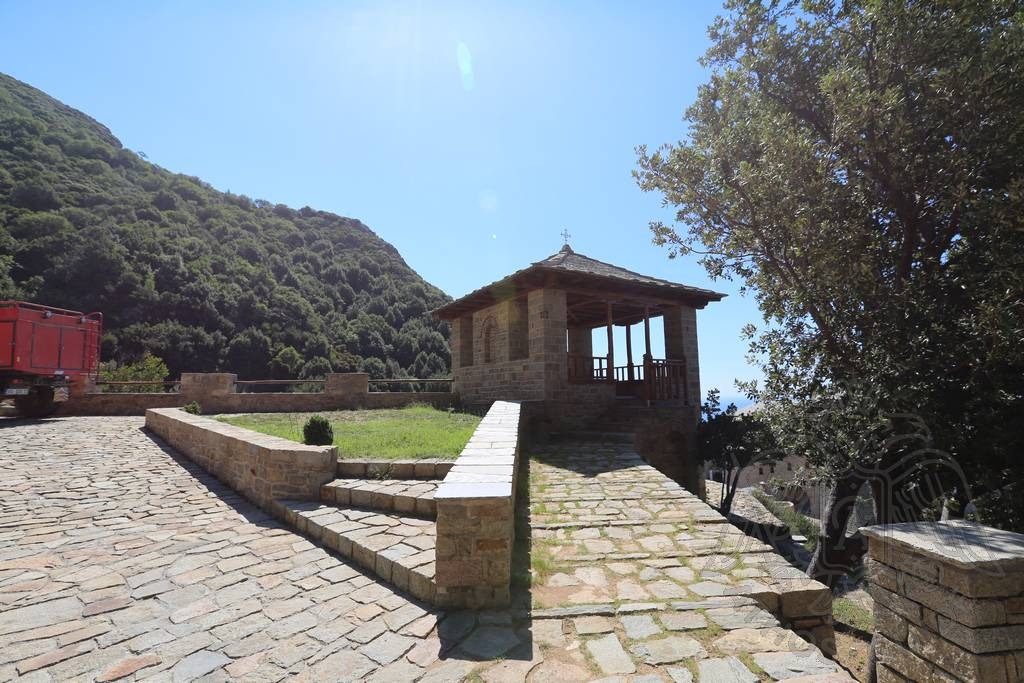
The space in front of the aqueduct is considered to be the most traditional part of the monastery, while the one behind the aqueduct and towards the hinterland houses the logistical infrastructure. This section includes as well one of the most sacred places of the monastery. Behind the newly built pavilion, on the mountainside that circles the valley, there is the kathisma of Saint Simon. Lower down there is the cave in which Saint Simon used to live his ascetic life.
History
The foundation of the monastery goes back to a vision that Saint Simeon the Athonite (Myrovlitis) († 1257), an ascetic who was living in a cave in this area, saw on Christmas Eve. According to tradition, the craftsmen invited by the Saint to undertake the construction of the monastery, initially refused. They were only persuaded when the Saint's subordinate, who had fallen off the cliff while offering them wine, reappeared unharmed and with his jug still full of wine.
Saint Simeon decided to name the monastery "New Bethlehem". However, this name did not become well-known and, according to the usual Athonite tradition, the monastery was called by the name of its founder. The names “Simopetra” and “Asimopetra” are also mentioned, as variations of the name “Simonopetra”.
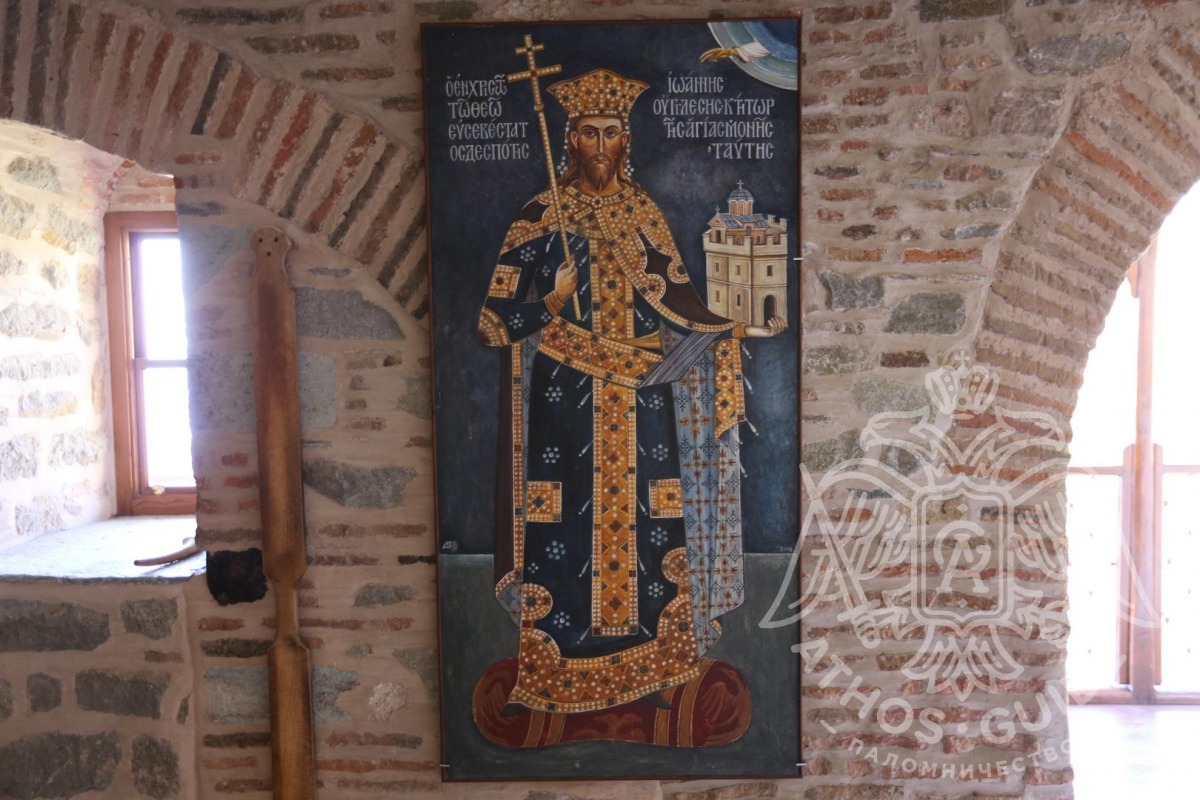
The first building extension of the monastery was made by the Serbian ruler John Unglesi, who in 1368 issued a golden bull and enriched the monastery with additional structures and metochia. In the Third Typikon of Mount Athos (1394) the Monastery of Simonopetra occupied the 23rd place among the 25 monasteries of that time.
In 1580 the monastery was completely destroyed by fire. Some of the monks died, while at least 20, including the abbot Eugene, survived and managed to save the monastery's treasury. Thanks to their financial ability, they were temporarily housed in the Xenophontos Monastery, where they took over the administration. They also took on the monastery's enormous debt. In order to meet the financial needs of the reconstruction, the abbot Eugenius went to Romania (1587-92), to the monastery of Saint Nicholas of Bucharest. In 1586 it seems that the resettlement of the monks in Simonopetra was completed. Around 1620 the community was converted into an idiorrhythmic monastery.
In 1622 a new fire broke out. However, there was no serious damage. The new katholikon was consecrated in 1633 and was decorated with beautiful frescoes.
From the middle of the 17th century there was evident a serious decline, which is reflected in the sparse information available about that period. Despite the financial difficulties, the monastery was able to purchase two cells that were sold in Karyes in 1661. Barsky notes on his first trip that the monastery “had quite a few monks”, while 20 years later, on his second trip, he claims that the monastery was in a state of complete confusion due to poverty and high debt. He also states that the monks, unable to cope with the heavy taxation, had either left for other monasteries or travelled out into the world to beg for money. In 1762, Saint Paisios Velichkovski came to the monastery together with a group of monks in order to take over its administration. Nevertheless, he could not cope with the pressure of the lenders and left. The monastery passed into the hands of the central administration of Athos, which, in order to deal with the debts, attempted to sell off metochia and additional structures of the monastery.
The monastery was reopened in 1765 thanks to the Hieromonk Ioasaph from Mytilene, who, with the proceeds of fundraising, managed to buy again the structures of the monastery. He also paid a part of the ransom for the recovery of the relic of Saint Mary Magdalene, the most valuable treasure of the monastery, which had been stolen by pirates 25 years earlier.
 In 1801 the monastery was converted into a commune by a sigil of the Patriarch Cullinikos V. The transition to the cenobitic system brought difficulties. Things got worse after the establishment of Ottoman troops in Mount Athos and the Revolution of Emmanuel Papas (1821-30). In 1835 the monastery had 40 monks. However, the unity of the brotherhood was being tested. In 1847, 17 monks left the monastery. The next abbots, Seraphim and Neophytos, from Alatsata in Asia Minor, managed to put the monastery back on the road to recovery.
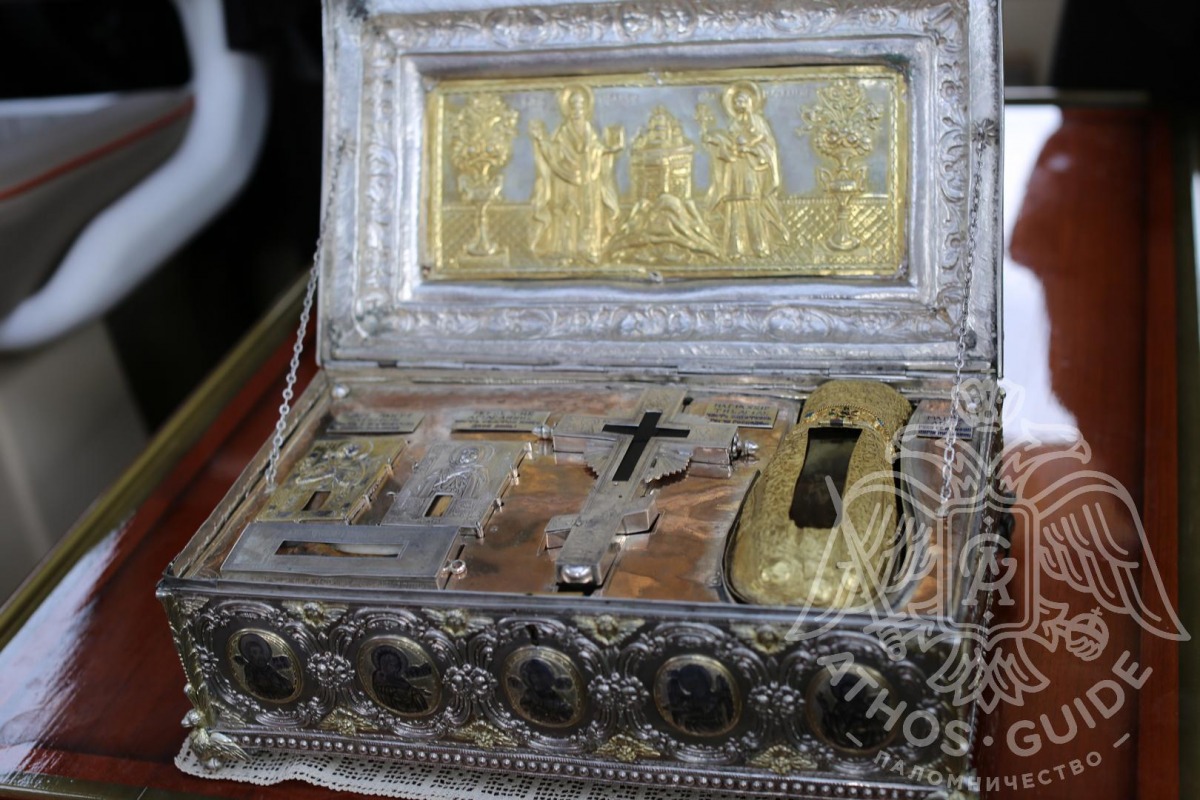
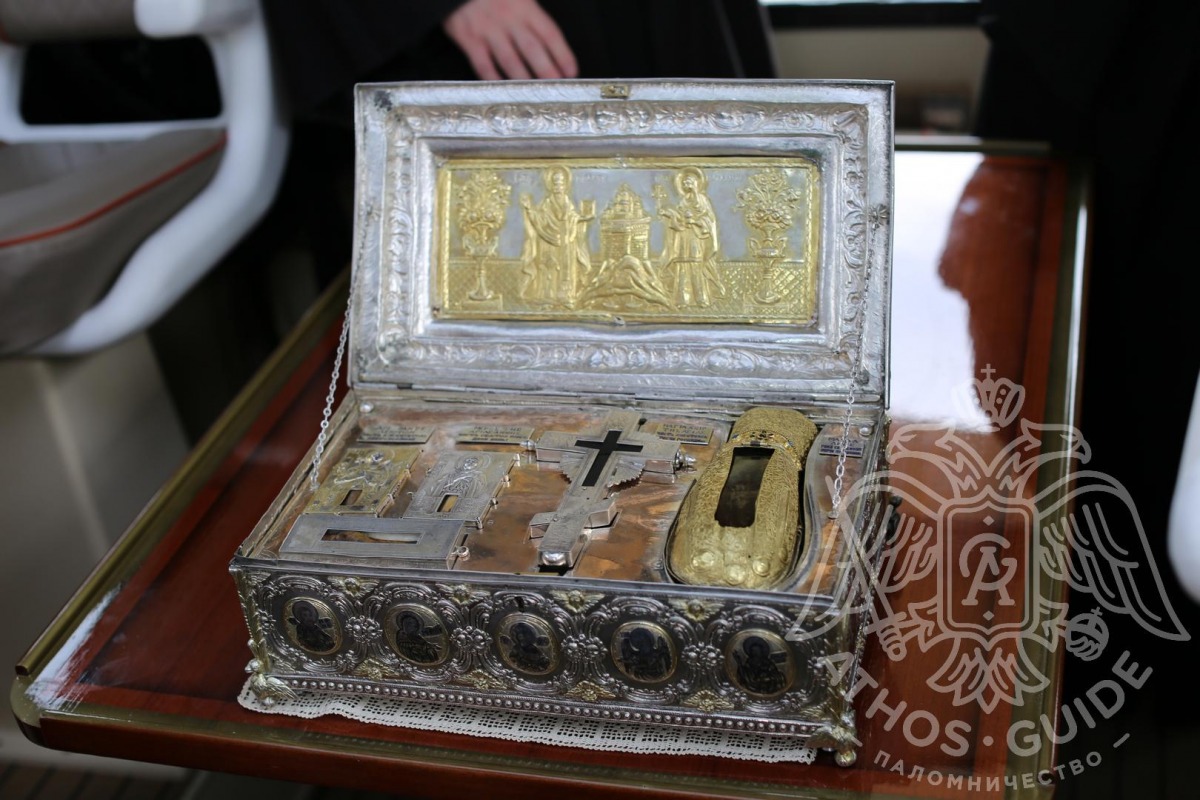
In 1891 a fire incinerated the eastern side of the monastery. The katholikon, with all the holy icons, the sacred vessels and vestments, got burned. The library above the narthex was also destroyed, with 250 manuscripts and all the printed books being burnt to ashes. The assistance of the Athonite monasteries was immediate. A great amount of golden Turkish lira was collected. The abbot Neophytos went to Russia for a fundraiser. His appeals for financial help were taken into consideration more by ordinary believers than by the hierarchy. Saint John of Kronstadt offered 300 rubles. The donations were all made to the miraculous relic of Saint Mary Magdalene the Equal to the Apostles and Myrrh-bearer, which the abbot carried around in the fundraiser. The saint has been venerated as the co-founder of the monastery ever since, while she is also depicted on portable icons next to Saint Simon the Myrrh-bearer. Simonopetra is the only Athonite monastery that honors a saint as a co-founder.
In 1974, the monastery bought the metochion of Vatopaidi in Ormylia, where there used to settle the female brotherhood of the Monastery of Saints Theodoroi in Meteora.
The inauguration of the commune of the Annunciation of the Virgin Mary took place in glory, on the day of the feast of Saint Justin the Martyr and Philosopher (1.6.2003), by the Ecumenical Patriarch Bartholomew I, in the presence of the Archbishop Christodoulos of Athens and the Archbishop Anastasios of Tirana.
At the same time, the monasteries of the Ascension and Saint Charalampus (Thessaloniki) were upgraded, while there was also created the monastery of Saint Nicodemus the Athonite in Goumenissa, Macedonia. Metochia of the Simonopetra Monastery were also created in France. The former catholic monk Father Plakidas Deseille was baptized and became an orthodox in the monastery, along with his three-member entourage. He was the one to found the Monastery of Saint Anthony the Great in the Vercors region of France.
Among others, deacon Iakovos and monk Dionysios, disciples of the holy New Martyr Iakovos († 1520, Didymoteicho), used to live in the monastery. In 1566-67 Damaskinos Stouditis, bishop of Liti and Rendinis, as well as author of the most popular book of the Ottoman era, visited the monastery.
Archimandrite Hieronymus
A gifted elder and a personality of great spiritual influence, Hieronymus (1871-1957) was one of the most outstanding Athonite monks of his time. He composed canons and holy services, especially for Athonite saints, while he also participated in the drafting committee of the Charter of Mount Athos. He fought for his beliefs and was slandered, so that he was forced to resign from the duty as abbot. After a four-month exile in the Monastery of Koutloumousiou, he retired to the metochion of Ascension, where he became the spiritual guide of thousands of believers.
Saint Gregory of Sinai
He was born to a pious and wealthy family in the village of Koukoulos near the ancient Clasomenes of Asia Minor. He went to Cyprus and then to the Monastery of Sinai, where he became a monk, living a life of strict asceticism and constant prayer. He went for a pilgrimage to the Holy Land and then he visited Crete, where he was taught the mental prayer by the hermit monk Arsenios. He then came to Mount Athos and settled in the Skete Magoula, opposite the Monastery of Philotheou. His soon became quite popular among the monks, who were coming to listen to his teachings and live close to him. The saint has built several cells. However, he decided to leave communal life and he finally settled in an inaccessible place in the area of the Great Pit. The raids of Catalan pirates forced him to go to Serbia, Bulgaria, Constantinople, Thessaloniki, Chios and Mytilene, where he carried the message of Mount Athos. Saint Savvas from the Hilandar Monastery brought relics from the Holy Land that connect Mount Athos with the primitive monasticism of Palestine and Syria. Saint Gregory carried the spirit of the Sinaitic monasticism and with it he renewed the Athonite monastic life. His teaching was essential for the flourishing of the Hesychasm. He is commemorated on the 6th of April. His disciples, including Saint Gregory the Younger, Saint Gerasimos of Euboea, his biographer Patriarch Callistos I, Saint Romulus of Ravanica, Saint Nicodemus of Tishmana, Saint Athanasius of Meteor are all known as the New Sinai Fathers. They were active in Greece and Balkans, teaching their spiritual way of life and founding monasteries (Meteora, Ravanica, Gornjak) that for centuries supported the faith of the enslaved Christians.