History and present days
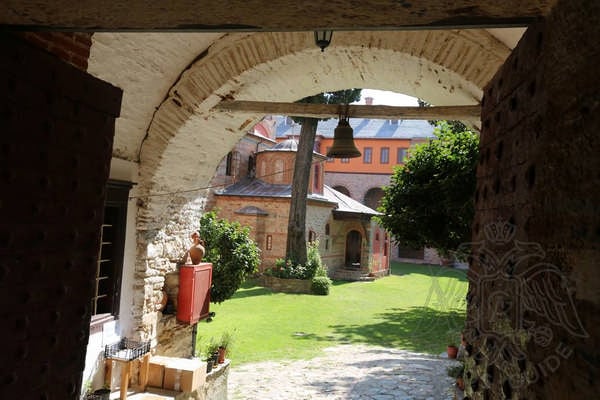
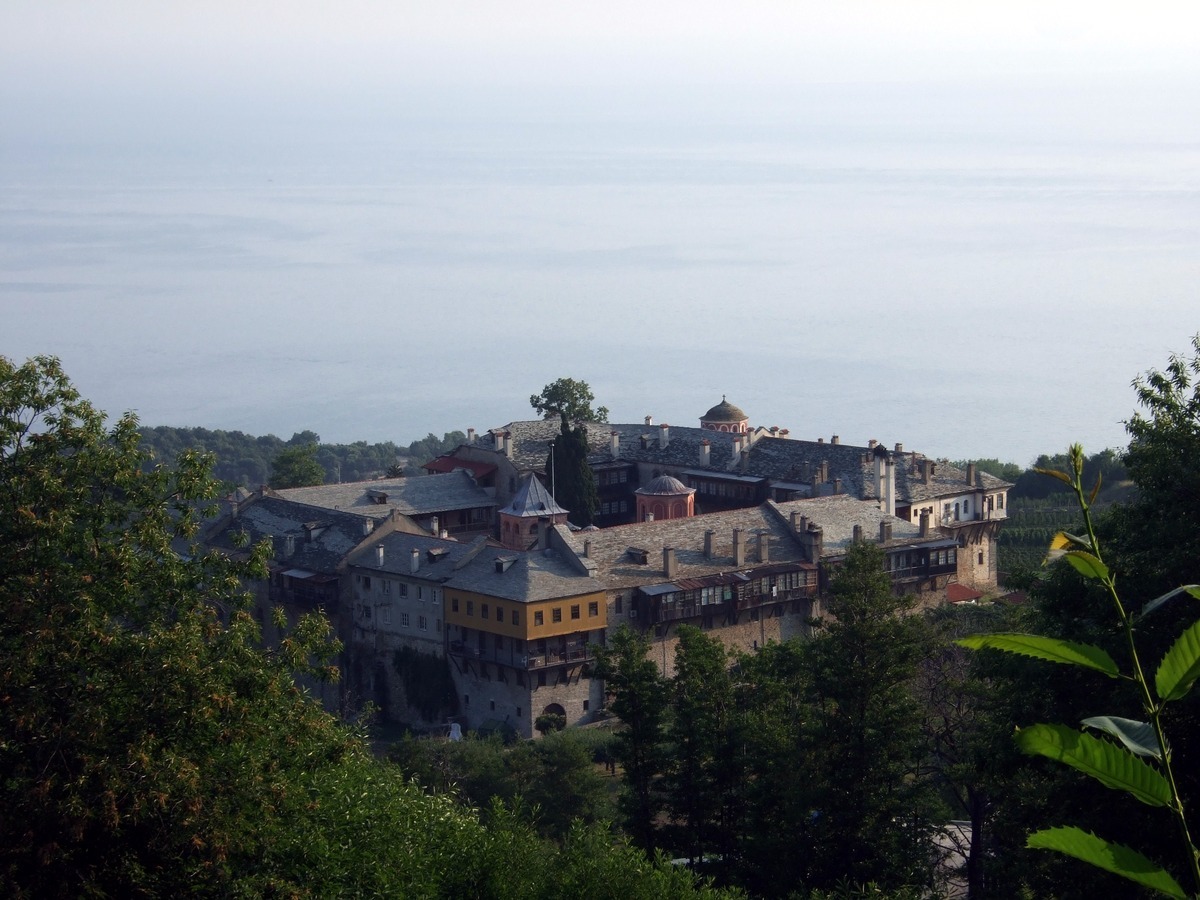
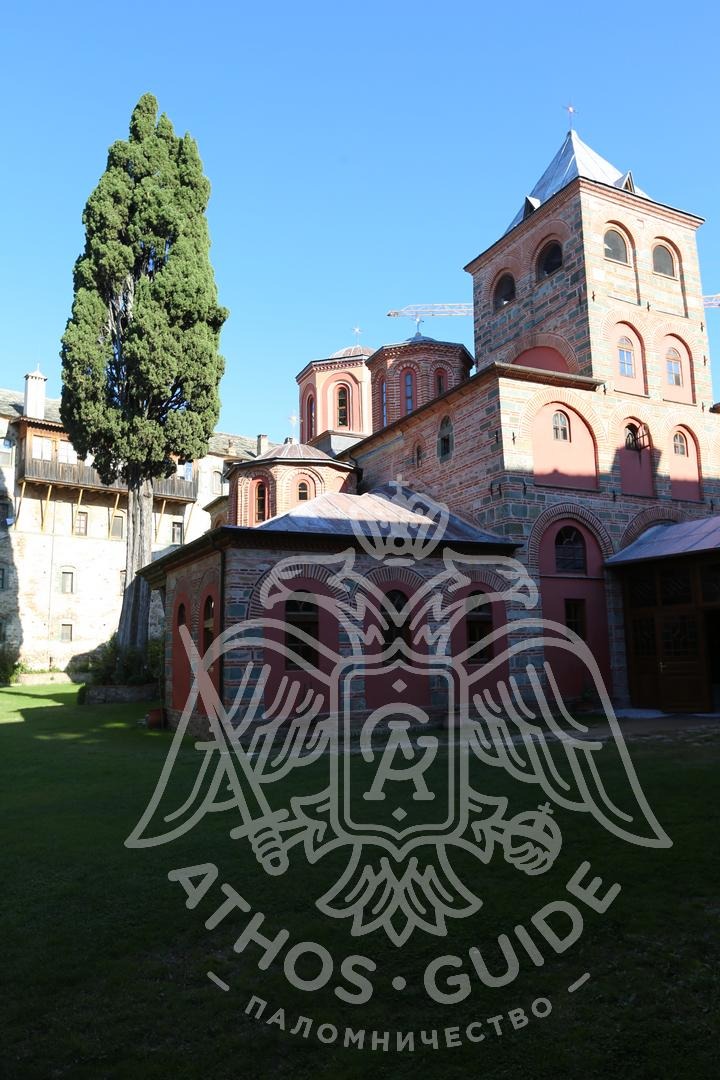
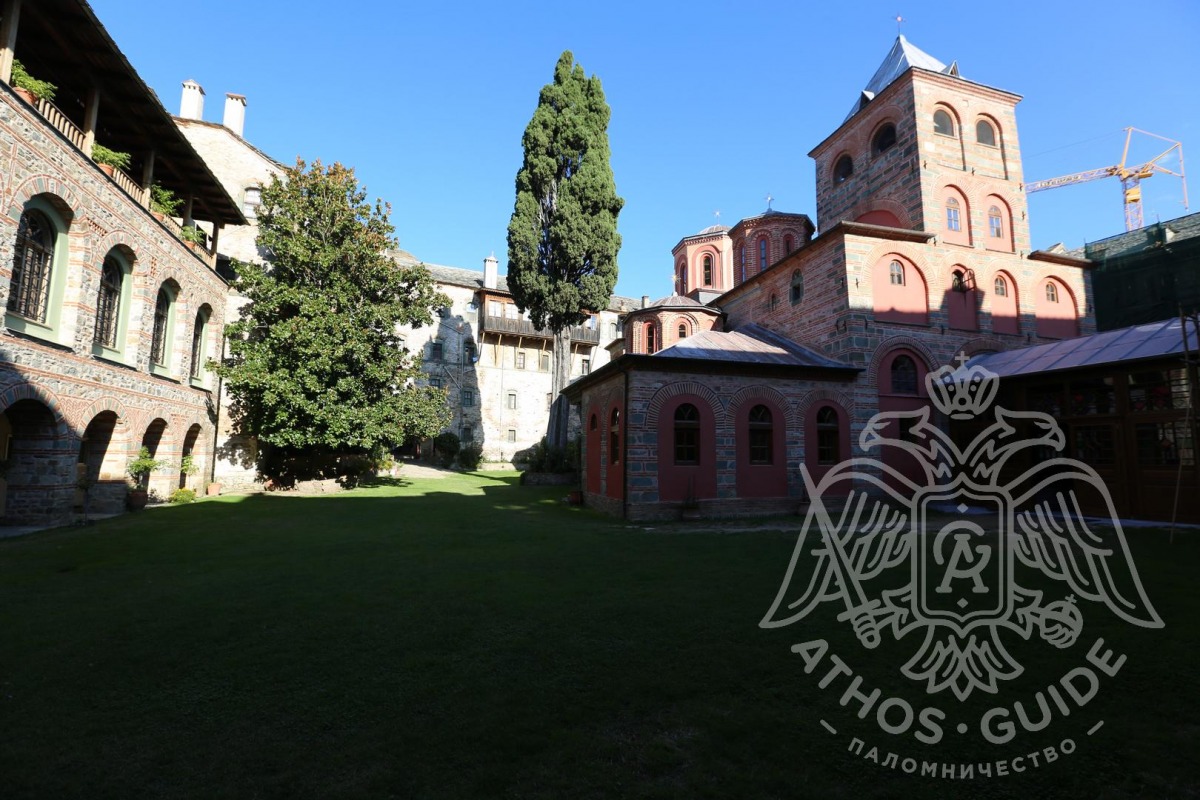
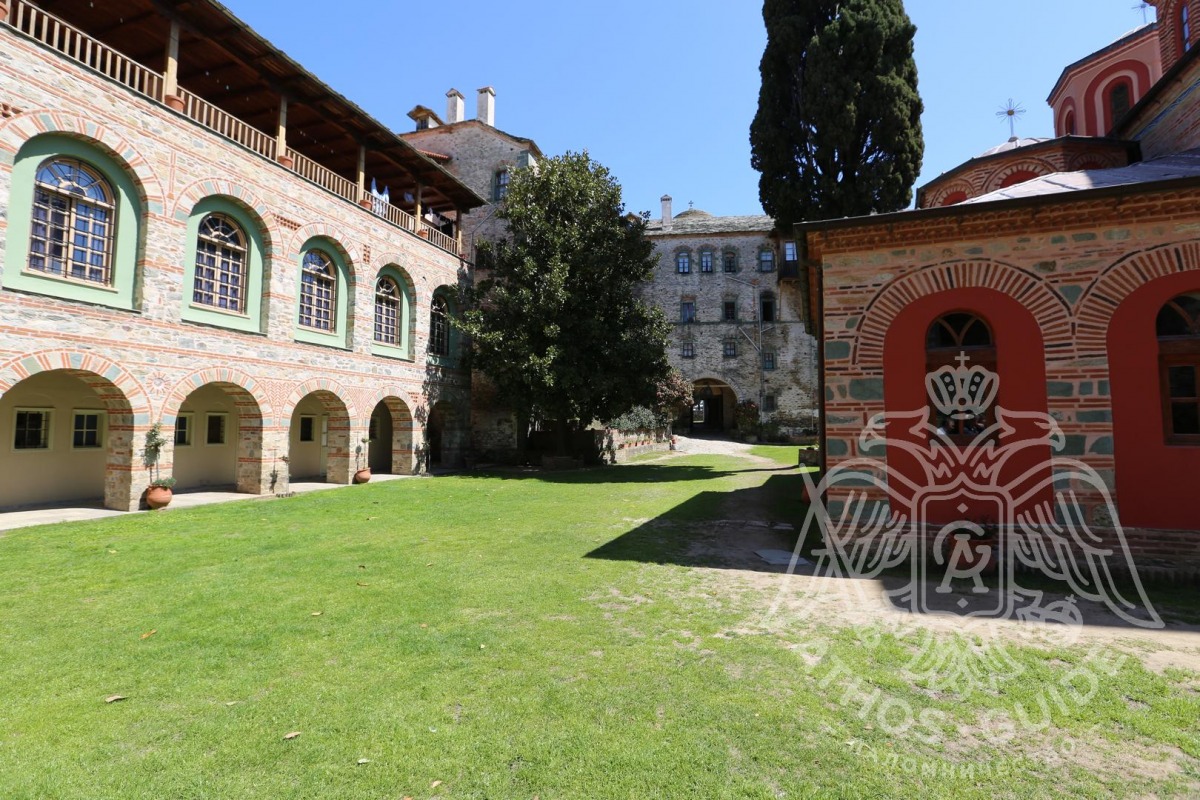
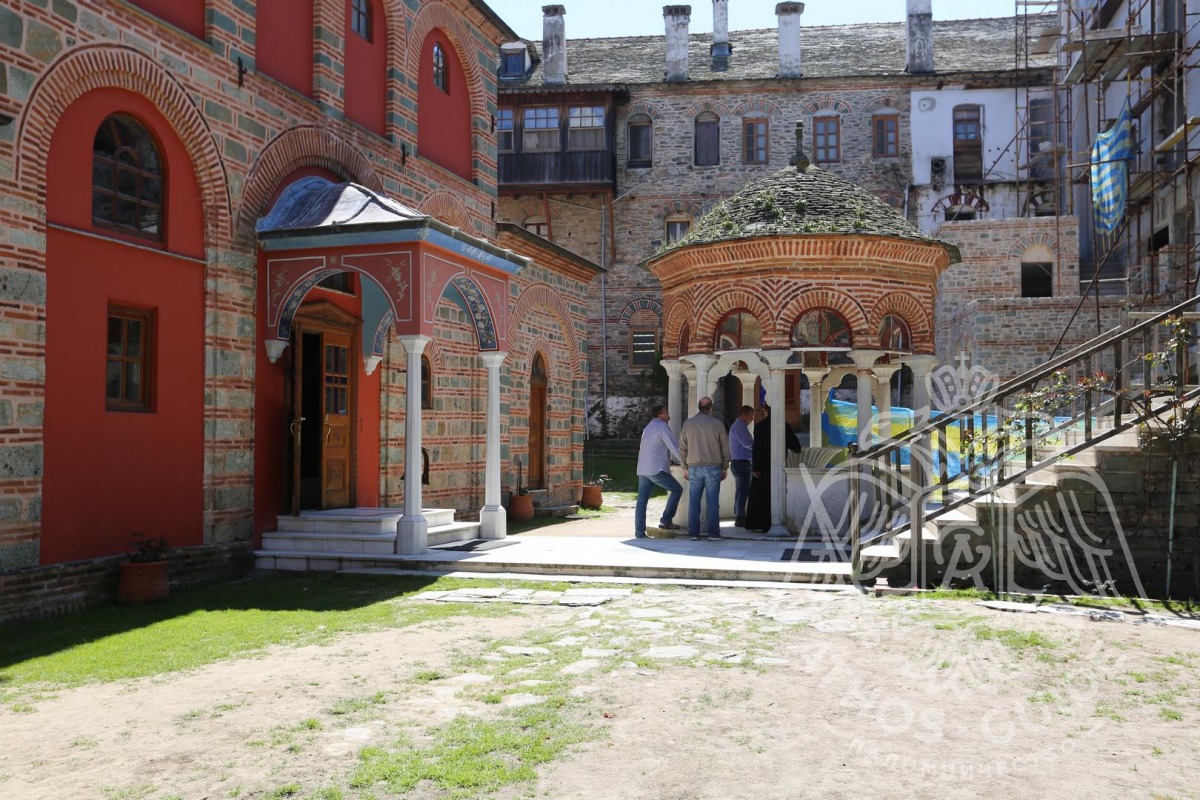
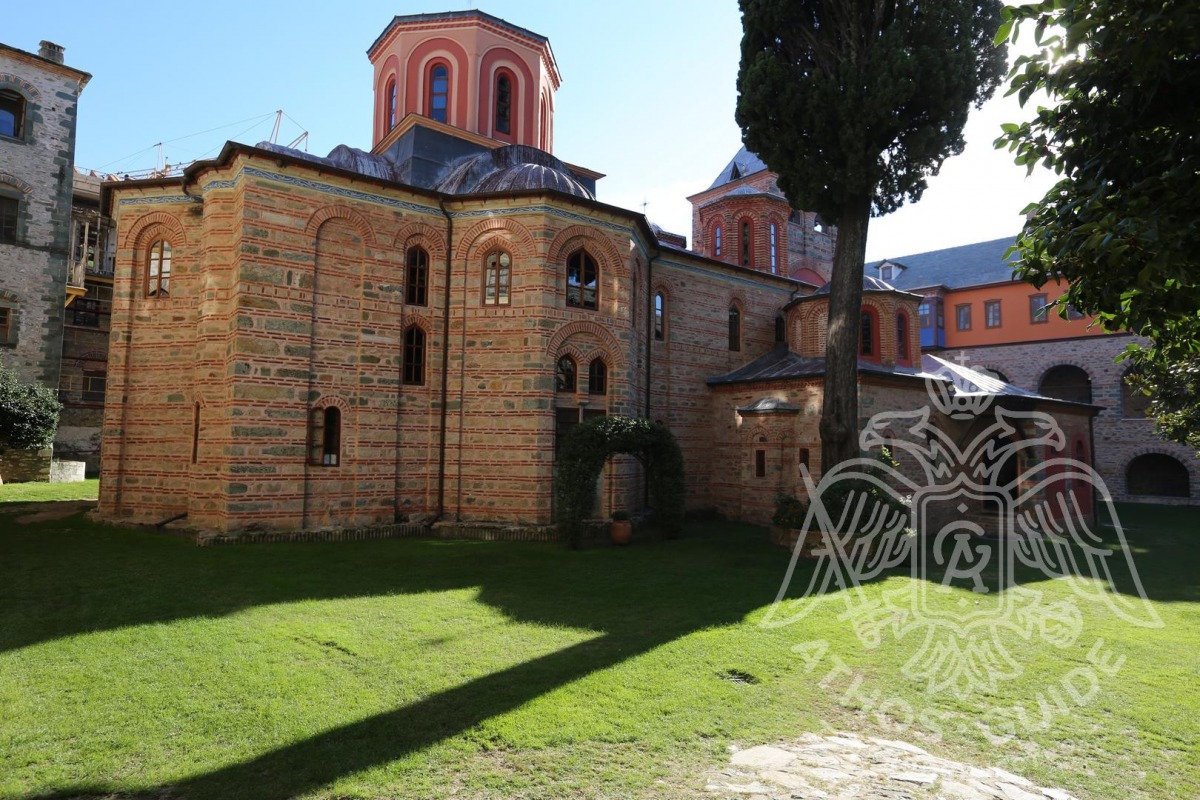
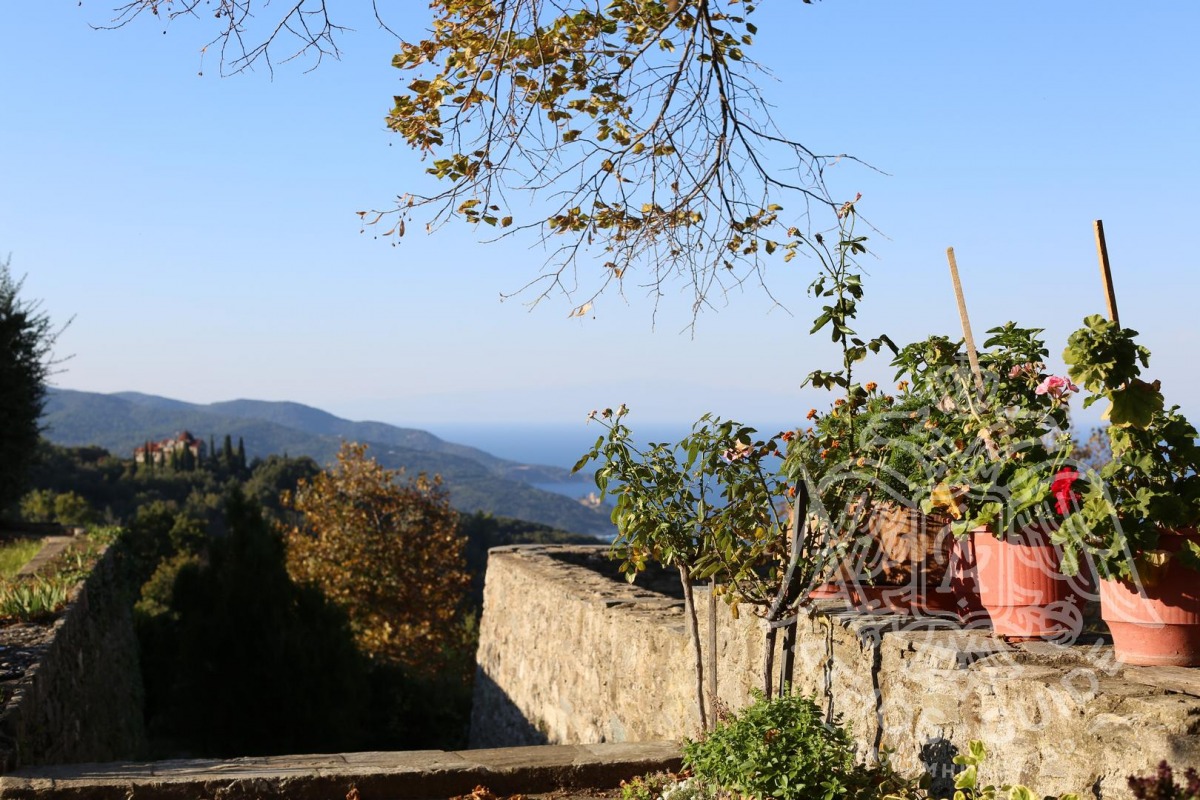
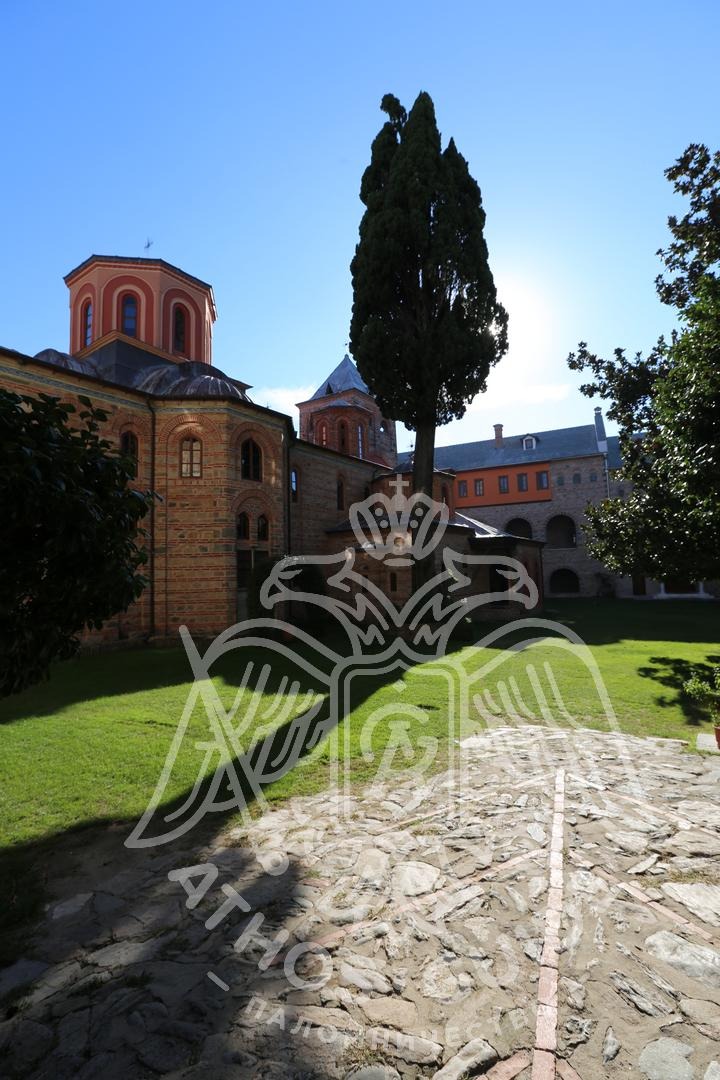
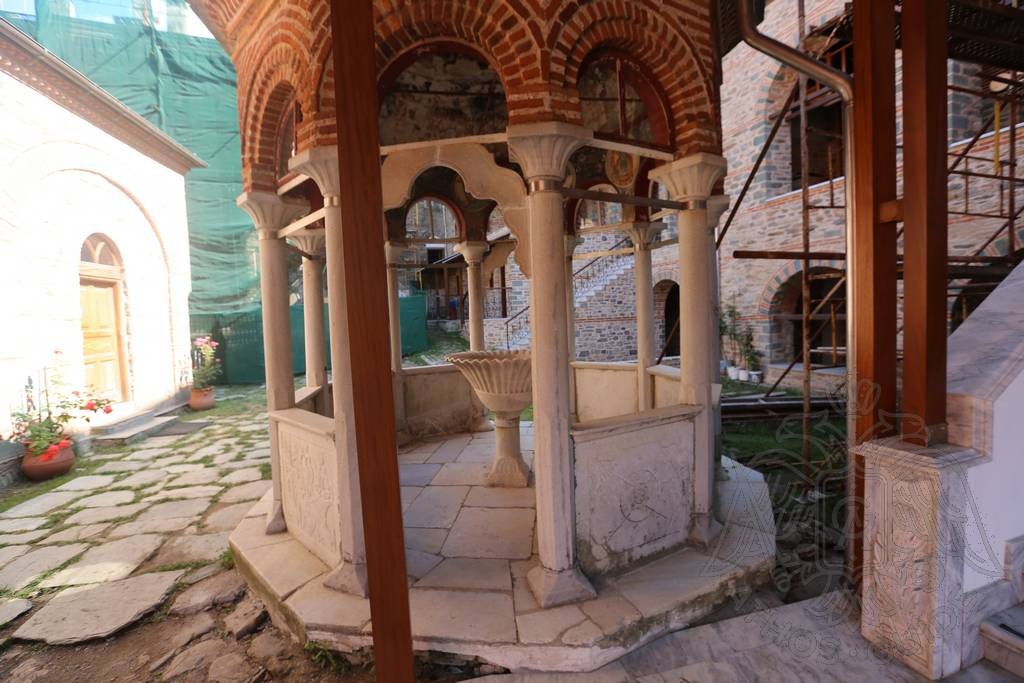
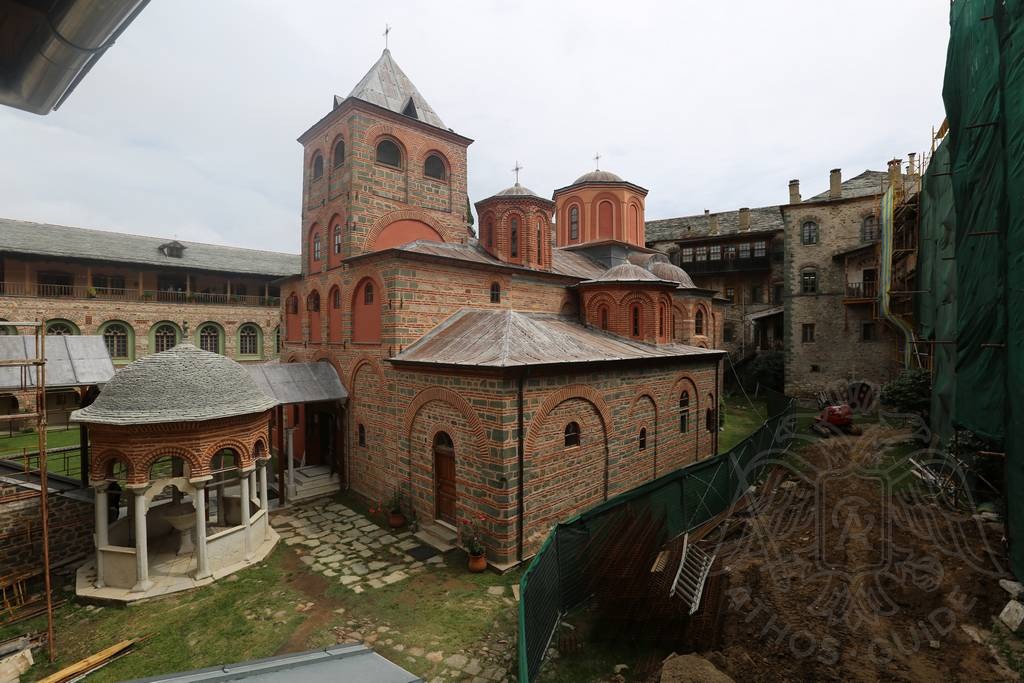
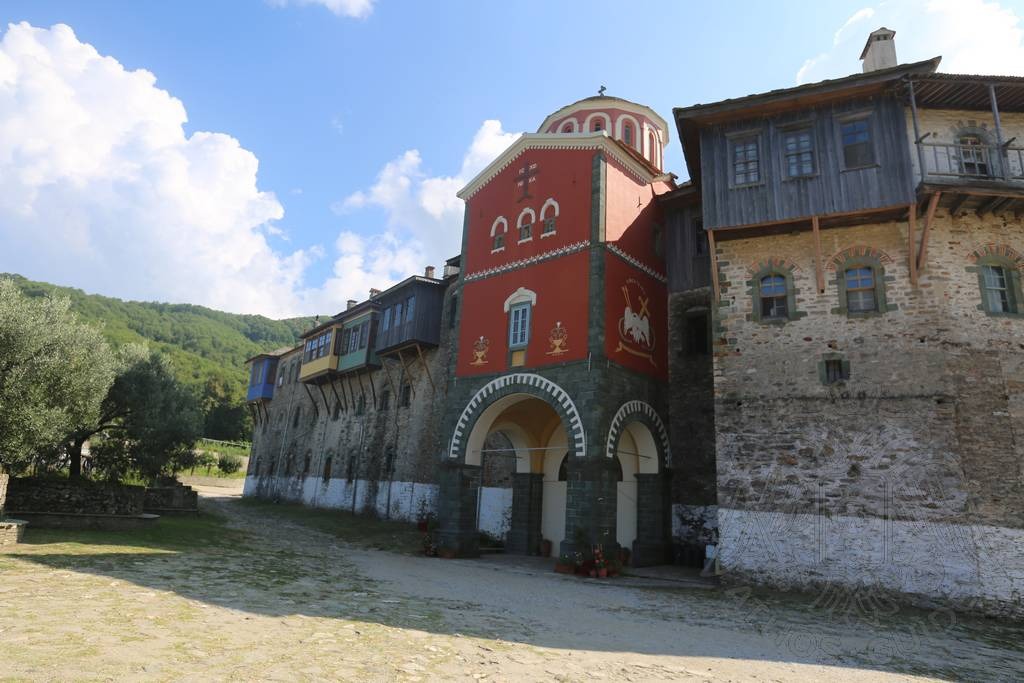
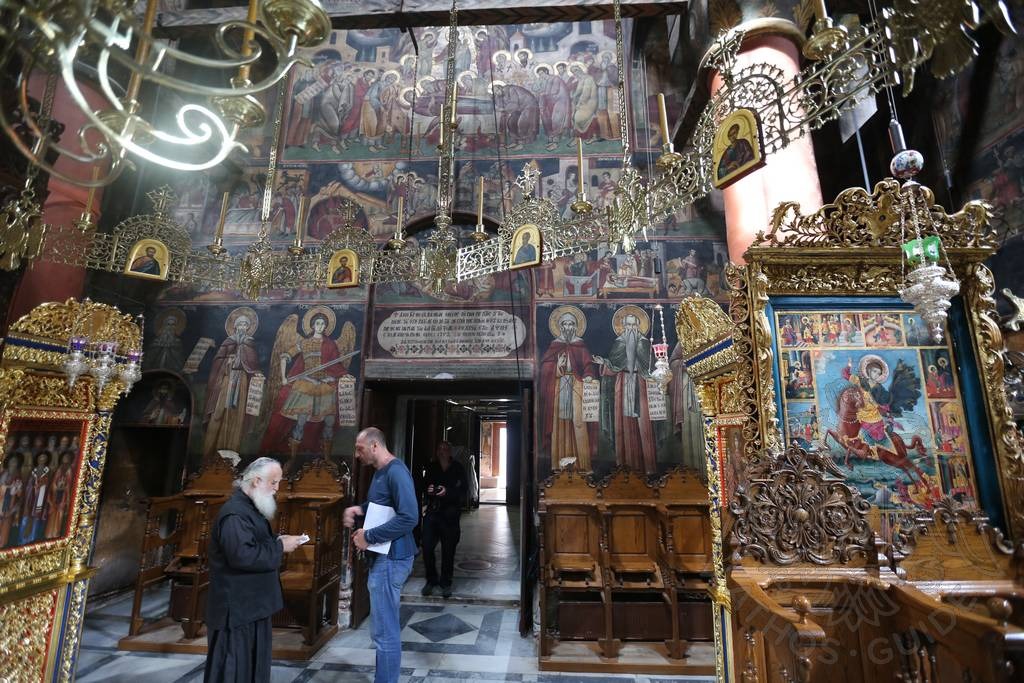
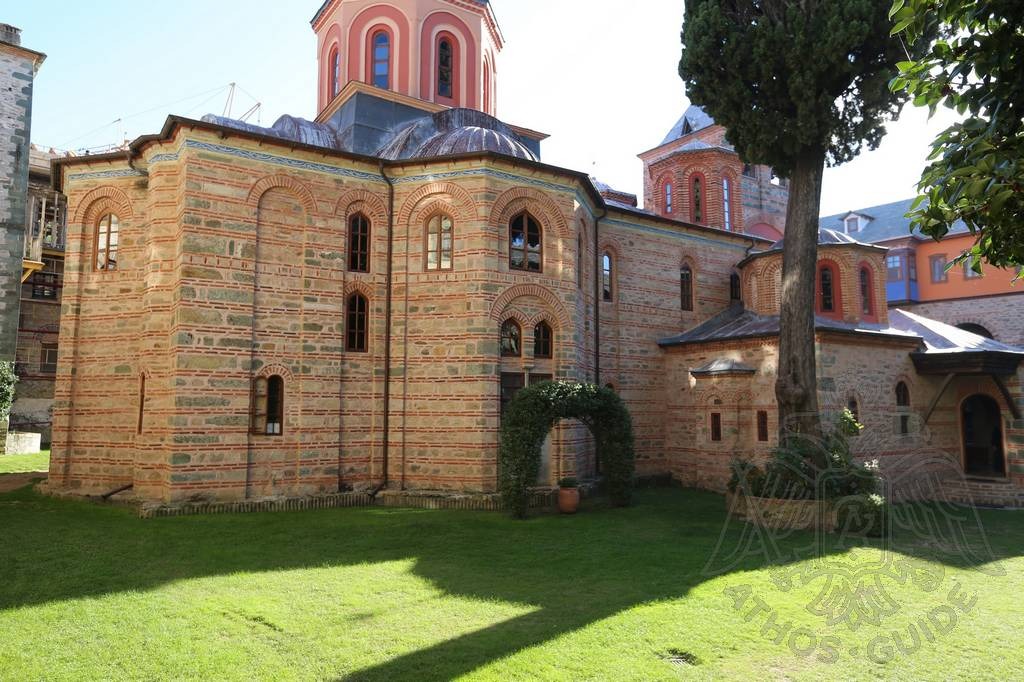
The Monastery of Philotheou is situated at an altitude of 330 meters, on the right side of the Mylopotamos stream. The ground plan of the building complex forms an irregular pentagon. The architecture of the wings can be attributed to three distinct building periods, the beginning of the 16th century, the middle of the 18th century and the end of the 19th century. An engraving of the monastery (1849) and the photographic archive attest to the existence of a tower in the northeast corner. However, the tower was destroyed in the fire of 1871 and was never rebuilt. Consequently, the building complex lacks the vertical dimension the tower provided. Instead, the pyramidal roof of the bell tower, projecting above the wings, creates the only vertical line in the architectural structure.
According to tradition, the plateau on which the monastery is built once housed the Asclepieion, a pagan sanctuary. Later, Constantine the Great (r. 323–337) established a bishopric in the same spot, at a time when paganism was still practiced.
In a memorandum written during the reign of the Emperor Basil I of Macedon (r. 867–886), it is mentioned that a monk named Xenophon came from Thasos and settled within the boundaries of the Philotheou Monastery. A codex of the Monastery of Great Lavra (992) refers to the Monastery of Phteris or Philotheou in connection with the smaller monasteries of Kaspaka and Azipanos. The Aizipanos Monastery, located near Mylopotamos, was sold by the Monastery of Philotheou to the Great Lavra in 1046. A document from 1015 bears the signature of "George, monk and abbot of Philotheou."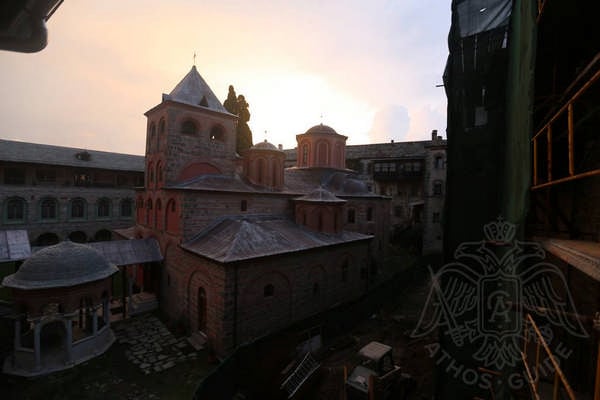
The name "Monastery of Phteris" (or "Pteris") is attested in a document settling the boundaries of the monasteries of Kravvatos (Great Lavra), Magoula, and Philotheou/Pteris (1021). The name is likely originated from a small settlement of the same name, whose ruins are located in the woods west of the monastery, near the present-day location of Kravvatos and the chapel of Prophet Elijah. It is believed that the small city was destroyed by Arab pirates during the reign of the Emperor Constantine IV Pogonatos (r. 668–685), while its church was restored by a retreating monk named Philotheos. He settled there after 870 and is traditionally considered to be the monastery's first founder.
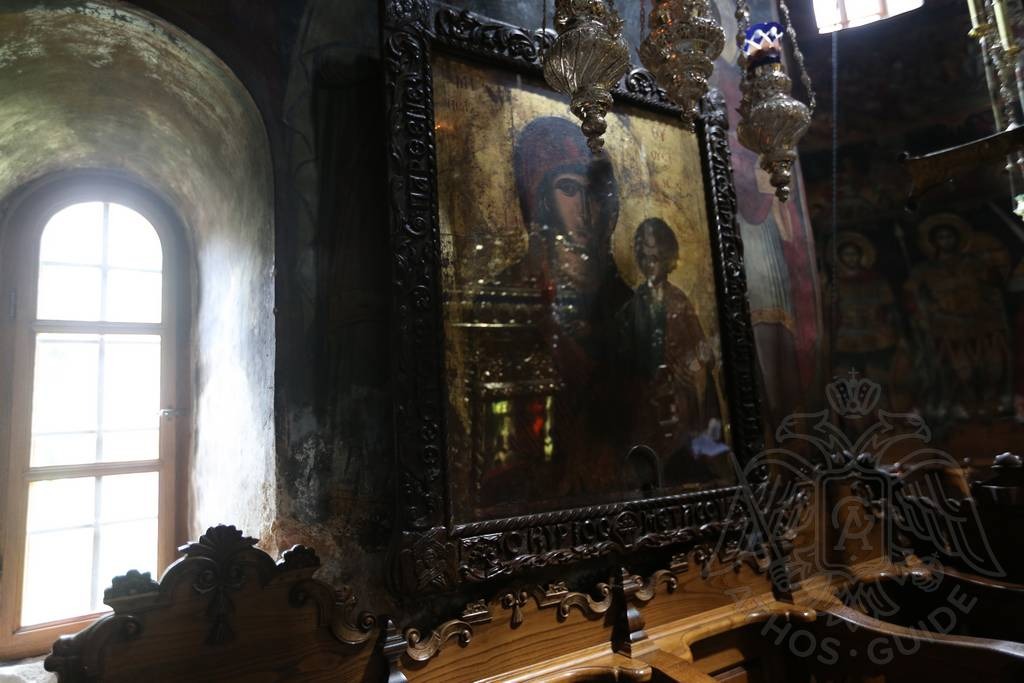
Historically, Saint Philotheos, an ascetic monk, contemporary of Saint Athanasios the Athonite, is regarded as the patron of the monastery. This is testified by a letter written in 1016 by the abbot of the monastery, George. The monks Arsenios and Dionysios, active around 1046, are also considered two key figures in the monastery's founding. In the Typikon of Monomachos (1045), the monastery is referred to as the "Monastery of the Virgin Mary, or rather of Philotheou," and it occupies the 19th position in the hierarchy of the Athonite monasteries. Renovation efforts by Nikephoros Botaneiotis (r. 1078–1081) included the offering of numerous relics to the monastic community. In 1284, a golden bull issued by Andronikos II Palaiologos appointed the abbot Makarios as confessor to the imperial court, while it also provided financial sponsorship and relics.
During the 14th century, a golden bull issued by the Crown Prince Stephen Dušan (1346) encouraged the arrival of Serbian and later Bulgarian monks, transforming the monastery into a multicultural community. A document from 1483 shows the abbot signing in Slavonic. By 1394, the monastery ranked 13th in the Athonite hierarchy, though it fell into decline after 1480. In 1533, financial struggles forced the sale of the Kathisma of Stavronikita, which subsequently became an independent monastery. From 1574 onward, the monastery held the 12th position in the Athonite hierarchy.
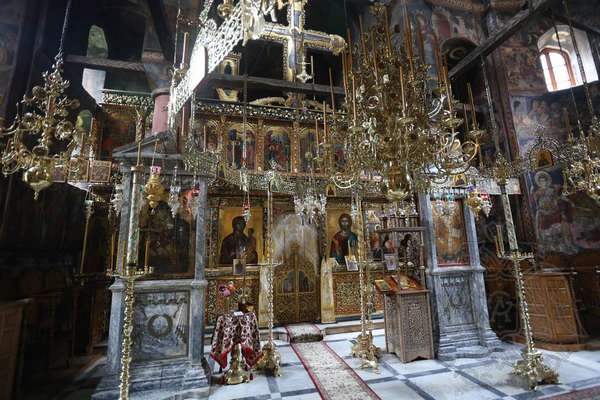
In 1786, a patriarchal sigillion transferred the Skete of Magoula, which belonged to the monastery since 1087, to the Monastery of Iviron. The reconstruction of the katholikon, which collapsed in 1746, was funded by the rulers of Wallachia, Gika and Mavrokordatos. The monastery's financial difficulties worsened after the 1871 fire, which destroyed all its wings except the katholikon and the trapeza. Reconstruction took 20 years and depleted the monastery's resources. At that time, the monastery housed 50 monks and had an annual income of 600 Ottoman lira from timber trading. To resolve a debt of 5,000 Ottoman lira, the monastery sought assistance from the Holy Community.
In 1973, the monastery was converted into a cenobitic community through a decree issued by the Ecumenical Patriarch Demetrios I.
According to a manuscript preserved in its library, the abbot of Philotheou Monastery, after the year of 1375, was the monk Theodosius, who was captured by pirates while fishing, sold as a slave in Prousa, freed, became the abbot of a monastery in Constantinople and finally the metropolitan of Trebizond under Alexios Komnenos. His brother Dionysius also became a monk during Alexios's reign. He was the one to persuade the emperor to help in the founding of the Monastery of Dionysiou. The Monastery of Philotheou became also a home to notable monks such as Saint Simeon the Barefoot and Single-Tunicked, Saint Dometios and Saint Damianos of Agrafa (†1515), founder of the Monastery of Theotokos Pelekiti. Saint Dionysios of Olympus was a monk in a cave southwest of the monastery. Around 1500, he was elected abbot by Bulgarian monks, reintroduced the cenobitic system and restored the Greek services in place of Slavonic. Facing hostility from other monks, he left the monastery and founded the Monastery of Saint John the Forerunner in the Aliakmon valley. Later on he built the church of the Holy Trinity on Mount Olympus, where he lived in solitude until his death.
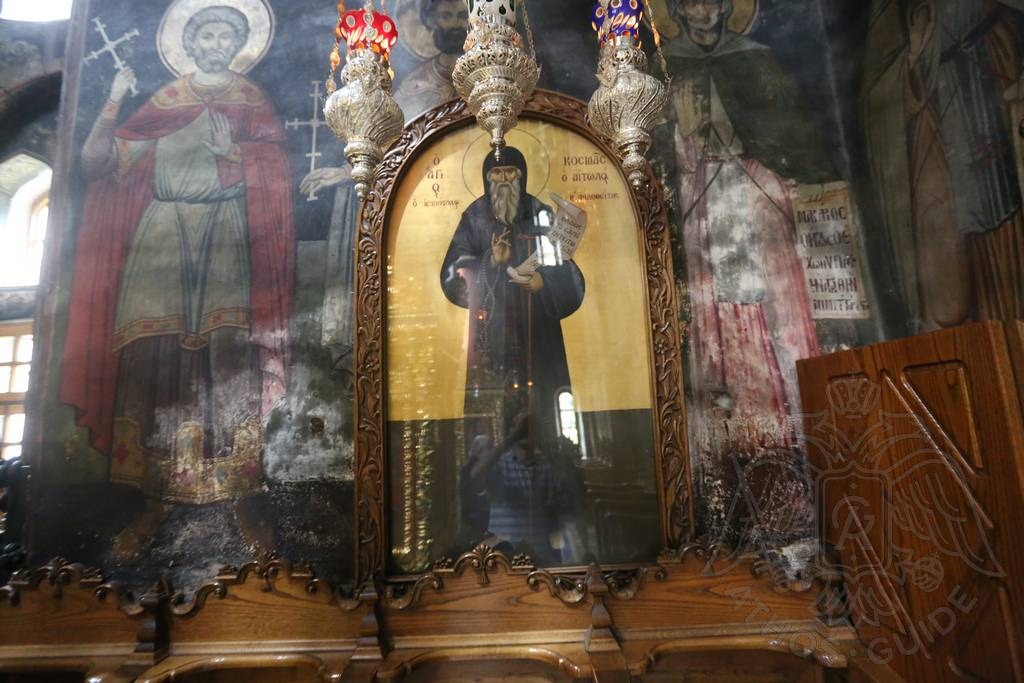
In modern times, Saint Cosmas the Aetolian (1714–1779), a graduate of the Athonite Academy, became a monk at the Monastery of Philotheou. With the blessing of the fathers, he traveled throughout Greece, preaching the Gospel, distributing books, building churches and schools. He was arrested and became a martyr by being hanged in Berat, Albania. He is commemorated on August 24 as an apostle.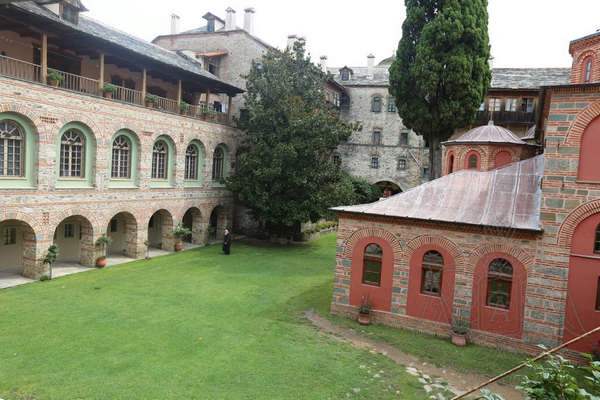
In 1973, the monastery was re-staffed by the Elder Ephraim, a disciple of Elder Joseph the Hesychast from the New Skete. Elder Ephraim founded over 15 monasteries in the United States, including the Monastery of Saint Anthony in Arizona. Groups of monks from the Philotheou Monastery also staffed other monastic communities, such as the Monastery of Karakalou and Xeropotamou. They also helped in the founding of female monasteries, like the Monastery of the Archangel Michael in Thasos and the Monastery of Theotokos Hodegetria in Pelion.
Holy New Hieromartyr Cosmas of Aitolia (1714-1779)
He was a student of Panagiotis Palamas at the Athonite Academy. When the academy was deserted, he joined the Monastery of Philotheou and became a monk. With the blessing of the fathers of the monastery, he began to travel around Greece in order to support the faith of the enslaved Greeks and awaken their national consciousness. He preached the Gospel, distributed books, built churches and schools. He was denounced by Jews to the Pasha of Beratia (southern Albania), who arrested the saint and sentenced him to death by hanging. He was declared an apostle. He is commemorated on August 24.
The Life of the Monk
On Mount Athos, among other icons and frescoes, one can see a representation of the sacrificial life of a monk. The latter is nailed to the Cross, while all around him demons that represent mortal sins carve into his heart. In his anguish and pain, the monk prays with the psalm of Prophet David, "Create in me a clean heart, O God". Above the monk, an angel of the Lord is ready to strengthen him so that he won’t lose his faith. This is the life of the monk, who made a promise to bear the Cross of the Lord for a life. Anyone who understands it differently stays outside the "dance of reverence" (Archimandrite Ephraim).