Although the Church offers us a rich legacy of psalms and prayers for our daily practice, we often feel the need to speak personally to the Lord, using our own spontaneous words, to give thanks, or to beg for His mercy in our own personal way.
.jpeg) This often raises the question: Is it right to pray with our own personal prayer?
This often raises the question: Is it right to pray with our own personal prayer?
The long history of our Church, the lives of saints, and the ascetic examples of our modern era give us the answer to this question. While all written prayers remain the cornerstone of Christian asceticism, personal prayer can also be deeply beneficial, provided it is in harmony with the Gospel and offered to God with spiritual clarity.
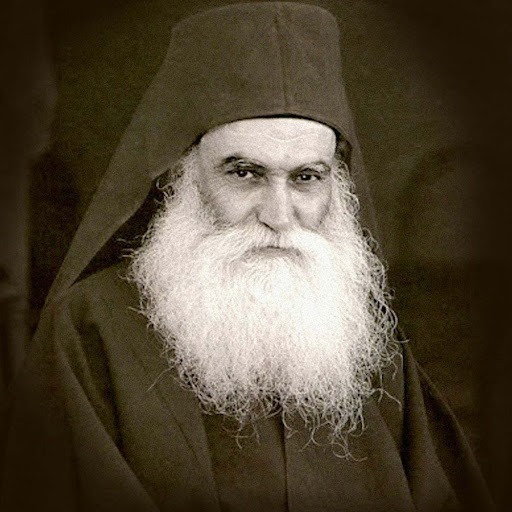
The holy fathers themselves often prayed in this way, leaving us their own words as examples of supplication. Among them, there is Saint Ephraim of Katounakia, who prayed with the words below:
“God—the invisible, the immortal, the eternal, the infinite, the immeasurable, the unchanging. You who made heaven and earth and all that is in them: the sun, the moon, the stars, the seas and oceans, and every living creature that moves within them.
You who sit upon the throne of glory and look upon the abyss. Our sweetest Jesus, surrounded by myriads upon myriads of angels and archangels who encircle Your inaccessible glory—the Cherubim and the Seraphim—ever singing the sweetest and most incomprehensible hymn: Holy, Holy, Holy.
You are the great bridge, the great reconciliation, the eternal bond between us—fallen and ungrateful as we are—and Your ungoverned and victorious Father. You became the sacrifice, bearing our sins and carrying them to the Cross.
Grant us sinners a ray of Your grace. Help us, teach us, enlighten us, so that we may follow You, find our rest in You, and live in a way that pleases You. Make us worthy also to share those inexpressible blessings, which Your fatherly love has prepared, through the intercessions of Your most Holy Theotokos and of all who have pleased You from all ages. Amen.”