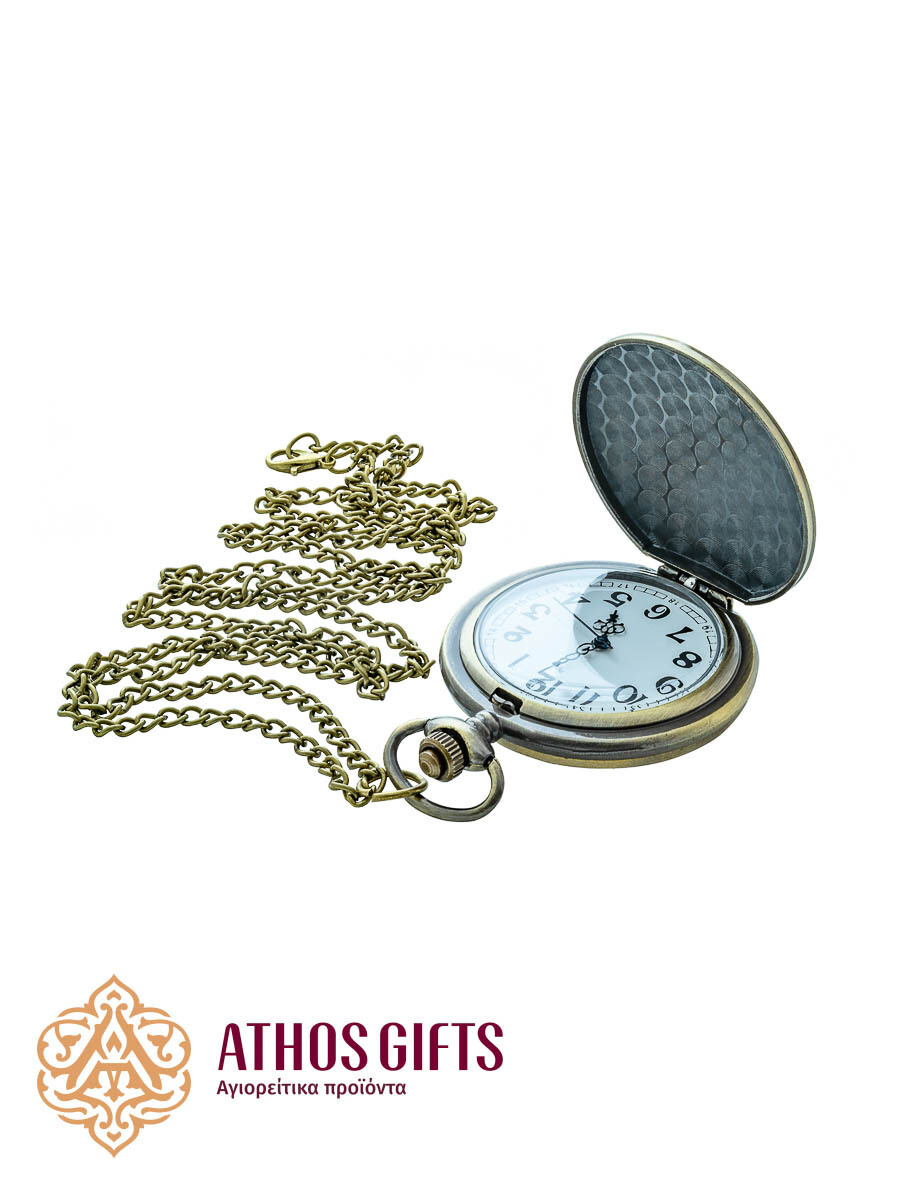
In Mount Athos, time — hours and days of the week — are calculated differently than in the rest of the world.
As far as the calendar is concerned, the monks of Mount Athos follow the old one rather than the new, seeking to preserve the continuity of the Orthodox Christian tradition. In this way, they continue to be connected to the historical past of Orthodoxy.
Similarly, they do not measure time in the usual way. Leading a peaceful life, in harmony with nature and devoted to prayer, they organize their day according to Byzantine time.
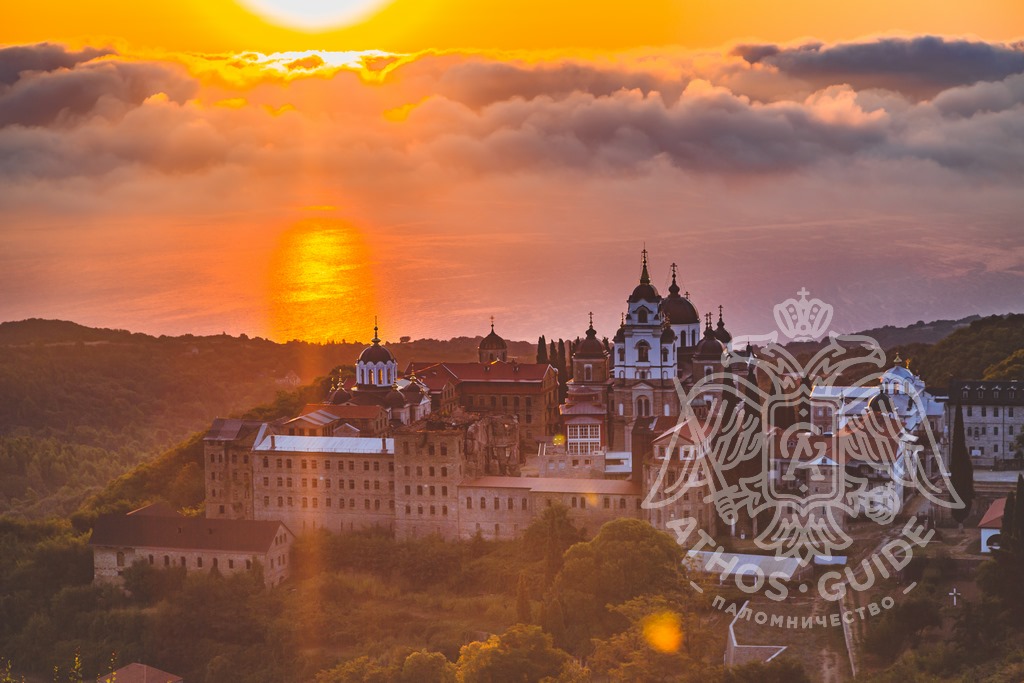
What is Byzantine Time?
The people of Byzantium did not calculate time as we do. Unlike our fixed, structured time continuum, time changed for them according to the physical changes of nature. The Byzantines were thus connected both to the natural environment, the movements of the sun, and the changes of the light, as well as to the worship of God.
Specifically, the day in Byzantium did not begin in the morning but in the evening together with the vespers.
How is Byzantine Time Calculated?
According to the Byzantine measurement of time, the day begins at sunset. When the sun sets, the Mount Athos community counts this moment as midnight. In other words, what we calculate as 00:00 and is the beginning of the 24-hour period, comes for Mount Athos with the setting of the sun and lasts for 24 hours.
However, unlike the rest of the world, which changes the time only a few times a year, the Byzantine system followed on Athos imposes constant change. As the earth revolves around the sun and itself, the seasons change and day and night follow each other periodically. When the former grows longer, the start of the 24-hour period is delayed, while when the latter grows longer, the new 24-hour period begins earlier.
Thus, midnight comes at a different time in winter and at a different time in summer. The change in time depends on the change in the position of the sun. This is why sundials are often used in Mount Athos.
What is the Time Difference Between Mount Athos and Our Time Zone?
During the summer months, the difference between Byzantine time and our modern clock is about three to four hours, whereas in winter it can be as much as seven hours.
For example in June, when it gets dark and the clock shows 9 p.m. for us, it's exactly midnight for the monks in Mount Athos.
Most of the monasteries strictly follow this Byzantine system, except for the monastery of Iviron (which starts its 24-hour day at sunrise).
What Significance Does Time Have for the Monks of Mount Athos?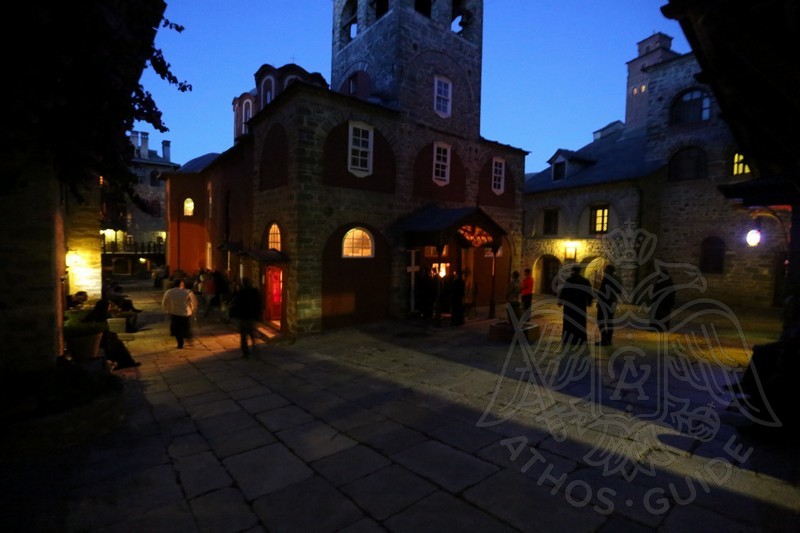
The system used to measure time affects all aspects of life in the Athonite community. It determines the time of the bell ringing, the celebration of the Divine Liturgy, the individual services, vespers, the meals, etc.
The monks are not simply living within time, consuming it, but actively interacting with it. On the contrary, they breathe with it, do not let it pass, and make it part of their ascetic mentality. Time is, in a sense, part of the practical theology that is implemented in Mount Athos.
Visitors quickly realize that their watches do not synchronize with those of the monasteries. However, this discrepancy does not hinder their experience. It is rather an invitation to the reality of Mount Athos, a place where every moment becomes prayer, adopting a different rhythm and ignoring the decay of worldly life.
The use of Byzantine time is not an anachronism. It is yet another way of connecting the Mount Athos community with the tradition of Byzantium, as well as with the Orthodox Christianity in general.
The change of time is perceived in Mount Athos as a natural event, with prayerful and theological dimensions.