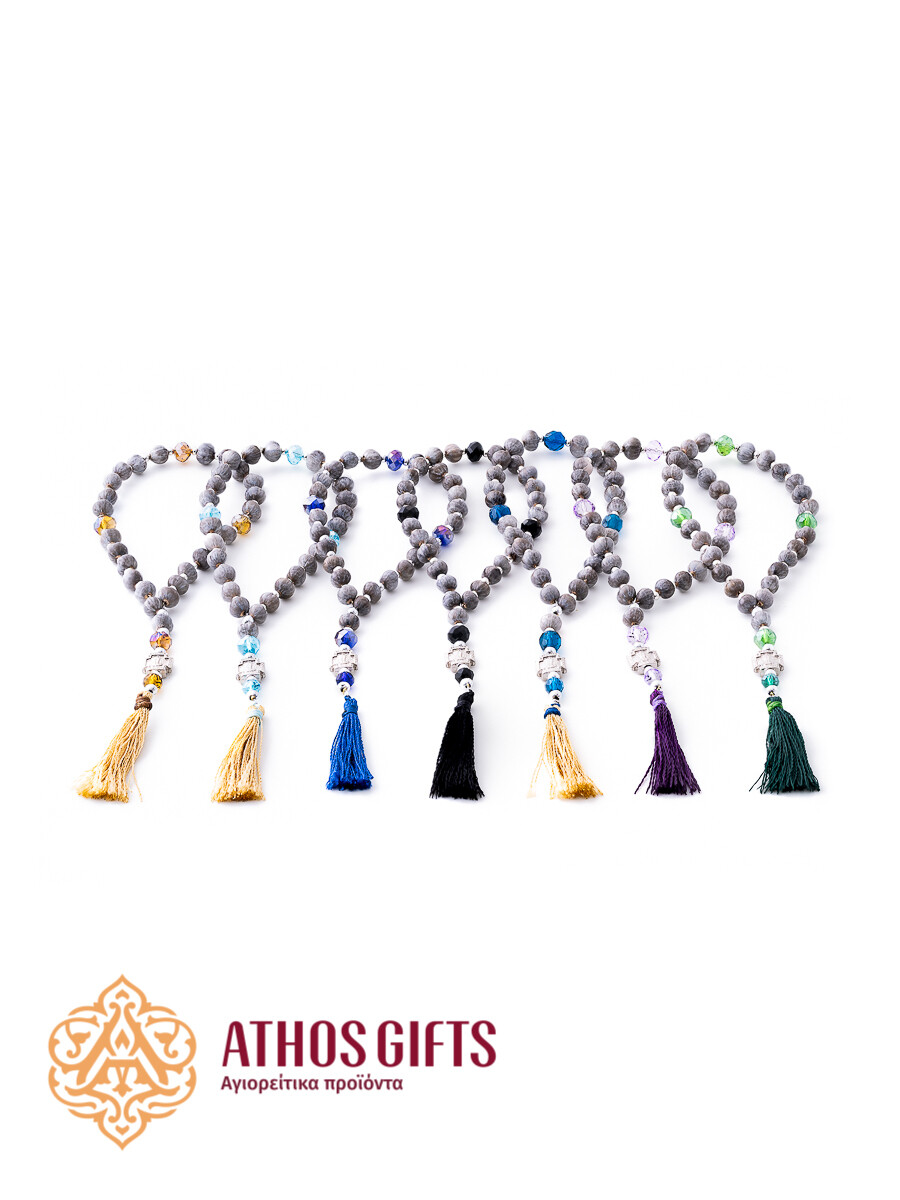
Hieromonk Charalambos of Dionysiou emphasized, through both his holy example and his teachings, the importance of the greek orthodox prayer rope (komboskini) and the mental prayer for a person’s salvation. As he would say, through supplication to the Lord, every Christian can save not only himself but also others. Thus, the prayer rope becomes a means of blessing and Divine Grace.
Find authentic Mount Athos prayer ropes, handcrafted by the monks, in our online store.
Once, a monk of the New Skete began to struggle with conflicting ideas:
“We pray,” he thought, “and we celebrate the services of the Church, which is good. However, in doing so, are we helping other people, or only ourselves?”
When the monk of the New Skete decided to share these thoughts with his elder, the elder anticipated him and, deeply moved, said:.jpg)
“Tonight, my child, God sent me an astonishing vision. As I was praying, for a moment it seemed to me that I was standing before a great altar.
I stood at the entrance, which resembled the beautiful gates of a church. Inside, countless people were waiting their turn.
I appeared to be the chief baker. You were standing beside me. You were cutting something large, like prosphoro (the Eucharistic offering bread), and you handed it to me.
The rest of the people were divided into two lines. In one there stood the living, and in the other there stood the departed. I blessed each one of them, and they left rejoicing. Among both the living and the dead, I recognized many familiar faces whose names were written in the memorial book.”
Hearing this, the brother exclaimed:
“Elder, this vision was meant for me. You have cleared away my doubts. Now I understand that prayers and commemorations are offered for the whole world.”
The elder replied:
“Since you are concerned about this, my child, let me tell you something even more inspiring about the prayer rope—from the life of my own elder (Joseph).
My elder had a cousin in the world. Although her life was not very good, he loved her deeply.
One day he was informed that his cousin had died in a terrible state. She was pulling strange faces, acting theatrically, speaking badly, until in that condition she surrendered her soul to the Lord.
When my elder heard this, he burst into tears.
I was surprised—such sensitivity, to weep so intensely..jpg)
But he perceived my thought and said before I could speak:
‘I am not weeping because she died, my child. I am weeping because she was lost into sins.’
From that day on, my elder devoted himself continually to fasting and prayer for his cousin.
After several days, I saw him very joyful.
‘What is it, Elder?’
‘Let me tell you, my child. After so many days of unceasing prayer, vigil, fasting, and tears for my little cousin, today I saw a wondrous and joyful vision.
As I was praying, I saw my cousin before me, calling out with great joy: “Today is the day of my salvation. Today I was delivered from hell. Today I am going to Paradise.”
At that very moment, I suddenly saw before me Papa-Giorgis.
He was a contemporary saint. I had known him before I became a monk. He wanted, if it was possible, to bring all sinners out of hell.
Every day he celebrated the Divine Liturgy and commemorated thousands of names.
Then he would go to the cemeteries and spend the whole day reading memorial prayers for the departed.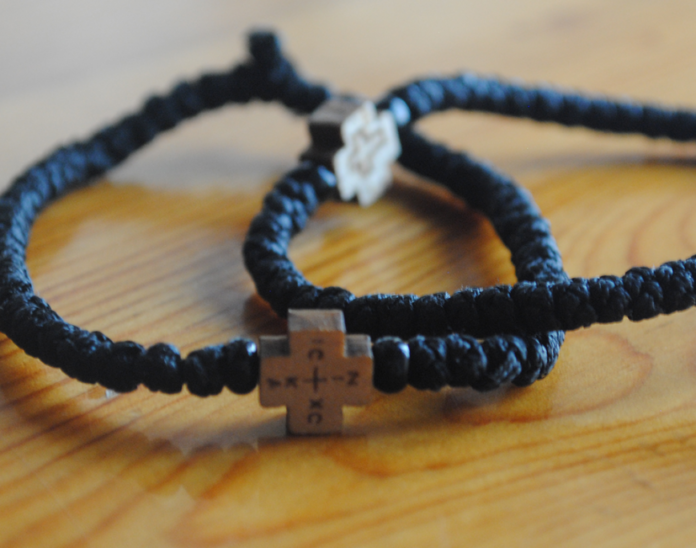
When I saw him before me, I heard him saying with great astonishment: “Well, well, well! Until now I believed that the departed are saved only through Liturgies and memorial services. However, now I have seen and understood that even through prayer ropes the condemned can be saved!”
And again, he exclaimed in wonder: “Through the prayer rope, the world is saved!”
Thus, I was assured that my cousin had been saved. God also showed me the power of the prayer rope—that it can even draw souls out of hell.’”
Having told this story, the elder, filled with emotion, gave his blessing to the brother and said:
“Go with my blessing, and hasten as much as you can in obedience and in prayer, if you wish to help both yourself and others.”
Source: Joseph M.D., “Papa-Charalambos of Dionysiou: The Teacher of the Mental Prayer”, Hellenic Publications, 2003, pp. 157–158.