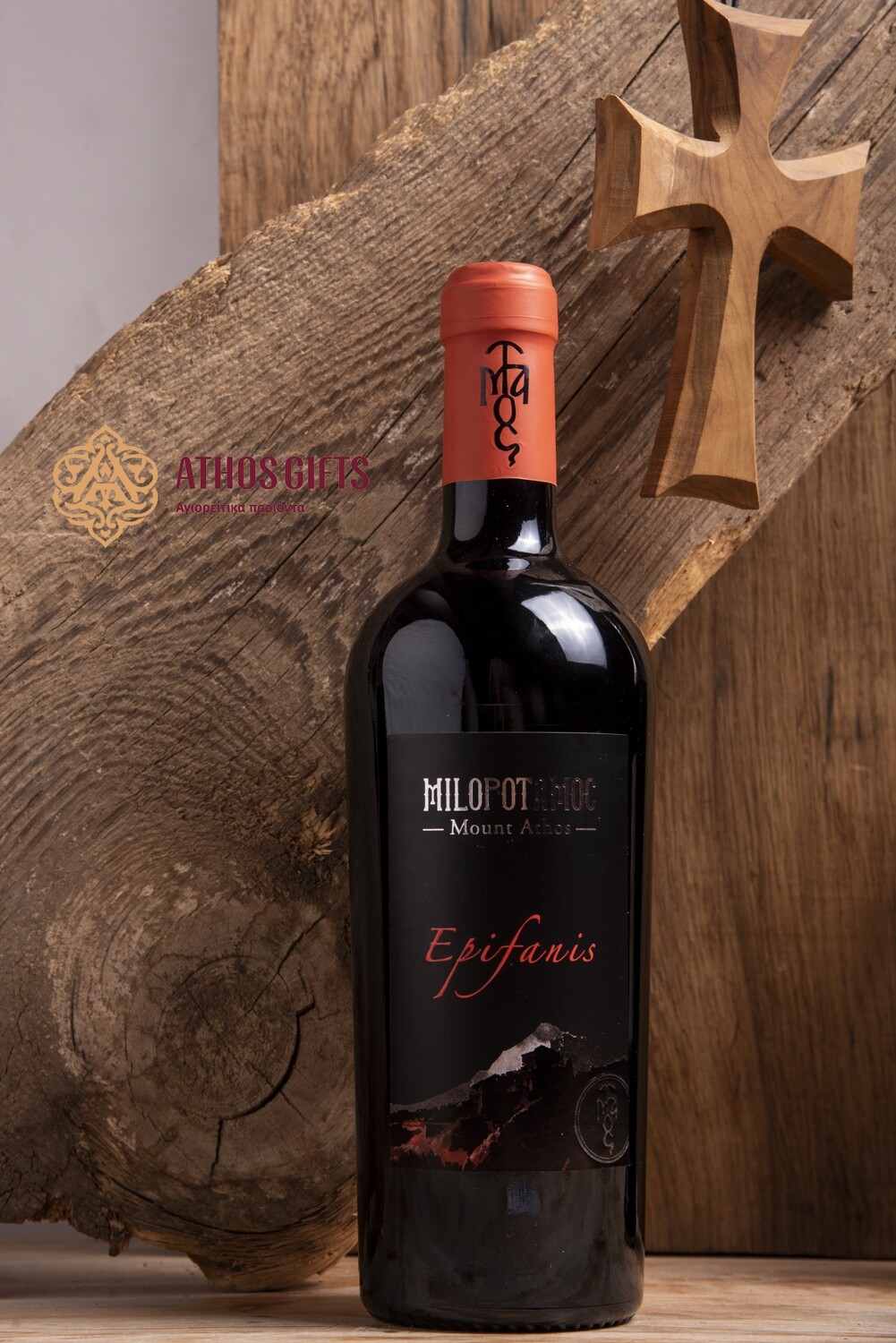
Monk Epiphanios was undoubtedly a highly gifted figure. For more than 40 years, he lived an ascetic life at the Monastery of Great Lavra in Mount Athos, where he cultivated vineyards, produced wine, was occupied with the Athonite cuisine, and wrote books, teaching the world the principles of the monastic culinary tradition.
He played a significant role in shaping the list of Greek wines, introducing unique varieties from the kathisma of Mylopotamos. Thanks to his work, the Athonite cuisine became known far beyond the borders of the monastic community.
His journey began in 1973, when he was tonsured as a monk at the Monastery of Saint Paul. During the 1980s, he traveled to Egypt, where he lived an ascetic life at the Monastery of Saint Catherine of Sinai. In 1990, he returned to Greece and settled at the cell of Saint Eustathios in Mylopotamos, a dependency of the Great Lavra Monastery.
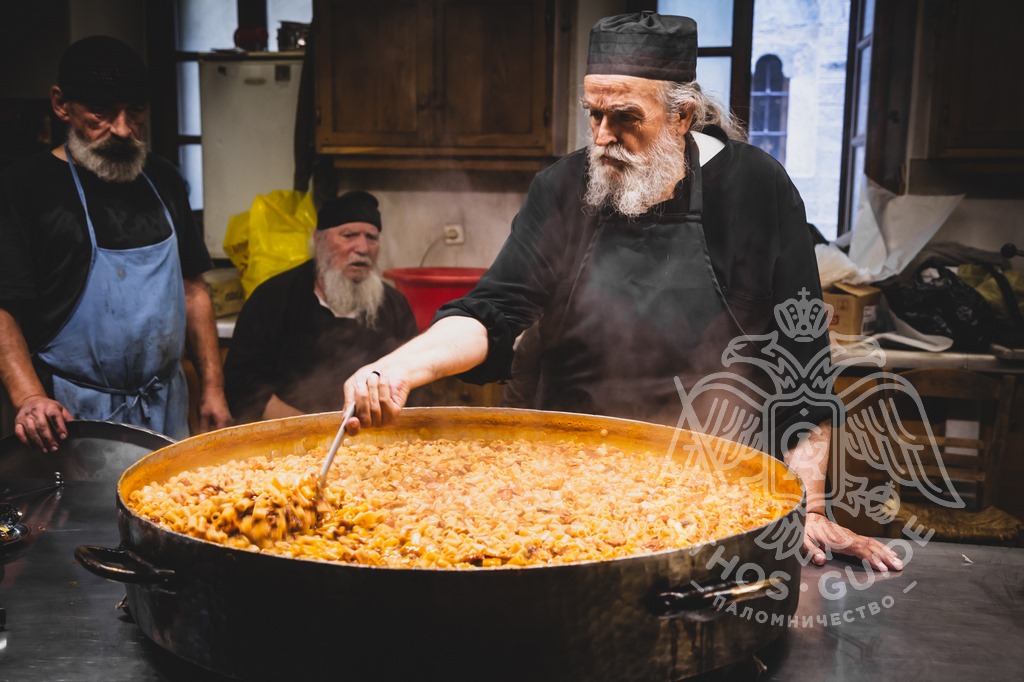
There, he cultivated his own vineyards, achieving a remarkable accomplishment by helping revive the ancient vineyards of the area. Regarding his approach to cooking, he prepared food in large ovens, using vegetables, herbs, spices, and plenty of seafood. Athonite organic olive oil and natural ingredients from the land of Mount Athos gave his dishes their distinctive flavor.
Monk Epiphanios’ open and warm character helped spread the Athonite wine and monastic recipes beyond Mount Athos.
When asked what led him to the monastic life, he said:
“To become a monk, you must understand whether you have it within you or not. It is a difficult question. It is like asking someone why they fall in love or how they fall in love. Either you have it within you, or not.”
“Mylopotamos is a place well suited for winemaking. Saint Athanasios himself, the founder of the Great Lavra Monastery (973), mentions Mylopotamos in his testament, stating that he built a tower and a church here in honor of Saint Eustathios. He also planted vineyards and olive trees. Since then, wine and olive oil have been produced in this area. I am not doing anything extraordinary. I am simply continuing a tradition that goes back a thousand years.”
“We produce five wine varieties. The first is a red wine, released in 1996, followed by the rest. In total, we produce around 70,000 bottles annually.”
It is worth noting that Father Epiphanios was one of the most important cooks of the Athonite monastic state. His book “The Cuisine of the Holy Mountain Athos” continues to sell in large numbers to this day. The book was translated into several languages for foreign pilgrims.
“My obedience at the Monastery of Saint Paul was cooking. For monks, obedience is like a profession. For seven years, I cooked daily for 80–100 people. I prepared main dishes, salads, and desserts. I learned to cook alongside the old masters of the Athonite cuisine, and since I loved it so much, I kept asking questions. I also began collecting recipes not from books, but by speaking with monks and learning firsthand. I learned how they prepared fish with white sauce and what followed afterward. In the last 15 years, friends who knew me suggested that I record all these recipes in a book.”