As the Great Lent and the Holy Week draw to a close, while the joyous celebration of Christ’s Resurrection arrives, Orthodox families all across Greece begin preparations for one of the most festive meals of the year, the Easter feast. Rich in symbolism, flavor, and tradition, it brings together a variety of dishes that mark the end of fasting and the beginning of a renewed spiritual and secular life.
In Greece, the celebration of Easter is inseparable from the preparation of traditional foods. Some customs are observed both at the Easter table of the laity and in Athonite gastronomy, as long as they do not contradict the monastic dietary habits.
- What are the traditional Easter foods in Greece?
- Which are the main dishes served at the holiday table?
- What side dishes and desserts accompany the feast?
Main Dishes of the Easter Table
Magiritsa (Easter Eve Soup)
After the long period of fasting during the Great Lent, the return to meat consumption should be gradual. One of the first dishes served on Holy Saturday night is magiritsa, a soup made with lamb offal, lettuce, and fresh herbs. This warm dish gently reintroduces the body to richer foods, while retaining the ingredients associated with the previous period of fasting.
Lamb on the Spit (Ovelias)
Spit-roasted lamb is one of the most popular Easter traditions in Greece. In some regions, goat is preferred for its leaner meat and milder scent.
Ovelias symbolizes the sacrifice and is closely associated with the figure of Jesus Christ, often referred to as "the Lamb of God, who takes away the sin of the world" (John 1:29).
Kokoretsi
A unique and flavorful delicacy, kokoretsi is made from lamb offal and intestines, thoroughly cleaned and wrapped around a spit. Slowly roasted, it is considered a great delicacy that adds to the distinctive character of the Easter meal.
Side dishes and Sweets
Red-Dyed Eggs
According to tradition, Easter eggs are dyed red on Holy Thursday. The red color symbolizes the blood of Christ, while the cracking of the eggs represents His Resurrection and the defeat of death.
The coloring of the eggs is completed before the solemn liturgy held on Holy Thursday evening, which marks the culmination of Christ’s Passion ushers in a period of mourning until the Resurrection.
Tsoureki (Easter Bread)
Tsoureki is a soft, aromatic, braided sweet bread that holds a special place on the Easter table. Adorned with a red egg in the center, tsoureki is traditionally flavored with mahleb and mastiha. Its chewy texture and subtle sweetness make it an ideal snack with coffee, a festive treat, or a dessert.
Variations include chocolate coatings and different fillings, giving a modern twist to this timeless classic.
Festive Atmosphere
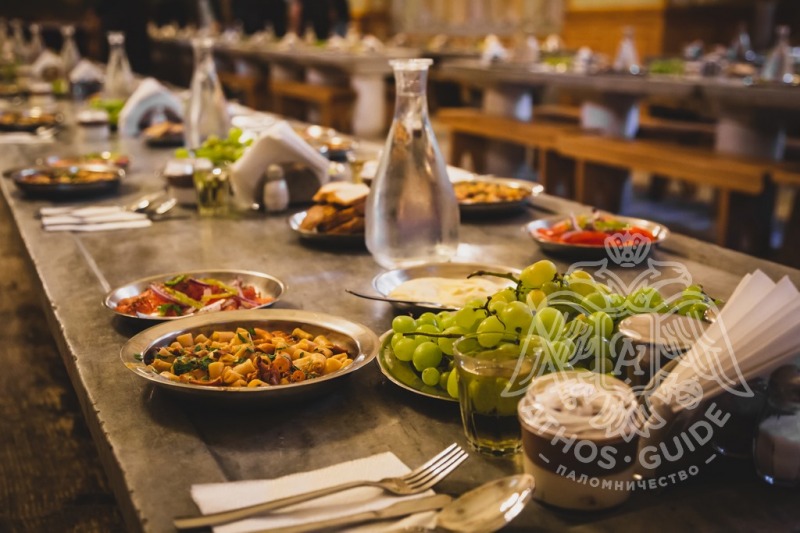
The Easter table is one of the most significant family gatherings of the year. It expresses the joy and spiritual celebration of the Resurrection, filling the homes with music, laughter, and heartfelt wishes. A deeply rooted tradition surrounds the preparation of the feast, from roasting the lamb to sharing homemade delicacies, dancing, and singing.
More than just a meal, the Easter table is a reflection of the deep bonds within Greek families. The care and love poured into every dish become an expression of hospitality and affection, the core elements of Greek culture and tradition.