The autonomous monastic state of Mount Athos serves as a guardian of the Orthodox tradition, preserving and protecting it through the centuries. It is a spiritual sanctuary and the home of many saints and holy fathers of our Church.
Beyond its spiritual significance, Mount Athos is a place of great natural beauty an untouched landscape where dense forests, high mountains, and vast coastlines create ideal conditions for diverse wildlife..jpg)
The rich biodiversity of the Athonite peninsula reflects the spiritual connection between the monastic life and nature, particularly regarding the relationship between monks and animals. Numerous studies have been conducted on the flora and fauna of this unique environment, highlighting its ecological and spiritual importance.
Today, we will explore:
- What species of animals inhabit the forests and the monastic communities of Mount Athos?
- How do animals contribute to the daily life of the monks?
- What is the theological perspective on the relationship between humans and animals?
- How have the Athonite fathers historically interacted with animals?
Wildlife and Domestic Animals of Mount Athos
The territorial character of Mount Athos, with its dense forests, granite peaks, bays, and cliffs, creates an ideal habitat for numerous animal species. The coexistence of wild fauna with domesticated animals is facilitated by both the geographical features of the peninsula and the monastic way of life.
The forests of Mount Athos are home to a variety of wildlife, including:
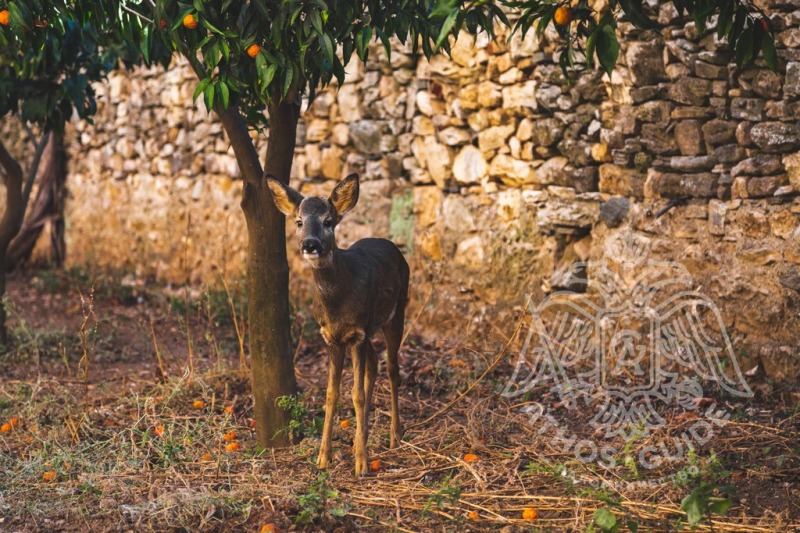
- Mammals: Foxes, wild boars, wolves, bears, wild cats, deer, badgers, hedgehogs, weasels, ferrets, skunks
- Birds: Golden eagles, hawks, owls, woodpeckers, finches, nightingales
- Reptiles and Amphibians: Lizards, turtles, snakes, frogs, salamanders
- Insects: Rare species of butterflies, bees, and other insects essential to the ecosystem
In addition to its rich wildlife, Mount Athos is also home to domesticated animals that support monastic life. These include:
- Cats: Essential for controlling rodent populations in the monastic storerooms
- Dogs: Serve as guardians of both the monasteries and the agricultural lands
- Mules and Donkeys: The primary means of transportation in the Athonite terrain
- Goats and Sheep: Raised in small-scale traditional farms for milk and wool
- Chickens and Pigeons: Provide eggs and contribute to the self-sufficiency of the monastic community
.jpg)
The Role of Animals in Monastic Life
The monks of Mount Athos hold a deep respect for all living beings, recognizing them as part of God’s creation. Following the Christian teachings, they take care of animals in their daily routines, not only for practical purposes but also as sources of companionship and spiritual reflection.
Cats play a crucial role, since they keep rodent populations out of the monasteries. Dogs serve as loyal protectors, safeguarding monastic grounds from potential threats, including wild boars that frequently damage crops. Mules and donkeys, valued for their endurance and humility, are indispensable for transporting goods. The monks ensure the animals receive proper care, providing them with adequate nourishment and rest.
Beyond their functional roles, animals serve as silent companions to the monks, offering an example of humility and peace. Their presence fosters a sense of tranquility, aligning with the monastic pursuit of simplicity, contemplation, and harmony with nature.
The deep bond between the monks and the animals of Mount Athos is a testament to the enduring relationship between humanity and the natural world.
Theological Perspective on Man’s Relationship with Animals
The theological understanding of man’s relationship with animals originates from the Scriptures, encompassing both the Old and New Testaments, as well as in the writings of the fathers of our Church.
This relationship was first established together with the creation of the world. According to the book of Genesis, God grants humanity dominion over nature:
"Be fruitful and increase in number; fill the earth and subdue it. Rule over the fish in the sea and the birds in the sky and over every living creature that moves on the ground." (Genesis 1:28)
Furthermore, man is granted the unique privilege of naming all living creatures, signifying his participation in the divine act of creation:
"Now the Lord God had formed out of the ground all the wild animals and all the birds in the sky. He brought them to the man to see what he would name them; and whatever the man called each living creature, that was its name." (Genesis 2:19)
However, the dominion we have been given is often misinterpreted outside its theological context. In reality, humanity’s role is not one of exploitation but of stewardship.
Initially, man's relationship with the animal kingdom was hierarchical yet loving, reflective of his ontological connection to God, whose grace was extended to all his creations. However, this harmony was disrupted by the fall of man. The consequence of the original sin led to a rift between humanity and the natural world:.jpg)
"...the beasts and all the animals of the earth, having stripped him of his former glory, despised him, and they all turned against him." (St. Symeon the New Theologian, Ethical Discourses 1,2, Sources Chrétiennes)
Saint Paisios of Mount Athos similarly described this estrangement:
"In Paradise, animals sensed the fragrance of divine Grace and recognized Adam as their master. However, after the violation of God’s order, they too were cast out, through no fault of their own, and no longer acknowledged man. Instead, they attacked him, as if saying: ‘You are no longer good. You are not our master.’"
Nevertheless, the Incarnation, Christ’s descent into Hades, and His Resurrection opened the way for the salvation of humanity, including the restoration of its relationship with all living creatures. While loving interactions between humans and animals are evident even in the Old Testament (most notably in the story of Noah and the Ark), Christ’s incarnation fully restores the bond between the divine grace and human beings. Thus, through Jesus Christ, man approaches the animal kingdom not merely as a ruler, but as a compassionate steward, guided by the divine presence.
Throughout Christian tradition, saints have been known to interact harmoniously with animals, calming them, healing them, and even praying with them. In return, animals have served, protected, and consoled these saints, recognizing their divine grace.
Athonite Saints and Their Relationship with Animals
The monastic tradition of Mount Athos offers numerous examples of the profound relationship between saints and the animal kingdom.
Saint Paisios frequently spoke of Elder Theophylactos from the Skete of Saint Basil, who deeply loved animals and became their protector. When hungry or mistreated, animals would instinctively seek refuge at his hut, knowing he would care for them as a doctor tends to his patients..jpg)
Similarly, Saint John Koukouzelis experienced a remarkable moment during prayer, when an entire flock of animals ceased grazing and gathered around him, as if joining in his hymn of praise to the Lord.
Another account describes Saint Akakios of Kavsokalyvia, who, in a moment of sorrow, was consoled by a bird that perched near him, singing persistently as though sharing in his grief.
Such cases are rather common in the lives of the saints of our Church. The divine grace that surrounded them allowed for a direct, unmediated communication with the natural world, restoring the harmony that had once existed between humanity and creation before the Fall of man.