How Did Judas Betray Christ?
As the feast of Easter approached, the chief priests sought a way to trap Jesus in order to stop the influence He had over the people. They therefore conspired with Judas, called Iscariot, who was one of the twelve apostles. He accepted the reward they offered him in exchange for delivering his teacher to them.
He received the thirty pieces of silver and waited for the right moment to betray Him.
What Happened to the Thirty Pieces of Silver After the Betrayal?
After the kiss of betrayal, the arrest, and the condemnation of Christ, Judas, filled with guild, repented and attempted to return the money to the chief priests, saying:.png)
“I have sinned, for I have betrayed innocent blood.”
They replied:
“What is that to us? That is your responsibility.”
Hearing their words and realizing the gravity of his sin, Judas threw the thirty pieces of silver to the floor, left the temple, and hanged himself. With that money, the chief priests decided to buy a field in which they would bury all foreigners, since they could not place the coins back into the temple treasury because, as they said,
“it is blood money.”
Thus the words of the prophet Jeremiah were fulfilled:
“They took the thirty pieces of silver, the price set on Him by some of the people of Israel, and they gave them for the potter’s field, as the Lord commanded me.”
The Thirty Pieces of Silver of Judas
The word “silver pieces” used in the New Testament indicates that these were silver coins.
The scholar Donald Wiseman argued as early as the 1960s that they were either Tyrian shekels or Roman-period staters.
Modern research supports the first theory. These coins were created in the Phoenician city of Tyre from 125 BC to AD 65. During the Roman period, the Temple of Jerusalem continued to pay its taxes using them.
On one side of the coin, following the instructions of the Roman authorities, there was depicted the image of the god Baal in order to emphasize the Roman dominance in Palestine. Despite the fact that the Jews identified this god with the devil, the coin remained in circulation, mainly because of the high value and purity of its silver.
What Was the Value of the Thirty Pieces of Silver?
Today we know that thirty shekels were at that time equivalent to 120 days of labor.
A shekel weighed slightly less than half an ounce of silver, about 16 grams. Based on the current value of silver, its worth is estimated at 400–500 US dollars.
Consequently, the thirty pieces of silver would correspond to approximately €15,000 in modern value.
The Figure of Judas Iscariot
Judas was one of the twelve apostles. According to the Church Fathers, Christ included him among His disciples because He recognized in him the potential to carry out apostolic work. However, Judas’s own pride and ambitions ultimately led him to self-destruction. He was known to be fond of money, something the Lord Himself was aware of. By entrusting him with the responsibility of managing the common treasury of the apostles, Christ sought to help him overcome his weakness and free himself from greed.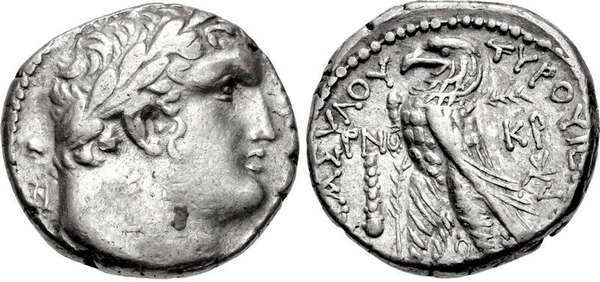
Why Did Judas Betray Christ?
Judas is perhaps the most controversial figure in the New Testament.
He is remembered as the man who betrayed Jesus, willing to sacrifice his relationship with Him in exchange for thirty pieces of silver. However, he repented, was overwhelmed with guilt, and ultimately took his own life. The Scriptures provide very few details about his origin or family, and only limited information regarding his appearance and the circumstances of his inclusion among the disciples.
The Evangelists John, Luke, Matthew, and Mark suggest that Judas acted under the influence of demonic forces and the passion of greed. In the liturgical texts of Easter, there is placed particular emphasis on his ingratitude. He is described as a lover of money, reckless, shameful, lawless, a traitor, and a liar.
His relationship with the devil is also highlighted. Just as Satan became a fallen angel, Judas became a fallen apostle. He refused to resist the temptations placed before him and chose to exercise his free will against the Lord.
Many scholars, attempting to understand and psychologically interpret the character of Judas, have proposed more complex theories. According to one interpretation, Judas—realizing his inability to become a true disciple of Jesus, created in His “image and likeness”—was overwhelmed by a sense of guilt. This inner conflict manifested itself as hostility toward his teacher.
Thus he resorted to betrayal, destroying the very model he could not resemble.
His act reveals the depth of his delusion, his tendency toward self-punishment, and his ingratitude toward the One who receives and loves every person without demanding perfection.
Judas’s weakness becomes even more evident after the betrayal. Instead of bearing the weight of his sin with faith in God and hope for forgiveness, he abandons himself to self-condemnation and remorse, which ultimately lead him to the even greater sin of suicide. In this sense, his final act becomes the ultimate betrayal of Christ. He abandons himself to darkness, repeating his mistake, losing faith, and delivering his soul into the hands of devil. Rather than repenting with hope in the boundless mercy of the Lord, he surrenders to guilt and despair. He lacks the courage to confront his fault and sincerely seek forgiveness—as Saint Peter the Apostle did. Instead, trapped in his pride, he chooses to cut off his relationship with God the Father.
Thus he is led into despair and self-destruction.
Was Judas’s Betrayal Inevitable?
God foretold that one of His disciples would betray Him. However, prophecy does not predetermine events—it merely foresees them. The Lord did not determine Judas’s choice. He simply knew beforehand what His disciple would freely decide.
The sacrifice of Christ and His crucifixion were made even more painful by the fact that they resulted from the betrayal of one of His own disciples.
This betrayal stands as a powerful example for all of us. Although we often witness the wonders and greatness of God in our daily lives, we frequently lose our faith and hope in Him. While sin may be inevitable in human life, there always remains our ability to return to God.