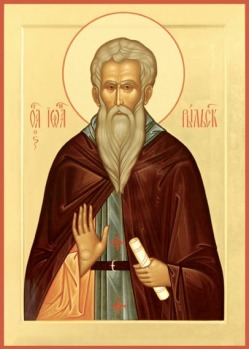
Saint John of Rila was born around 876–880 in the village of Skrino, Bulgaria. He was orphaned at a very young age and endured many trials before becoming a hermit and beginning his life in a cave. He spent twelve years there before moving to the Rila Mountains. He settled among the trees, feeding on herbs and fruits that, according to tradition, miraculously grew for him through the Divine Providence. Gradually, many people began to seek him out, looking for care and healing from their illnesses.
Wishing to avoid the fame and admiration of the world, the saint withdrew to a high rock, where he lived for seven years. Peter, the ruler of Bulgaria, wished to meet him, but John refused. Later, he became a monk and founded the Monastery of Rila at the site of the cave where he had lived. He reposed on 18 August 946, at the age of 70, leaving behind his blessing and a valuable legacy of spiritual counsel for his disciples. His life and miracles became a testament of faith for the Bulgarian people.
During the difficult period of Bulgaria’s struggle against the Byzantine Empire, Saint John appeared to his disciples and instructed them to transfer his relics. This was indeed carried out in 980, while his right hand was later taken to Russia. In 1183, the Hungarian King Béla II took the saint’s holy relics with him on a military campaign. However, in 1187, he returned them with great honours to the church. On 19 October 1238, the relics were transferred to Tarnovo, the new capital. On the 1st of July 1469, they were returned to the monastery, where they have been kept ever since, offering the saint’s grace to all the faithful.
