Saint Alexander served as archbishop under Saint Metrophanes, the first Patriarch of Constantinople. He was a charismatic figure, known for his virtue and holiness. During the First Ecumenical Council in Nicaea, he appeared as the Patriarch’s representative, defending the Orthodox faith against the heresy of Arius. After the death of Metrophanes, Alexander succeeded him. He governed the Church with diligence and courage, standing firmly against heretics and philosophers who misled the people with false teachings. On one occasion, during a public dispute, he commanded his opponent to remain silent. The man suddenly lost his voice, leading many witnesses to convert to Christianity.
Through prayer and with the strength of his faith, Saint Alexander also opposed Arius, who, after deceiving Emperor Constantine, sought to receive the Holy Communion. The saint declared that he would not permit it. On the very day Arius intended to enter the church, he was struck with a sudden and severe illness and died unexpectedly. This event was regarded as a sign of God’s judgment upon his false teachings.
Saint Alexander guided the Church for many years. Before his death, he appointed two worthy men as possible successors. He reposed at the age of ninety-eight. Saint Paul, the first Patriarch to bear that name, was the one to succeeded him on the patriarchal throne.
Saint John, also known as the Cappadocian, became Patriarch after the unorthodox Timothy. He courageously defended the Orthodox faith and endured severe persecution under Emperor Anastasius. After the emperor’s death, the pious Justin was elevated to the throne. Together with John, they eventually restored peace to the Church.
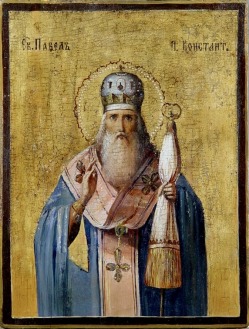
Saint Paul, the fourth Patriarch, was deeply loved by the faithful. Yet, seeing the suffering endured by the people of the Church, he renounced the patriarchal throne and chose to withdraw into monastic life. His departure caused great sorrow to Empress Irene and Emperor Constantine.
Among other things, the saint called for the restoration of the veneration of the holy icons and warned the people about the dangers of heresies. He reposed leaving the Church in a time of great turmoil. His words became a source of strength in the defense of Orthodoxy and the true doctrine of the Church.
