The Life of The Saint
Saint Paraskevi was born in Rome during the reign of Emperor Hadrian (117–138 AD). Her parents, Agathonikos and Politia, were wealthy and deeply devoted Christians. For many years they were unable to have children, until, after long and fervent prayers, they were blessed with a daughter. They named her Paraskevi as an expression of gratitude to Jesus Christ, who was crucified on that day in order to save humankind.
She was raised according to the principles of Christian faith until the age of twenty, when she lost her parents. From that moment on, she dedicated herself to acts of charity, distributing her wealth to the poor and the sick. She also took part in missionary work, preaching the Gospel in Rome and in the surrounding regions.
Her activities soon became widely known and quickly drew the attention of the authorities. The pagan Emperor Antoninus (138–161 AD) ordered her arrest. When she was brought before him, he demanded that she renounce her faith and offer sacrifice to the idols. In an attempt to persuade her, he promised her a life of comfort and wealth. Saint Paraskevi rejected his offers, willingly enduring the terrible tortures that awaited her. Her face was burned, and she was thrown into prison in solitary confinement.
There, an angel of the Lord appeared to her, giving her strength and freeing her from her chains. When she was once again ordered to abandon her faith, the saint refused, willingly enduring further suffering. She was cast into a large cauldron filled with boiling oil. However, she was miraculously unharmed.
Antoninus was left astonished. Unable to believe the miracle, he approached the cauldron to see for himself. At that moment, his eyes were injured, causing him to lose his sight. According to tradition, Saint Paraskevi miraculously healed him, which is why she became known as the protector of eyesight. Following this event, the emperor ceased persecuting Christians and allowed the saint to freely continue her mission.
After the release, Saint Paraskeva once again set out to preach Christ. During her travels, she came to a city ruled by Asclepius. There she was seized again and forced to renounce her faith. Asclepius ordered the saint to be thrown into a place where snakes were kept, but they perished as soon as they approached her. After witnessing the miracle, Asclepius came to believe in Christ, and the saint was once again set free.
Continuing her apostolic ministry, Paraskeva came to another city, ruled by the cruel pagan Tarasius. By his order, the saint was subjected to new torments, but even they could not shake her faith. Then Tarasius ordered her to be beheaded with a sword. Thus the holy venerable martyr Paraskeva surrendered her soul to the Lord.
Her feast day is celebrated on July 26 (August 8 according to the old calendar).
Why Is Saint Paraskevi Depicted Holding a Plate with Eyes?
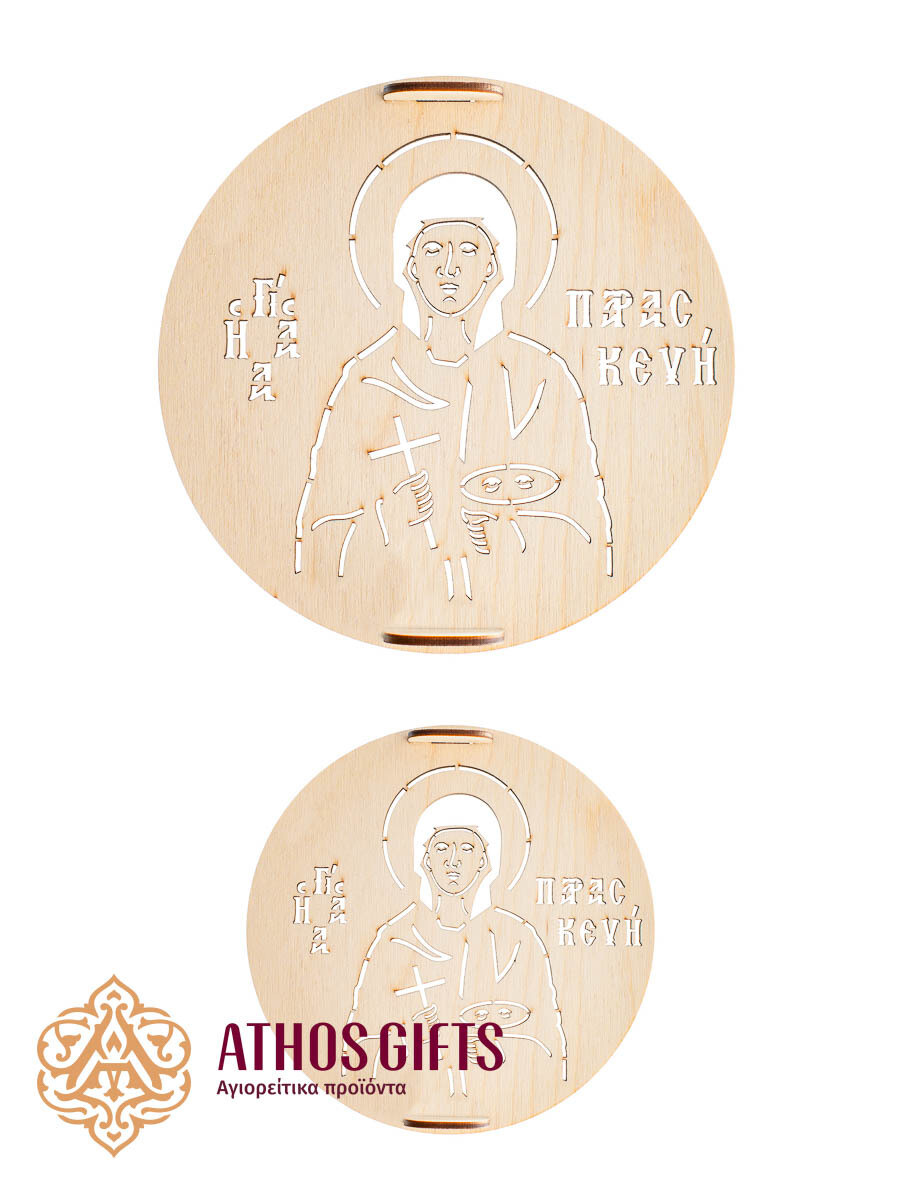
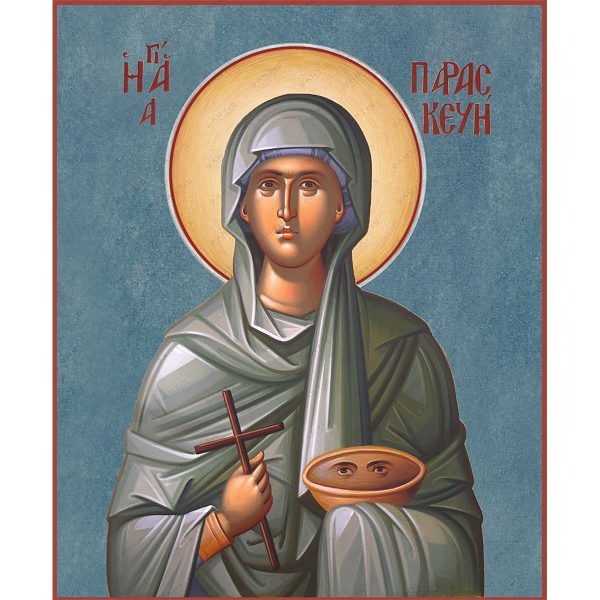
According to the Orthodox iconographic tradition of Saint Paraskevi, she is portrayed facing forward, holding a cross in her right hand and a plate in her left, containing the image of two eyes. This symbolism refers to the miracle in which the saint restored Emperor Antoninus’ sight. It also highlights her role as the protector of eyesight and the patron saint of those suffering from eye-related illnesses.