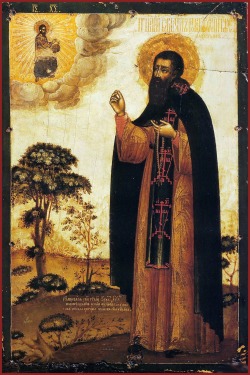
Saint Varlaam of Khutyn lived in the 12th century, was the son of a noble Novgorodian, and spent his childhood years in Novgorod. In his youth, having withdrawn to the nearby Lisichiy Monastery, he took monastic vows and settled on a secluded hill above the Volkhov River, in the area of Khutyn, 10 versts from Novgorod. He led a strict life, engaging in constant prayer and observing a rigorous fast, working by cutting wood and plowing the land, fulfilling the words of Sacred Scripture: "If anyone does not want to work, neither let him eat" (2 Thess. 3:10). Residents of Novgorod gathered around him, wishing to share in his labors and ascetic feats.
Saint Varlaam taught those who came to him: "Children, beware of all unrighteousness, do not envy, do not slander. Abstain from anger, do not lend money at interest. Be careful not to judge unjustly. Do not swear falsely; if you take an oath, fulfill it. Do not give in to bodily passions. Always be meek and treat everyone with love. This virtue is the beginning and root of all good."
Soon a church was erected in honor of the Transfiguration of the Lord, and a monastery was founded. The Lord bestowed upon him the gift of miracles and discernment. When his days were drawing to a close, by God's will, a hieromonk Anthony arrived from Constantinople, a contemporary and friend of the saint. He entrusted the monastery to Varlaam, instructing him to take care of it, and said that he would always be with them in spirit. Saint Varlaam reposed in the Lord on November 6, 1192, leaving instructions for his brethren to keep the Orthodox faith and remain in humility.
