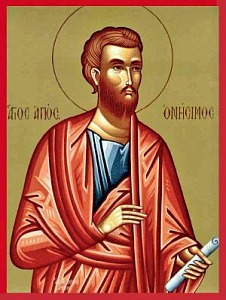
Venerable Onesimus of Magnesia was born in the 4th century in Caesarea of Palestine into a family of devout Christians. From an early age he showed a desire for the spiritual life and was distinguished by meekness, zeal in prayer, and obedience. His parents, though physically blind, raised their son in piety, and through the prayers of Onesimus the Lord granted them their sight, which became the first miracle associated with his name. In his youth he went to Ephesus, where he received the monastic tonsure and began to labor in strict seclusion.
Having embraced monasticism in Ephesus, Venerable Onesimus soon faced the persecutions raised by Emperor Diocletian against the Christians. He was forced to leave Ephesus and return to Palestine, where he continued his ministry under conditions of danger and oppression. His struggle consisted not only in personal asceticism, but also in supporting other believers who were suffering for the name of Christ.
After the period of persecution, Venerable Onesimus set out for Magnesia in Asia Minor, where he founded a monastery. This place became a center of spiritual life, prayer, and enlightenment. He built a church, cells for the brethren, and established a monastic rule based on strict obedience, fasting, and prayer. The monastery quickly became known for the wisdom and holiness of its founder. Onesimus received all who were in need, instructed the monks, and taught them church singing, reading, and various crafts. He not only governed the monastery, but also continued to serve the wider world: he received pilgrims, healed the sick, and comforted those in sorrow. His monastery became a place of refuge for all who sought spiritual consolation and guidance.
Venerable Onesimus reposed in Magnesia, leaving behind a deep spiritual legacy. His monastery became an important center of Christian life in the region, and the memory of his struggles and miracles was preserved in the hearts of the faithful for centuries.
Historians note that the monastic community founded by Onesimus played a significant role in the spread of Christianity in Asia Minor.
