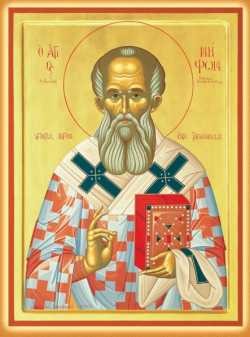
Saint Niphon II of Constantinople was born around 1435–1440. He was raised by a pious family in Peloponesse.
He became a monk in Epidaurus, taking the name Niphon. Later, he withdrew to Mount Athos, where he lived an ascetic life in the monasteries of Koutloumousiou, the Great Lavra, and Dionysiou. After the death of Metropolitan Symeon of Thessaloniki in 1483, the saint was called to succeed him. In 1486 he ascended the patriarchal throne in Constantinople. In 1488 he was removed from his duties and withdrew into a life of solitude and asceticism. During the years 1497–1498 he again assumed the office of patriarch. Persecuted once more, he finally left Constantinople. In 1500 he became Metropolitan of Wallachia. In 1502 he declined the ecumenical throne, to which he had again been called, and spent the rest of his life in Mount Athos.
Foreseeing his end, Saint Niphon gathered the monks to speak with them and ask their forgiveness. He reposed on August 11, 1508.
On August 16, 1517, there took place the official translation and glorification of his holy relics. They were placed in the Monastery of Dionysiou, where they are preserved to this day.
The Church commemorates the saint on August 11.
