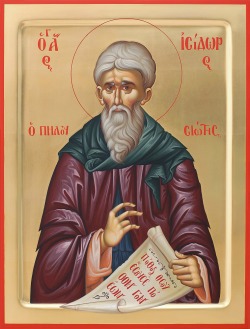
Saint Isidore, originally from Alexandria, came from a noble family and was related to the archbishops Theophilus and Cyril. He left the worldly life and went to the Mount of Pilusiot, where he accepted monasticism and became an abbot. His strict life and spiritual wisdom attracted many followers, and he was respected not only among the clergy but also among emperors.
The church historian Evagrius notes that Isidore was held in great honor during the time of Theodosius II, and his life was an example of monastic virtue. Nicephorus Callistus bears witness to his works and the multitude of letters in which he explained the Divine Scripture and instructed people.
He became a defender of Saint John Chrysostom, writing to Theophilus and Emperor Arcadius, urging them to abandon evil deeds. After the death of Chrysostom, Isidore convinced Saint Cyril to include John’s name in the church diptychs as a great confessor.
Saint Isidore also wrote to Emperor Theodosius, encouraging him to care for the church's peace and to convene the Third Ecumenical Council in Ephesus against the heretics. In his letters, he emphasized the importance of virtue, chastity, and humility, calling for a spiritual life and good deeds.
He left behind many teachings on virtues and, having reached a deep old age, passed away in peace, pleasing God.
