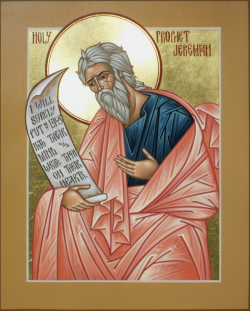
The Prophet Jeremiah was born in Anathoth, in the territory of the tribe of Benjamin. He was the son of the priest Hilkiah. The gift of prophecy had been bestowed upon him even before his birth, as the Lord declared: “Before I formed you in the womb, I knew you” (Jer. 1:4–5). He began his divine ministry around 630 B.C. Though still very young and inexperienced, Jeremiah received great encouragement from the Lord to fulfill his prophetic calling.
Jeremiah reproached the people of Israel for abandoning the true God and warned them of the coming wrath. His ministry spanned the reigns of Kings Josiah, Jehoahaz, Jehoiakim, Jeconiah, and Zedekiah. Despite enduring much suffering at the hands of his own people, he remained steadfast in proclaiming the word of God, admonishing sinners for their unjust ways.
During the reign of Josiah, political turmoil arose when Pharaoh Necho defeated the Judean army and fatally wounded the king. After Josiah’s death, Jeremiah mourned him deeply. Pharaoh Necho appointed Jehoiakim as king over Judah and imposed a heavy tribute upon the land.
Early in Jehoiakim’s reign, Jeremiah received a new word from the Lord, foretelling the punishments that awaited Judah. Because of this prophecy, he was arrested and a death sentence was sought against him. He was, however, spared through the intercession of the princes and elders. Jeremiah continued to preach, warning the people of the consequences of paganism.
When the Lord revealed another prophecy, Jeremiah announced even greater calamities. The king attempted to suppress his words, but Jeremiah spread the message among the people, foretelling that Jehoiakim’s descendants would not inherit the throne of David.
King Zedekiah, appointed by Nebuchadnezzar, reigned for eleven years. Yet he did not repent and continued to venerate idols. Though Jeremiah repeatedly warned him, the king disobeyed. In the end, Jerusalem fell, Zedekiah was taken captive, and the people of Judah were led away into Babylonian exile—just as the prophet had foretold.
