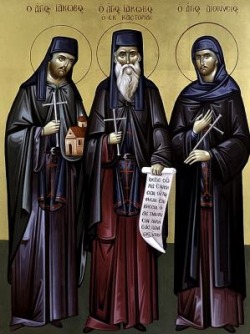
Originating from a village in the diocese of Kastoria, Saint Hieromartyr James, son of parents Martin and Paraskeva, became wealthy in his youth while tending sheep. Due to the envy of his brother, who slandered him before the Turkish ruler, James fled to Constantinople, where, hearing of the miracles of Saint Patriarch Niphon, he came to him for advice. After this, he distributed his wealth to the poor and went to the Holy Mountain, where he joined the brotherhood of the Dochiariou Monastery, and later revived the deserted Iveron Skete.
Leading an angelic life in fasting and prayer, he received the gift of miracles and revelations. Through prayer, he brought forth key water, healed the possessed, and even brought down rain. Desiring greater solitude, James withdrew into the wilderness with six disciples. He predicted calamities and, visiting Aetolia, became a renowned elder to whom people flocked for comfort and healing.
However, the envy of the local archbishop Akakios led to a denunciation against the saint, and he was arrested. In prison, he prophesied that they would be together in the monastery of Saint Anastasia. After writing a letter to the brethren, the saint and his disciples were sent to Adrianople, where they were subjected to severe torture for their faith. Saint James, not yielding to threats, steadfastly endured the sufferings and was finally sentenced to death.
At the place of execution, he prayed with his disciples, received the Holy Mysteries, and peacefully surrendered his spirit to God. His relics were taken by Christians and placed in tombs, where miracles occurred. A priest, calling upon the saint for help, was healed, and his relics became a source of miracles and healings. The saint's disciples, after many trials, settled in the monastery of Saint Anastasia, where they continued to strive and perform miracles.
