The island of Kefalonia is renowned for its unique tradition and its deep devotion to the Mother of God, especially on the eve of the great Feast of the Dormition, celebrated on August 15.
According to local tradition, around the year 1200, pirates attempted to seize the island's monastery. Suddenly, by a miraculous intervention, countless snakes appeared and surrounded the monastery, forming an impenetrable barrier that drove the invaders away in terror.
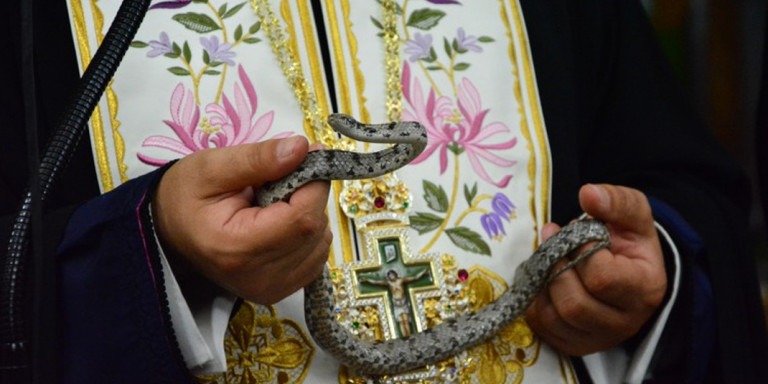
Since then, small snakes, known as the "Snakes of the Virgin Mary," have appeared each year in remembrance of this miraculous event. The phenomenon continues until August 15, the Feast of the Dormition of Theotokos.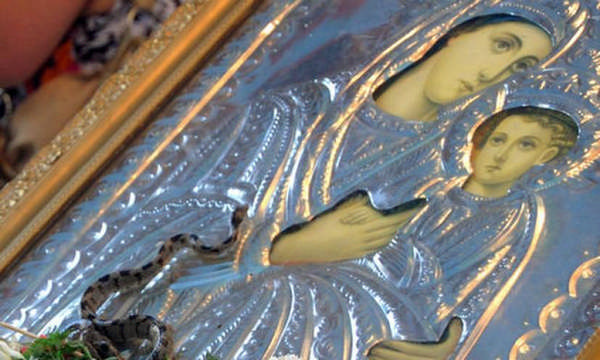
According to another tradition, in order to protect the nuns from barbarian attackers, the Virgin Mary transformed them into snakes. Ever since, they have returned to their monastery every year during the Feast of the Dormition.
As for scientific explanations, researchers have repeatedly attempted to attribute the phenomenon to natural causes. However, no definitive conclusion has ever been reached. The annual appearance of the snakes remains a genuine miracle.
The snakes themselves possess remarkable characteristics that continue to astonish pilgrims. Each bears a cross-shaped marking on its head and tongue. They are gentle and harmless to humans, while their skin is unusually soft to the touch.
Every year, thousands of pilgrims from Kefalonia, throughout Greece, and abroad travel to the island in anticipation of the snakes' appearance. According to local tradition, if the snakes fail to appear in a given year, it is considered a sign of impending misfortune. This has happened twice in modern history, in August 1940, shortly before the outbreak of the Second World War, and again in August 1953, when Kefalonia was devastated by a series of catastrophic earthquakes.
Those who visit the Monastery of the Dormition of Theotokos in the village of Markopoulo, in southern Kefalonia, have the opportunity to witness this extraordinary phenomenon, which takes place each year from August 6 to August 15. The small, gray snakes, measuring less than one meter in length, emerge inside the church and make their way toward the icon of the Virgin Mary, known as Panagia Fidousa ("Our Lady of the Snakes").