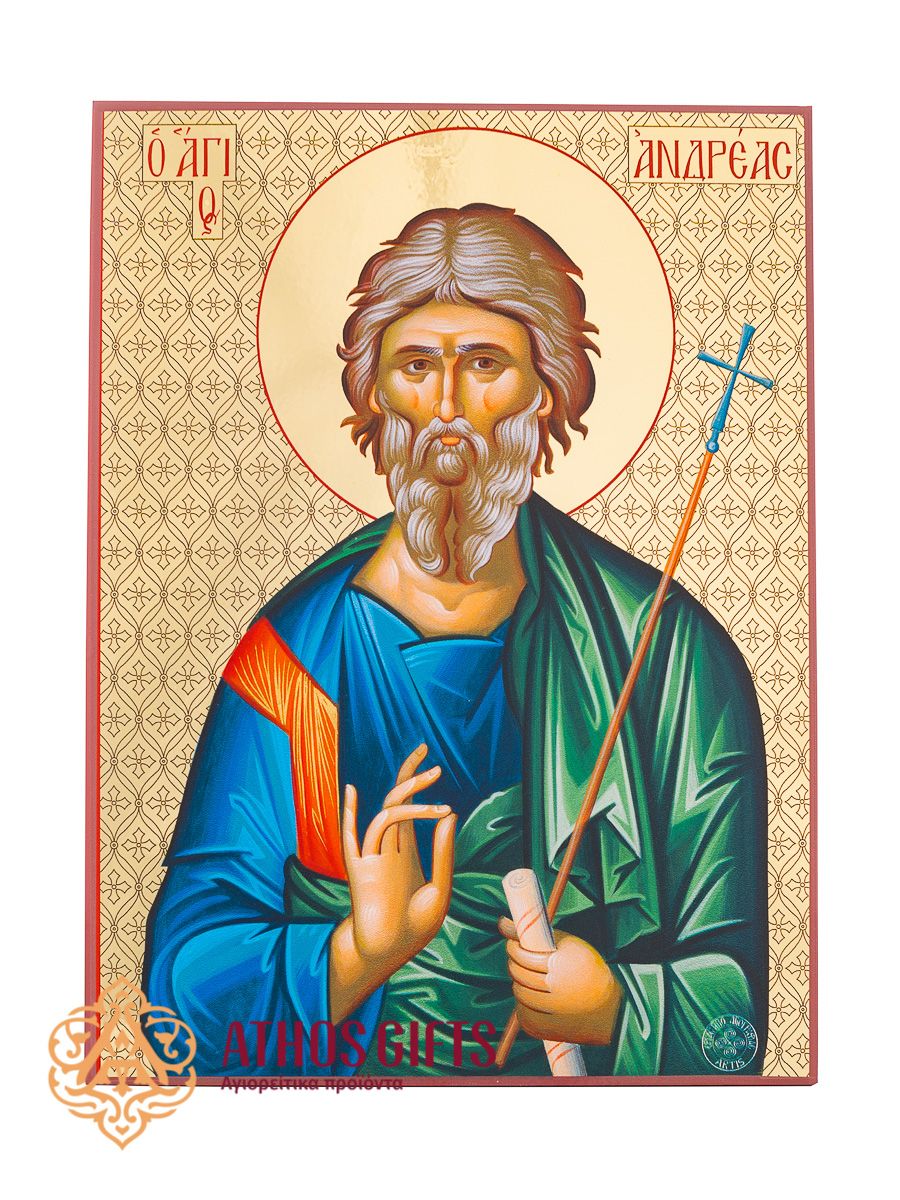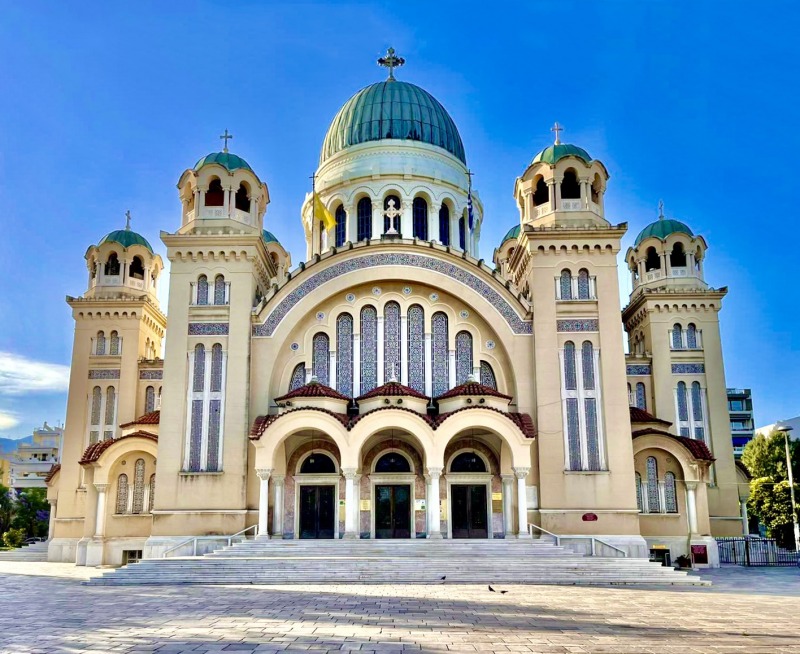
In the south of the city of Patras, in the coastal area of the city, not far from the place of the martyrdom of the Apostle Andrew, there are two cathedrals, an older and a more recent one. They are both dedicated to the holy Apostle, who is also the patron saint of the city.
Nowadays, both the old and the new cathedrals are united by one territory. The more recent one is the largest temple in Greece and the second-largest in the Balkans. Today, it is a symbol of Patras.
The old cathedral of Apostle Andrew the First-Called was built on the remains of another one, which in turn was erected on the ruins of an ancient temple of Demeter at the end of the 5th century. The cathedral was an important center of pilgrimage; over the centuries of its existence, it survived many disasters, the latest of which was its burning to the ground by Turkish-Albanians in 1770.
.PNG)
The cathedral lay in ruins until the beginning of the present church's construction in 1836. It was designed by the famous Greek architect Lysandros Kaftanzoglou. The new cathedral was inaugurated in 1843 and served as the metropolitan cathedral of the city from 1845 to 1856.
In terms of architectural style, the cathedral belongs to the type of a three-aisled basilica. Its interior is adorned with magnificent frescoes and icons created by renowned artists, executed in the Ionic style. In the southern aisle, there is the tomb of Apostle Andrew, lined with marble; next to the cathedral, in an underground vaulted grotto, there's a well of Saint Andrew.
To the left of the old cathedral, there is a new majestic temple built in Byzantine style. It was laid by King George I back in 1908, but it was only opened in 1974 due to construction halts caused by unstable ground conditions, and later by war and the following economic hardship in Greece.
The main dome's height is 46 meters; it is crowned by a five-meter gilded cross. Smaller crosses crown the twelve bell towers of the temple. The total area of the interior premises is 2,500 square meters; it can accommodate more than 8,000 people.
The work on the frescoes of the new temple began in 1985. It was then suspended in 1993, and resumed in 2006. The cathedral houses the Holy Head of Andrew the First-Called and particles of the Cross upon which the saint suffered martyrdom. These great relics were returned to Patras by Italy in 1964.
The Feast Days of the cathedral of Saint Andrew in Patras are November 30, the Sunday closest to September 26 (commemoration of the return of the Honorable Head of the Apostle Andrew), and the Sunday closest to January 18 (commemoration of the return of the Holy Cross).
Commemorations of the Cathedral |
SUBMIT A NOTE |
LIGHT A CANDLE |
The Holy Relics kept in Saint Andrew Cathedral
The Honorable Head of the Apostle Andrew the First-Called
After a period of persecution, some of the holy relics of St. Andrew the Apostle were transported to Constantinople. The son of Constantine the Great, Emperor Constantius II, sent dux Artemius (later canonized) to Achaea, who likely took some of the apostle Andrew's relics out of Patras. On March 3, 357 AD, the relics were placed in the Church of the Holy Apostles in a precious reliquary engraved with the inscription "Treasure of Patras." From there, a significant part of the relics was stolen by the Latins in 1204 and taken to the Italian city of Amalfi.
On April 11, 1462, the ruler of Patras, Thomas Palaiologos, the last despot of the Morea and brother of the last emperor of the Palaiologos dynasty, left Patras and headed west, as the Peloponnese had been completely enslaved by the Turks in 1460. Thomas Palaiologos took with him the holy head of the apostle Andrew to prevent it from falling into the hands of the Turks and handed it over to the Latins for safekeeping. Initially, he handed the holy head to the papal envoy in Ancona. From there, it was temporarily transported to the city of Narni in Umbria, where it remained for over a year. From Narni, the sacred relic was brought to the outskirts of Rome, to the place where Constantine the Great received the "In hoc signo vinces" (In this sign thou shalt conquer) sign. There, it was received by the Pope, after which the relic was transferred to Rome with great honors. The holy head was handed over to Pius II by the Greek Cardinal Bessarion, who delivered a solemn speech when placing the relic in St. Peter's Basilica.
.jpg)
Five hundred years later, in 1962, the metropolis and municipality of the city of Patras made considerable efforts to persuade Rome to return the "Treasure of Patras" to the city of the martyrdom of the apostle Andrew. The response was positive. In his generosity, Pope Paul VI decided to return the holy head to Patras as a gesture of goodwill. On September 26, 1964, a papal procession led by Cardinal Bea carried the holy head of the apostle out of St. Peter's Basilica in Rome and handed it over to Metropolitan Constantine of Patras. The solemn transfer of the relic took place in Trikoupis Square, in front of thousands of people. Today, the miraculous head of the holy apostle is kept in the new Cathedral of St. Andrew in Patras.
The Cross of the Apostle Andrew
From the day of the crucifixion of the holy apostle and until its abduction during the period of Francocracy, the Cross was located in Patras. This period is characterized as a dark time, as many church relics were stolen and taken to the West. Unfortunately, among them was the Cross of Saint Apostle Andrew the First-Called. According to the archives of the Duchy of Burgundy, initially the Cross was placed in the Weaume monastery of Marseille and later transferred to the Abbey of Saint-Victor in the same city.
During the French Revolution, an attempt was made to destroy the Cross, which was ultimately unsuccessful. Its particles were rescued and placed in a reliquary shaped as a regular cross (parts of which intersect perpendicularly).
On October 9, 1979, Metropolitan Nicodemus of Patras raised the issue of returning the Cross to Patras. After consultations between the Roman Catholics and the Orthodox, the cardinal told the Metropolitan of Patras thus: "Since the Cross was brought here from Patras, it belongs to Patras."
Soon after, negotiations began between the parties for the return of the Holy Cross to Patras. The Ecumenical Patriarchate of Constantinople and the Holy Synod of the Greek Orthodox Church were informed of the matter. Thus, on January 18, 1980, an Air Force plane with a delegation from the Holy Metropolis of Patras flew to France to return the Cross to Patras.
Archaeological studies have confirmed that the Cross fragments are indeed made of olive wood and date back to the 1st century. The Cross of Saint Apostle Andrew the First-Called is a source of many miracles and healings.
The tomb of St. Andrew
After the crucifixion, the Apostle Andrew was buried near the place of his martyrdom. A cathedral dedicated to the holy apostle was built there a few years later.
Today, the tomb of the saint is located on the territory of the Cathedral of Andrew the Apostle and is the only apostolic tomb in Greece. Every day, hundreds of Christians come to venerate the tomb of the saint and pray for his intercession in healing from various diseases and overcoming life's difficulties.