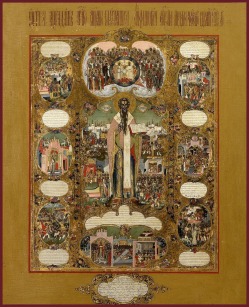
Bishop
During the reign of the Emperor Diocletian, there began fierce persecutions against Christians. The governor Philimarhos gathered all priests and ordered the people to offer sacrifices to the idols. Many refused, openly confessing their faith in Christ and accepting the martyrdom that awaited them.
Among those denounced to the governor was Saint Athenogenes, who came from Sebasteia in Cappadocia and served as bishop of Pidachthoe. Philimaros therefore sent soldiers to arrest him. The saint, together with his ten disciples—Riginos, Maximinos, Patrophilos, Athenogenes, Antiochos, Ammon, Theophrastos, Kleonikos, Peter, and Hesychios—was seized and thrown into prison.
On the following day, the governor ordered them to offer sacrifices to the pagan gods, threatening them with severe tortures. Saint Athanogenes replied that they were ready to give their lives for the true God, for as martyrs they would not truly die but would rejoice in the heavenly Kingdom. Enraged, Philimarhos ordered the beheading of his disciples, who, with unfailing patience and faith, continued to glorify the Lord. The governor then mocked Athenogenes, claiming that his God had been unable to save them.
Throughout the tortures, mockery, and humiliations, the saint continued to glorify God, praying constantly for strength. He began to hear the voice of the Lord, which filled him with joy and courage, while he remained faithful until his own martyrdom.
His body was buried with honor by the faithful, who gathered each year on the anniversary of his death to celebrate his memory. Many miracles have been associated with his name.
