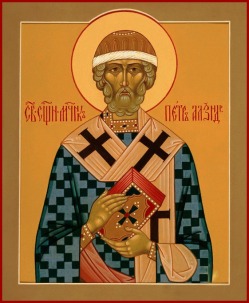
Archbishop
Saint Peter, Archbishop of Alexandria, was raised by the blessed Theonas and became archbishop during the persecutions of Christians under the Roman emperors Diocletian and Maximian. He supported the believers, strengthening them in faith and leading many to the martyr's crown. Exiled for Christ, Saint Peter continued to care for his flock while in Tyre and Palestine, praying for them. Upon returning to Alexandria, he assisted the imprisoned, among whom were many presbyters and clergy, rejoicing in their patience and sufferings.
At this time, the heretic Arius arose, who blasphemed the Divinity of Jesus Christ. Saint Peter opposed him, excommunicating him from the Church. Despite the persecutions, the number of believers grew, and many turned to Christ. Learning of the growth of Christianity, Emperor Maximian sent a tribune with soldiers to capture Saint Peter. The people, upon hearing of his arrest, rose up, wishing to protect their shepherd. The tribune, seeing the unrest, decided to temporarily imprison Peter.
Receiving the emperor's order for execution, the tribune attempted to secretly carry it out, but the people would not allow it. Arius, learning of Saint Peter's imprisonment, came to him with hypocritical repentance, but Saint Peter rejected him, knowing of his deceit. He prophesied that after his death, Achillas would become archbishop, and then Alexander. Wishing to avoid bloodshed, Saint Peter decided to surrender himself to the executioners and secretly left the prison.
The tribune and soldiers brought Saint Peter to the place of his execution, where he was beheaded. That night, a nun heard a voice from heaven proclaiming that Peter was the end of the Alexandrian martyrs. In the morning, the people, learning of his death, came weeping to his body, which was buried with honor. Saint Peter, who had not sat on the heavenly throne during his lifetime, was placed on the throne after his death, and all exclaimed: 'Pray for us, holy servant of God!'
