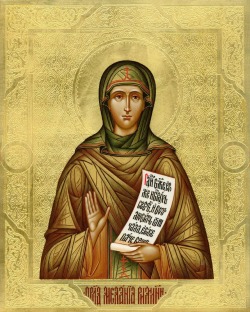
Saint Melania the Roman was raised in a wealthy and devout family. Her father and grandfather served as advisors at the imperial court. From a young age, she preserved her virginity until the age of fourteen, when she married Apinianus. She continued to cultivate purity and self-restraint, persuading her husband to follow her spiritual struggles. After the birth of their daughter, Melania vowed to maintain her virginity.
She fasted and renounced worldly pleasures, even though her husband did not initially support her choice. At one point, Melania considered leaving him; however, following the guidance of her spiritual mentors, she remained by his side and worked for his salvation. After the birth of their second son, who soon passed away, Melania and Apinianus took a vow to live in continence. Following the death of their daughter as well, they decided to renounce the world and embrace monastic life.
They distributed their wealth to the poor, but faced the envy of Apinianus’ brother, who claimed and seized by force part of their property. When the empress learned of the couple’s virtuous life, she offered to help and protect them. However, they chose to endure all injustice. They continued giving alms, building churches and monasteries.
After giving away all their wealth, they traveled to Sicily and then to Carthage, where they founded new monastic communities and continued their charitable work. Melania practiced rigorous fasting and devoted herself to reading the Holy Scripture and studying the writings of the Church Fathers. Later, she went to Jerusalem, where she spent much time in prayer at the Holy Sepulchre.
After her husband’s death, she founded another monastery for men and continued her God-pleasing life. She visited Constantinople, where she converted her uncle and many others to Christianity. She then returned to Jerusalem, where, peacefully awaiting her death, she continued to perform miracles, heal the sick, and guide the faithful.
Saint Melania reposed, leaving behind a profound spiritual legacy. She was buried with great honor, while she remains, to this day, a model of faith and ascetic struggle.
