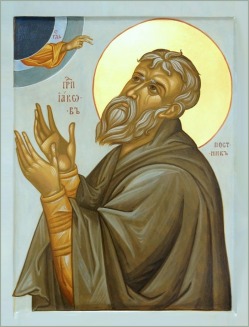
In the land of Phoenicia, near the city of Porphyreon, there lived a hermit named Jacob, who, having left the vanity of life, took on the monastic life and spent fifteen years in a cave, excelling in ascetic feats. He became pleasing to God, healed the sick, and turned people to the true faith. However, the devil, envious of his virtues, rose up against him, inciting an unbelieving Samaritan to expel Jacob. The Samaritan hired a harlot to tempt the saint. The harlot came to Jacob, but he, suspecting deceit, did not let her in. She, pretending to be sick, forced him to come out to her. The saint, showing mercy, helped her, but soon she confessed that she had been sent to tempt him. Jacob, instructing her, sent her to Bishop Alexander, who baptized her. After this, the bishop expelled the Samaritan from the city and strengthened Jacob in virtue.
Later, the saint cast out a demon from the daughter of a nobleman, but refused gold in gratitude, saying that divine gifts are not for sale. He continued to heal many, but to avoid vanity, he withdrew to another cave, where he spent thirty years in prayer and fasting. However, having fallen into pride, he succumbed to temptation, violated a maiden, and, fearing exposure, killed her, throwing her body into the river. In despair, he left his cave, but met a hermit who comforted him and called him to repentance.
Jacob, confessing his sins, spent ten years in repentance in a burial cave until the Lord heard his prayers. A drought began in the land, and the bishop, receiving a revelation, called Jacob to pray for the people. The saint finally came out of the cave and, after praying, called for rain. After this, he began to perform miracles and heal people again. Before his death, he bequeathed to be buried in the same cave. Saint Jacob passed away, and his relics were transferred to the church, where a feast was established in his memory.
