In the first year of the reign of Emperor Antoninus, during the governance of the ruler Sabinus, the Christians of Traianopolis would gather in the church, praying for peace and prosperity. The ruler, following the emperor’s decree, appointed a day to celebrate god Dionysus, which marked the beginning of a wave of persecutions against the Christians.
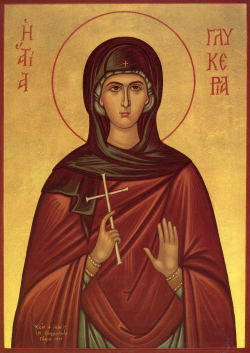
At that time, a young lady named Glykeria used to live in the same city. She was a devout believer in Christ and had dedicated herself to the service of the Church, encouraging all Christians to remain steadfast in their faith. Upon learning of the pagan feast that had been proclaimed, she decided to offer a sacrifice to the true God, thereby openly declaring her faith.
On the day of the feast, she made the sign of the Cross upon her forehead and went before the governor Sabinus, who was present in the temple. She boldly confessed that she was a servant of Christ, even though the governor insisted that she offer sacrifice to god Dionysus. The saint prayed for divine help, and in answer to her prayer, the idol of Dionysus fell to the ground. This enraged the pagans, who began to throw stones and hit her. Yet her body remained firm and unshaken.
Following this event, Saint Glykeria was arrested and imprisoned. The governor repeatedly urged her to worship the idols in order to end her torments. However, she remained unwavering in her faith. Her steadfastness provoked even harsher tortures: she was cast into fire, hanged by her beautiful hair, and thrown to wild beasts. An Angel of the Lord always healed her wounds, while the wild animals came and lay peacefully at her feet.
At last, when she surrendered her soul to the Lord, her body was buried with great honor. From her holy relics there flows fragrant myrrh, which heals all sufferings of those who approach in faith — to the glory and praise of the Holy Trinity.
