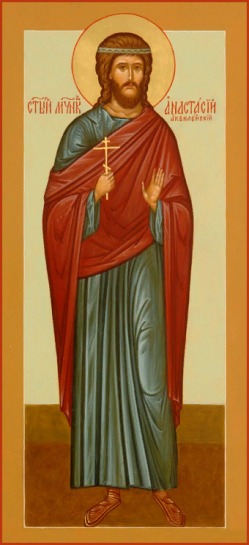
Saint Martyr Anastasius of Salona lived in the 3rd century in the city of Aquileia (Northern Italy) and worked as a fuller. When he came of age, the saint moved to Salona (now Solin, Croatia). During the persecution of Christians under Emperor Diocletian, Anastasius did not wish to hide his faith and drew a cross on the entrance door of his house. For his missionary activity in the city, he was arrested and brought before a judge. The martyr fearlessly confessed Christ as the true God and Creator of all creation, for which he was sentenced to death and beheaded.
The body of the saint was thrown into the sea, but a pious woman named Asclepia promised a reward for the recovery of the holy relics. The relics were found by sailors from Africa, who took part of them with them, while Asclepia buried another part at her villa. She anointed the relics with fragrant oils, clothed them in burial garments, and placed them in her home church.
The relics of the holy martyr became renowned for many miracles. After the invasion of barbarians and the destruction of the city in the 7th century, they were transferred to Rome.
