The Forty-Day Liturgy (Sarantaleitourgo) is one of the most important traditions of the Orthodox Church. It consists of a series of sacred services during which the names of the living and the departed are read daily, offering spiritual support and blessing both to those who participate as well as to their loved ones.
In Mount Athos, the Forty-Day Liturgy is celebrated in an atmosphere of deep devotion, while the monks’ daily prayers are considered a blessing for all the believers.
.jpg)
What Is the Forty-Day Liturgy?
The Forty-Day Liturgy is a sequence of forty Divine Liturgies in which the names submitted by the believers are commemorated.
It is a long-standing ecclesiastical tradition grounded in three fundamental principles of Christianity:
- that the Divine Liturgy is the highest form of prayer and the ultimate expression of faith;
- that the love for one’s fellow human being and the power of prayer for their well-being are central to Christian life;
- that God listens to and responds to the prayers of His people, offering comfort and peace to their souls.
The practice of the Forty-Day Liturgy has its roots in the early centuries of Christianity. It is closely connected with the idea of unceasing prayer and of an offering that unites the earthly world with the heavenly one.
Why Do We Perform the Forty-Day Liturgy?
According to the teachings of the Church Fathers:
- the daily celebration of the Divine Liturgy is a supreme ecclesiastical act—an expression of faith and a prayerful supplication to the Lord;
- the commemoration of names for health and protection is spiritually beneficial and can strengthen our loved ones in the difficulties of daily life;
- the commemoration of names for the repose of the departed brings peace and lightens their souls, just as the lighting of a candle warms them and draws them closer to God.
Through the daily services and the continuous remembrance of names, the believers receive great consolation. More specifically, the Forty-Day Liturgy becomes an occasion to pray for:
- health and protection
- guidance in difficult decisions
- spiritual and physical healing
- the repose of our loved ones
- gratitude for the blessings we have received.
How Can I Participate in the Forty-Day Liturgy?
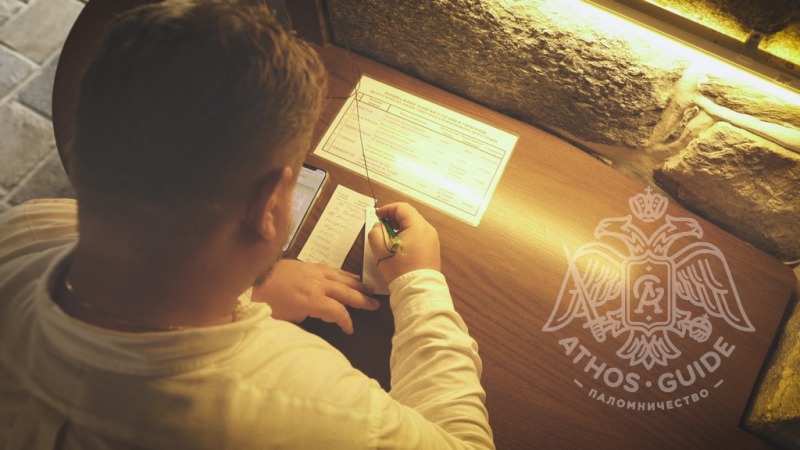
To participate, one simply prepares a note with the names of the living and the departed they wish to be commemorated, and submits it to the church so that the priest may include them in the Divine Liturgy.
It is important to remember that, beyond submitting names and offering silent prayer, it is spiritually beneficial to be present in the church during the service. Praying together with the priest and the other members of the liturgy makes us part of the communion of Christ and unites our supplication with theirs. As the Lord Himself said:
“For where two or three are gathered in my name, there am I in their midst.”
How Many Names Should We Submit?
There is no limit to the number of names one may offer for commemoration.
Guidelines:
- Create two lists: one for the living and one for the departed.
- Write the names as if preceded by the phrase “Remember, O Lord, Your servant…”.
- List the names of married couples side by side, regarding them as a single unit.
.jpg) What Do We Bring to the Church?
What Do We Bring to the Church?
When submitting a note with names, the believers often bring additional offerings useful for the church, such as:
How Much Does the Forty-Day Liturgy Cost?
The cost of the Forty-Day Liturgy depends on the needs of each church or monastery.
The holy ritual consists of a series of forty sacred services and is therefore a long-lasting procedure. In most cases, the believers choose to offer, along with the names, certain material goods that are useful to the church, as well as to contribute financially with a monetary donation.
Furthermore, due to high demand, some monasteries have set a fixed amount for the commemoration of names in the Forty-Day Liturgy. In this way, they limit the enormous volume of names and set the cost so that it is the same for everyone.
The Forty-Day Liturgy is a profound offering of love—one that transcends time and unites every believers soul with the living prayer of Church.