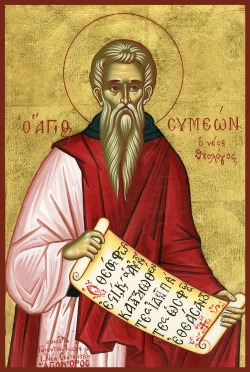
Saint Simeon the New Theologian was born in 946 in the city of Galatia (Paphlagonia) and received a basic secular education in Constantinople. At the age of 25, he felt a calling to monastic life and withdrew to the Stoudios Monastery, where he served under the guidance of Elder Simeon the Blessed. The main impetus for his life was the unceasing Jesus Prayer. He sought solitude and spent nights in the cemetery, which led to special states of ecstasy. In 980, the venerable one was appointed as the abbot of the monastery of Saint Mamant and remained in this position for 25 years, bringing the neglected household of the community into order.
Simeon combined kindness with strictness. He punished the disciple Arsenius for killing crows, while showing kindness to the bishop who had killed a young man. His strict discipline caused discontent among the brethren, and once he nearly became a victim of an invasion. After the liturgy, he prayed for forgiveness for the irritated brothers.
Around 1005, the venerable one transferred the abbacy to Arsenius and settled into retirement, where he created his theological works, including "The Active Theological Chapters" and "Word on Faith." His teaching about the new man and the "deification of the flesh" caused disputes with the clergy, which led to his exile to the shores of the Bosporus, where he founded the monastery of Saint Marina.
The holy one peacefully departed to God in 1021. During his life, he received the gift of miracle-working, and many miracles occurred after his death, including the finding of his image. His life was written by the venerable Niketas Stithatos.
