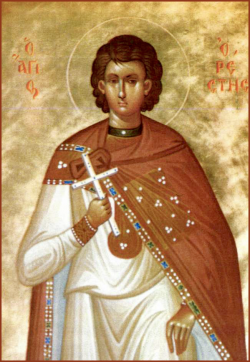
In the time of the wicked Emperor Diocletian, the dignitary Maximian gained power and went to Cappadocia, where he learned about the Christian Orestes, who taught the people to honor Jesus Christ. Maximian brought Orestes to trial and demanded that he offer a sacrifice to the idols, but the saint refused, declaring that he worships only the One God.
Orestes was subjected to cruel tortures: he was beaten, burned with hot iron, and starved in prison. Despite the suffering, he remained steadfast and prayed to the Lord, asking for help. After seven days of fasting, he was brought again to trial, where Maximian threatened him with even greater tortures.
Saint Orestes was tied to a wild horse and dragged through thorns and stones, where he surrendered his spirit to the Lord. His body was thrown into the river, but a certain bright man gathered the relics of the saint and buried them on the mountain near the city of Tyana.
In 1685, during the preparation of the life for printing, the author received a revelation from Saint Orestes, who appeared to him in a dream and showed his wounds, confirming that he suffered more than was written.
