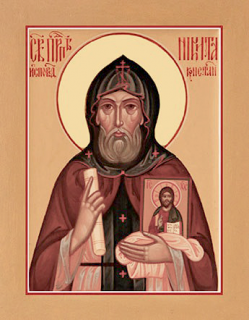
Born in Paphlagonia to devout Christian parents, Saint Nicetas was a distant relative of the Empress Theodora. At the age of seventeen, he traveled to Constantinople, where he entered in the imperial service. There he was entrusted with high-ranking offices and significant responsibilities. However, before long, he came to recognize the vanity of worldly life and resolved to embrace the monastic vocation. After persistently petitioning the emperor, he obtained permission to resign from his duties, although he was required to remain in the capital. He was therefore assigned to Chrysonikeia.
Witnessing the desecration of the holy icons during the Iconoclast controversy, Saint Nicetas decided to leave Constantinople and enter a monastery, where he devoted himself to a life of strict fasting and unceasing prayer. When he refused to surrender an icon of the Savior, he was expelled from the community. After many years of wandering, he settled in a seaside monastery, where he completed his earthly life at the age of seventy-six.
Saint Nicetas was granted the grace to perform many miracles both during his earthly life and after his repose.
