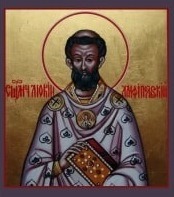
Presbyter
During the reign of Emperor Diocletian, in the time of the persecutions against Christians, there lived in the city of Amphipolis in Macedonia a presbyter named Mocius. Filled with zeal for Christ, he openly rebuked the pagans for worshiping idols and called them to repentance. Angered by his words and seeking revenge, they falsely accused him before the governor Laodicius, who ordered that he be cruelly tortured.
Despite the torments, Saint Mocius steadfastly confessed his faith in Christ, declaring that a martyr’s death would be great gain for his soul. Enraged, Laodicius commanded that he be hanged and his body torn apart. Yet the saint felt no pain and continued to glorify God.
After several failed attempts to destroy him, the governor ordered that he be thrown into the fire. Without fear, the saint continued to pray, until he saw three radiant men chanting with him. Suddenly, the flames turned against Laodicius and his servants, while Mocius emerged unharmed.
When a new governor, Maximus, heard of these miracles, he set out to persecute the saint. However, Mocius remained firm in his confession of Christ and would not deny his faith. He was thrown into an arena with hungry lions, which, instead of attacking, became gentle and lay at his feet.
Unable to overcome the grace that surrounded the saint, Maximus sent him to higher authorities, where Mocius was finally beheaded. Before his death, he prayed with faith. A voice from heaven announced to him the reward he would have in the Kingdom of God.
Saint Mocius completed his martyrdom on May 11. Emperor Constantine established the day of his feast, built a church in his honor, and transferred the relics of the great martyr so that they might be venerated by all the faithful.
