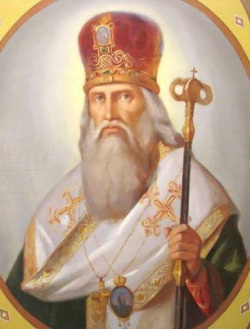
Patriarch
Born in Sicily, Saint Methodius was a hierarch of Christ. He became a monk at a young age and served under Patriarch Nikephoros. He was sent to Rome, where he remained following the latter’s deposition and the rise of the heretic Theodotus to the patriarchal throne.
Upon returning to Constantinople, Saint Methodius struggled against the heresy of iconoclasm, for which he got imprisoned and subjected to severe tortures. After the death of the iconoclast emperor, his successor released Saint Methodius, who once again began to defend Orthodoxy and the veneration of the holy icons.
The new emperor, Theophilos, although he defended iconoclasm, released many saints from prison. However, he soon initiated new persecutions against Christians. The saint, who had accompanied the emperor on a campaign against the Saracens, was accused of responsibility for the military defeat. His opponents claimed that God had allowed the enemy to win because of the veneration of icons and thus the alleged idolatry of the saint. He was then severely punished, remaining imprisoned in a remote cave, exiled, and forced to endure hunger.
During his imprisonment, two holy confessors, Theophanes and Theodore, who had also suffered for the honor of the icons, encountered a fisherman who frequently brought food to the saint. They sent him a letter, to which he replied, commending them for their courage. Saint Methodius remained in captivity until the death of Theophilos, after which he was released and became Patriarch of Constantinople.
A holy synod was then convened, which confirmed the decisions of the Seventh Ecumenical Council and restored the veneration of the holy icons. Saint Methodius once again faced severe slanders, which he overcame by proving his innocence.
Having endured many trials, he lived the rest of his life in peace, caring for the honor of the sacred icons. He transferred the relics of the saints to Constantinople and foresaw the day of his own death.
He fell asleep in the Lord seven months after the death of Saint Ioannikios. The burial of Saint Methodius was solemn and filled with honor for this great confessor and hierarch of the Church.
