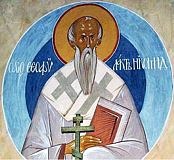
In the days of iconoclasm, a pious man named Theophylact came to Constantinople and became close to Saint Tarasius, who was a layman and senator. After the death of Emperor Constantine Copronymus, Leo ascended the throne with his mother Irene, and Tarasius became patriarch and convened the Seventh Ecumenical Council, which condemned the heresy of iconoclasm. Theophylact and Michael of Synada took monastic vows and were sent to a monastery on the shores of the Black Sea, where they excelled in virtues.
During a time of great thirst, the saints prayed to God, and a vessel began to pour forth water, reminiscent of ancient miracles. Saint Tarasius, seeing the virtuous life of Theophylact, consecrated him as bishop in Nicomedia. He cared for the poor, orphans, and widows, built churches, hospitals, and guest houses, served the sick, and cleansed lepers.
After the death of Tarasius, Nikiphor became patriarch, and once again the heresy of iconoclasm arose under Emperor Leo the Armenian. Nikiphor and the archbishops, including Theophylact, tried to persuade the emperor, but he would not listen. Theophylact foretold the emperor's doom for his opposition, and the emperor, enraged, exiled them to various places, sending Theophylact to Strovul. He spent about thirty years there, confessing Christ, and passed away.
Emperor Leo the Armenian died, as foretold, on Christmas Day. After him, iconoclasts ruled until Empress Theodora restored Orthodoxy. The honorable body of Theophylact was transferred to Nicomedia and laid to rest in the church he had built.
