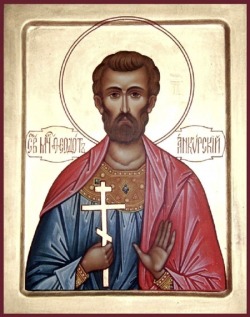
Saint Martyr Theodotus and the virgins Tecusa, Alexandra, Claudia, Phaina, Euphrasia, Matrona, Julia, and Theodote lived in Ancyra, in the region of Galatia. There they suffered martyrdom for Christ at the beginning of the fourth century. Theodotus was a grain merchant who cultivated a life of spiritual virtue, preserving his purity and self-restraint while providing food for persecuted Christians and offering them a shelter.
During the persecutions initiated by the Emperor Diocletian, the governor Theotecnus demanded that Christians offer sacrifices to the holy idols, threatening them with torture and death. Despite the danger, Theodotus continued to support the faithful, assist the churches, and secretly preserve the relics of the holy martyrs.
The seven holy virgins, among whom was Tecusa, Theodotus's aunt, refused to renounce their faith. As a result, they endured terrible tortures before being cast into a lake and drowned. Tecusa then appeared to her nephew in a dream and asked him to bury their bodies. With the help of other Christians, Theodotus succeeded in secretly recovering their relics and giving them an honorable burial.
When the governor learned what had happened, he began persecuting the Christians who had assisted the saint. Theodotus was arrested and, despite severe torture, courageously confessed his faith. He was executed, while his body was miraculously preserved when a storm extinguished the fire prepared to consume it. A priest later succeeded in burying his remains at the place indicated by the martyr himself.
Saint Theodotus suffered a martyr's death on June 7, 303 or 304. His memory is celebrated on May 18, the same day with the martyrdom of the holy virgins.
