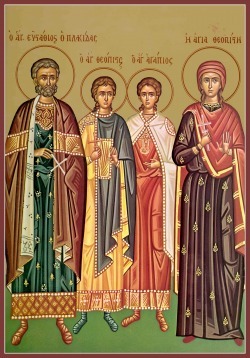
Saint Eustathius, formerly known as Placidus, was a military commander under the emperors Titus and Trajan. He performed acts of mercy, helping those in need. While hunting, he was visited by a Cross with the crucified Savior, who called him to faith. Placidus, believing, received Baptism along with his family.
After his conversion, he received a revelation about the trials that awaited him. Saint Eustathius lost everything: his servants, livestock, and family, but did not fall into despair. He left his home and, having lost his children, continued his path, humbly accepting the trials. For fifteen years, he worked in obscurity, not knowing that his sons had been saved and were living nearby.
Emperor Trajan, remembering Placidus, sent soldiers to search for him. They found Saint Eustathius, who did not reveal his name. Soon he returned to Rome and became a military commander again. His sons, unaware of their kinship, served under his command.
The family reunited when their mother came to Eustathius asking for permission to follow the army. After victory in battle, Emperor Adrian summoned the saint to sacrifice to idols. Saint Eustathius refused, for which he and his family were condemned to a martyr's death. They were thrown into a heated bull, but their bodies remained unharmed. Many people, witnessing the miracle, believed in Christ. The honorable bodies of the saints were buried by Christians.
