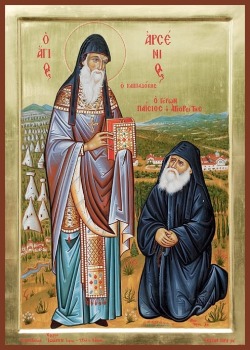
He was born in the village of Farasa in Cappadocia around 1840, and in Holy Baptism was named Theodore. Having lost his parents at an early age, he received his education at a seminary in Smyrna. At the age of 26, he took monastic vows in the Monastery of St. John the Forerunner, was ordained a deacon, and sent to Farasa to teach children to read and write. In 1870, he was ordained a priest and elevated to the rank of archimandrite. He made five pilgrimages to the Holy Land, for which he earned the nickname Haji-Efendi. His pastoral work lasted 55 years, during which he guided and strengthened the faith of the Greeks who were under threat of annihilation.
He led a strict ascetic life and received the gift of clairvoyance and healing. By his prayers, the deaf, blind, paralyzed, and possessed were healed. Not only the Greeks but also the Turks regarded him as a saint, as he performed miracles among Muslims as well. The Patriarchs of Constantinople and Jerusalem wanted to make him a bishop, but he refused each time.
He foresaw the coming trials and wars. In 1924, during the resettlement of the Asia Minor Greeks, he accompanied his flock and died 40 days after arriving in Greece, on the island of Corfu. His relics were first transferred to the city of Konitsa and then to the Monastery of St. John the Theologian in Souroti. Numerous posthumous miracles led to his canonization in 1986 as a saint.
