The Mystery of the Sacred Icon of Theotokos Tricherousa
The icon of Theotokos Tricherousa is preserved in Mount Athos and is considered to be one of the most important relics of the monastic state. It is kept at the Holy Monastery of Hilandar, where it is venerated by the monks as a guardian in their spiritual struggles.
It is associated with a miracle that was performed by the grace of the Virgin Mary.
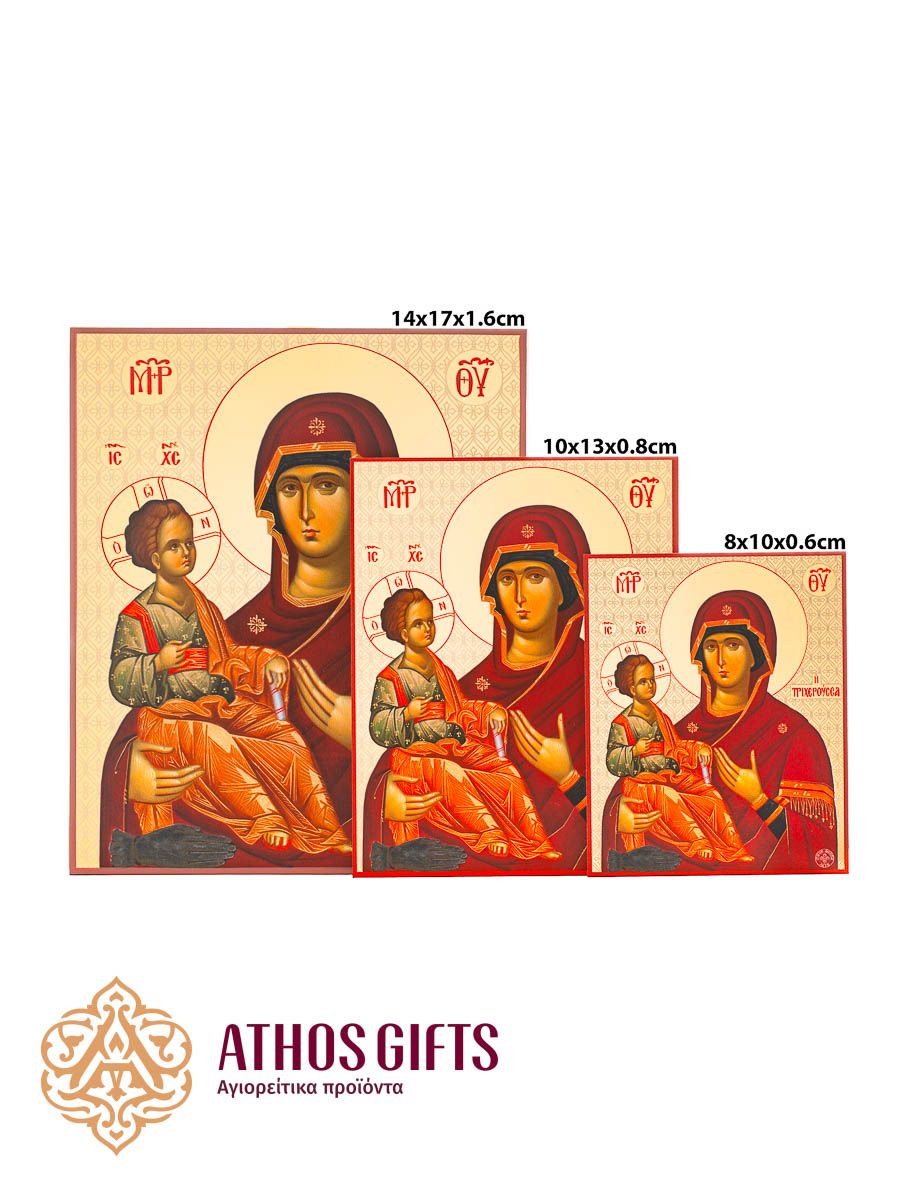
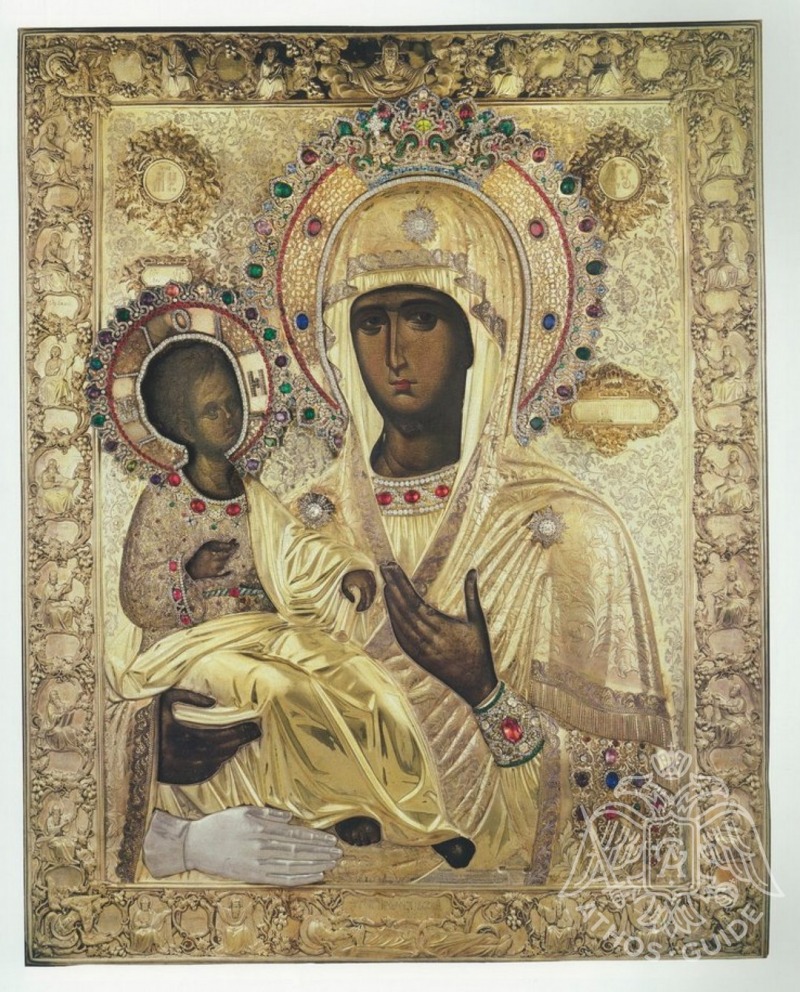
In the icon, Theotokos is depicted in the usual iconographic type of “Hodegetria”, holding in her arms the Holy Infant. What makes it unique is the presence of a third hand beneath her right arm, on the left side of the image.
Because of this unusual feature, the icon became known as “Tricherousa” (Three-Handed) and is honored as a precious treasure of the Orthodox Christian tradition.
.jpg)
The Miracle of Theotokos Tricherousa
According to tradition, the icon originally belonged to the family of Saint John of Damascus, who lived in Damascus of Syria during the 8th century. He was a devout Christian and served as an advisor to the Caliph Al-Walid.
His strong opposition to iconoclasm disturbed the imperial authorities of Constantinople, leading to a conspiracy against him. As a result, he was arrested, and the Caliph ordered that his hand be cut off.
After enduring this suffering, Saint John prayed before the icon of the Virgin Mary, asking for healing. Holding his hand before the holy image, he prayed with tears throughout the night. The next morning, he awoke to find his hand miraculously restored.
In gratitude, he had a silver replica made and attached it to the icon. This is how the “third hand” appeared, giving the icon the name “Tricherousa”.
Where Is the Icon of Theotokos Tricherousa Kept?
Following this miracle, Saint John of Damascus embraced monasticism. He later traveled to the Monastery of Saint Sabbas in Palestine, bringing the sacred icon with him. It was no longer merely a family belonging but a source of miracles and a sign of the Virgin’s presence. According to tradition, he ordered that the icon would be given to the first bishop named Sabbas who would visit the monastery right after his death.
In 1217, the icon came into the possession of Saint Sabbas, the Serbian Archbishop. It remained in Serbia for several centuries until the early 15th century, when it was transferred to Mount Athos in order to be protected from the Ottoman invasions. Since then, it has been kept at the Serbian Monastery of Hilandar.
Theotokos Tricherousa is regarded as the abbess of the monastery and the protector of the Serbian people. It is, therefore, deeply venerated by all the faithful.
Its golden frame is decorated with approximately 5,000 precious stones.
In the monastery there is also preserved a fresco depicting the entire historical journey of the sacred icon.