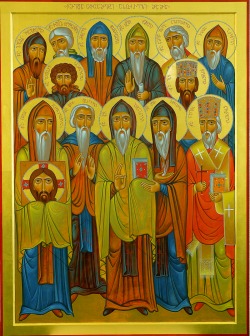
Saint John of Zedazeni and his 12 disciples, among whom were Aviv, Bishop of Nekresi, Anthony of Martkobi, David of Gareja, Zenon of Ikalto, Thaddeus of Stepantsminda, Isai, Bishop of Tsilkani, Joseph, Bishop of Alaverdi, Isidore of Samtavro, Michael of Ulumbi, Pyrros of Breti, Stephen of Khirki, and Shio of Mgvime, came to Georgia from Cappadocia in the mid-6th century to promote Christian enlightenment. John, who received spiritual education in Antioch, became the head of the ascetics and, fulfilling the command of the Mother of God, set out with his disciples to Georgia, where they were joyfully received by the people and the royal authorities.
The saints established monasticism on Mount Zedazeni, where a pagan shrine had previously existed. They lived in seclusion, subsisting on herbs and roots, and the sick came to them, receiving healing. By the command of the Mother of God, John sent his disciples to various places in Georgia to preach the Word of God and provide pastoral guidance.
Disciples such as Zenon, Thaddeus, and Isidore founded monasteries and churches, strengthening Christianity in various regions. John, opposing evil spirits, performed miracles, and by his prayer, a spring of healing water appeared on Mount Zedazeni. Before his death, he called his disciples and bequeathed that they bury him in a cave on the mountain.
After his death, the disciples, forgetting the bequest, transferred his body to the monastery at the foot of the mountain, but the earth began to tremble until the body was moved to the cave, as he had bequeathed. In the 10th century, a church was built in honor of John the Baptist, and the holy relics of John of Zedazeni were placed in its sanctuary, where they were glorified by many miracles.
