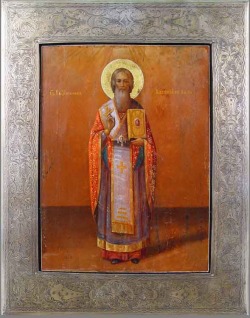
Bishop
After the death of the Roman emperor Maxentius, the persecutions against Christians continued under Emperor Maximin. The pious Emperor Constantine sent Licinius, who at that time believed in Christ, to wage war against Maximin. Licinius defeated him. However, after becoming emperor of the East, he turned away from Christ and began to persecute Christians, and even his own wife, Constancia, who was deeply grieved by his arrogance.
Knowing about the sufferings of the faithful, Constancia secretly helped the pious maiden Glaphira, one of her servants, to escape. Glaphira fled to Armenia and reached the city of Amasea, where she was warmly received by Saint Basil, the bishop of the city.
Not long after, a letter from Glaphira to the queen fell into the hands of Licinius. Enraged, he ordered the arrest of both the bishop and the young woman. Glaphira, however, passed away before the order could be carried out. Bishop Basil was arrested and imprisoned. Foreseeing his approaching martyrdom, he exhorted his deacons to remain steadfast in their faith in Christ.
During the interrogations, the holy bishop firmly refused to offer sacrifices to the pagan gods. He was sentenced to death and joyfully accepted his sufferings, praying for the salvation of all Christians. After his execution, his body was thrown into the sea, but it was miraculously recovered and buried with great honor in Amasea.
When Emperor Constantine learned of the cruelty of Licinius, he rose against him, defeated him, and liberated the East from persecution. From that time on, the glory of the one true God was proclaimed throughout the empire.
