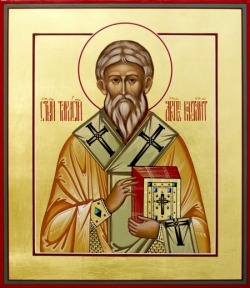
Archbishop
He was born in Constantinople into a family of noble patricians. After receiving a good education, he held various positions at the royal court and became one of the royal advisors. During the reign of Constantine Porphyrogenitus and Empress Irene, the patriarch was Paul of Cyprus, who, fearing the iconoclasts, concealed his piety and signed heretical decrees. After his death, Empress Irene and Emperor Constantine sought a worthy person for the patriarchate and chose Tarasius, who initially refused but eventually agreed, recognizing the necessity of convening the VII Ecumenical Council to condemn the heresy of the iconoclasts.
Having become patriarch, Tarasius zealously worked to restore the veneration of holy icons, established hospitals, and helped the poor. He actively worked to eradicate the iconoclastic heresy, calling for a council of bishops and patriarchs. The council took place in Nicaea, where the heretical teachings were condemned, and the veneration of icons was restored. Saint Tarasius wisely governed the Church, defending the oppressed and helping those in need.
When Emperor Constantine came of age, he began to lead an immoral life and expelled his lawful wife Maria, accusing her of conspiracy. Saint Tarasius, upon learning of the slander, resolutely defended the Empress, but the Emperor did not heed him. As a result, Constantine married Theodotia, while Saint Tarasius continued to endure oppression, remaining faithful to God and the Church.
After Constantine's death, Empress Irene restored order in the state, and Saint Tarasius continued to shepherd the Church, celebrating liturgies until his death. He passed away, battling unclean spirits, and was buried in the monastery he founded. Many miracles occurred at his grave, healing the afflicted. Saint Tarasius left behind a legacy of fidelity to the Orthodox faith and the struggle against heresies.
