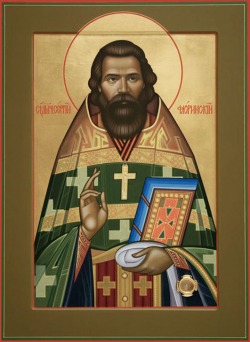
Presbyter
Priest Sergius Florinsky was born on March 4, 1873, in Suzdal in the family of a priest. After graduating from the Vladimir Seminary in 1893, he became a teacher, and in 1900 he was ordained a priest and assigned to the 151st Infantry Pyatigorsk Regiment. He participated in the Russo-Japanese War, where he was awarded the Order of Saint Anna of the 3rd degree and a bronze medal. During World War I, he was awarded the Order of Saint Vladimir of the 4th degree and a golden pectoral cross. After the February Revolution of 1917, his service became difficult, and in 1918 he was transferred to the 29th Field Reserve Hospital, where he earned love and respect. After the occupation of Estonia by the Germans, he was left without means of subsistence. On December 19, 1918, he was arrested as a representative of the old regime. On December 26, the commission issued a decree for execution, which was carried out in the Palermo forest. After the Bolsheviks' departure, all those executed were reburied, and Priest Sergius was buried in the cemetery in Rakvere. In 2002, he was canonized among the ranks of the new martyrs. In 2003, the incorrupt relics of the saint were found, which now rest in the Church of the Nativity of the Most Holy Theotokos.
