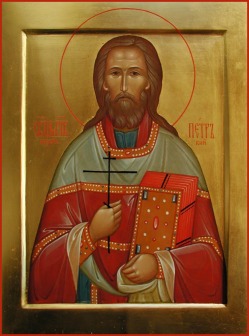
Presbyter
Saint Peter was born on December 23, 1891, in the village of Barkovo, Dmitrovsky district of the Moscow province, in the family of a priest, Vasily Pushkinsky. After graduating from the Moscow Theological Seminary in 1913, he taught the Law of God and was ordained as a priest. Since 1914, he served as the rector of the Church of the Prophet Elijah in the city of Vereya and actively participated in the life of the parish.
During the First World War, he selflessly performed the duties of a priest in a hospital. After the revolution, despite the dangers, he continued to serve and help the sick, even when he himself fell ill with typhus. In 1918, he was arrested but released. During the Civil War, he served in the city militia and then returned to his ministry in the Elijah Church.
In 1920, he was appointed by the Bishop of Vereya, Hilarion (Troitsky). Father Peter actively participated in church life, organized assistance for the needy, and fought against epidemics. He created a church choir and conducted services despite the persecution of the Church.
In 1922, during the campaign to confiscate church valuables, Father Peter urged parishioners not to resist the authorities. In 1937, he was arrested and accused of counter-revolutionary activities. The false testimony of priest Viktor Ozerov led to his conviction.
On October 9, 1937, the NKVD troika sentenced him to death by shooting. He was executed on October 13, 1937, and buried in an unmarked mass grave at the Butovo firing range near Moscow.
