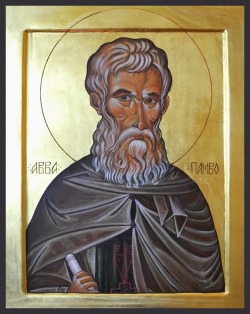
Saint Pambo (IV) asceticized in the Nitrian desert of Egypt. Saint Anthony the Great said that Saint Pambo instilled the Holy Spirit in himself through the fear of God. Saint Theodore the Studite noted three deeds of the saint: hunger every day, silence, and handiwork, calling him 'high in deed and word.'
At the beginning of his monastic life, Saint Pambo heard the verse from the 38th Psalm of David: 'I will guard my ways, that I may not sin with my tongue.' These words deeply penetrated his soul, and he sought to follow them always. He answered questions only after long reflection and prayer, fearing to say anything he might later regret. Saint Pambo was an example of diligence for his disciples, working to the point of exhaustion and eating bread earned by his own labor.
The disciples of Saint Pambo were great ascetics: Dioscorus, Ammonius, Eusebius, and Ephymius. Once, the blessed Melania the Roman brought a large amount of silver to Saint Pambo for the needs of the monastery, but he did not leave his work and did not even look at the money brought. Only after persistent requests from Saint Melania did he allow her to give alms to one brother for distribution among the poor of the monastery. Saint Pambo was distinguished by humility but highly valued the title of monk and taught laypeople to treat monastics with respect.
The blessed one passed away at the age of 70, telling the brethren who stood by his deathbed about the virtues he had strived for in his life: 'However, I depart to the Lord as if I had not begun to live piously and monastically.'
