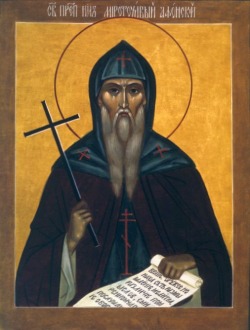
Saint Nil, originally from Morea, was raised by his uncle, the hieromonk Macarius, after losing his parents. Possessing remarkable gifts, he took monastic vows and became a hieromonk. Together with his uncle, they withdrew to Mount Athos, where they found a deserted place called the Holy Stones for solitude and prayer. After Macarius' death, Nil continued his ascetic practices in harsh conditions, striving for complete love of God.
He sought solitude to hide his virtues and prayers from the eyes of men, settling in an inaccessible cave, where he endured hardships and fought against demons. At the end of his earthly life, he peacefully passed away in his cave, and his body was buried by the brethren.
After his death, fragrant myrrh began to flow from his tomb, attracting many Christians for healing and sanctification. The place where the cave was located became known as karabosrasion. A disciple of the saint, concerned about the fame he received, noticed that the myrrh ceased when the crowds began to come.
In 1815, during the construction of a church near the cave, the holy relics of Nil were found, fragrant with aroma. The relics were transferred to the Lavra, where they were met by Patriarch Gregory V. The church built near the cave became a place of worship, where his holy remains are kept.
Venerable Nil, as a faithful servant of God, was glorified on earth and in heaven, granting healing and grace to all who approach him with faith.
