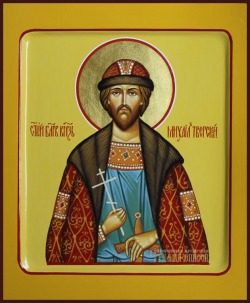
Mikhail, the holy great prince of Tver, was born in 1272. He affirmed the independence of the Tver principality. After the death of the great prince Andrew, Mikhail was to ascend the throne, but his nephew George disputed this right. George, being married to the sister of Khan Uzbek, opposed Mikhail, but he defeated George's army and granted him freedom. After the death of the Konchak, George slandered Mikhail before Uzbek, which led to his arrest and torture. Mikhail, not saving himself, went to the horde, laying down his soul for his loved ones and his people.
After some time, the Khan ordered him to be judged, and Mikhail was under guard, suffering humiliation. He spent nights in prayer and reading psalms, unwilling to flee. When the villains approached, he prayed, but was captured and tortured until one of them plunged a knife into his ribs, killing him on November 22, 1319. His body was given to be plundered, and later George sent it to Hungary.
Mikhail's wife, Anna, pleaded with George for the transportation of the prince's remains to Tver. The Tverians met the coffin on the banks of the Volga, and the burial took place on September 6, 1320, in the Transfiguration Monastery. The holy relics of the prince were found incorrupt in 1655.
The chronicler calls Mikhail a patriot, raised in the rules of piety. His mother, Ksenia, ended her days as a nun.
