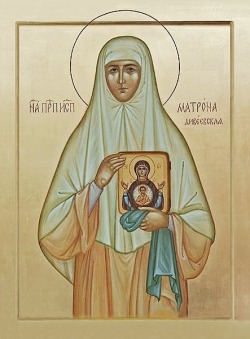
Matrona Vlasova was born in 1889 in the village of Puzo, Nizhny Novgorod province. At the age of six, she was left an orphan and was sent to the Serafimo-Diveyevsky Monastery, where her artistic talents in drawing were discovered. In 1927, the monastery was closed, and she settled with her sisters in the village of Kuzzyatovo, where she served in the church and earned a living through handiwork. In 1933, she was arrested on charges of anti-Soviet agitation and sentenced to three years in the Dmitrov camp.
After serving her sentence, she found work at the church in the village of Verigino, where she fulfilled the duties of a singer and cleaner. In 1937, she was arrested for the second time and sentenced to ten years in the KarLag. After her release, she settled in the village of Vyezdnoe, where she continued to serve in the church.
On October 19, 1949, she was arrested again, accused of conducting 'hostile activities.' She was sent into exile in the village of Kamenska. In her last years, she lived with her brother in her native village of Puzo, where she prayed and served in homes, despite the prohibitions.
Matrona peacefully passed away on November 7, 1963, and was buried in the village cemetery. On October 6, 2001, she was glorified as part of the Council of New Martyrs and Confessors of the Russian Church of the 20th century.
