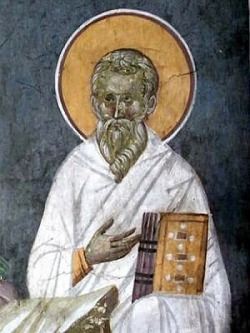
Saint Julian was born to humble parents and, having received no formal education, acquired true knowledge of the Christian faith. In his youth, he withdrew to the Parthian desert, where he lived in solitude, subsisting only on bread with salt and water, spending his time in prayer and contemplation.
Many came to him wishing to live under his guidance, and he accepted them, but soon retreated deeper into the desert for complete solitude. One of his disciples, Asterius, wishing to follow him, weakened on the way, and the saint, praying for him, brought forth a water spring from the ground.
Julian showed meekness, refusing to accept gifts from his disciples until he was convinced of their sincerity. During the war with Emperor Julian the Apostate, he prayed for the downfall of the enemy of Christians and heard a voice proclaiming his demise.
The saint fought against the Arian heresy, going to Antioch at the request of his disciples. On the way, he performed a miracle, saving a seven-year-old boy who had fallen into a well. In Antioch, healing the sick and strengthening the faith, he returned to the desert, where he lived until old age and peacefully departed to the Lord at the end of the 4th century.
On the same day, the suffering of the martyr Marina, an elder who suffered under Diocletian in the city of Tarsus.
