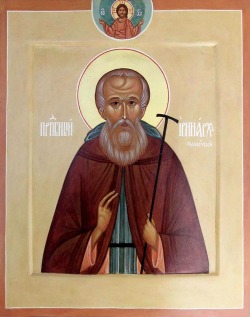
Ηegumen / Abbot
Saint Irenarchus became a monk at the Solovetsky Monastery, where he acquired many virtues and attained a profound level of spiritual life. In 1614, following the repose of Abbot Anthony, he succeeded him. At that time, the monastery played a vital role in the defense of northern Russia against attacks by Danish and Swedish forces. Saint Irenarchus devoted great effort to strengthening its defenses, overseeing the construction of a second stone wall, defensive ditches and barracks for the garrison. His concern for safeguarding his homeland proved well-founded when, in 1623, the Danish forces, seeing the monastery's fortifications, did not dare to start an attack.
Alongside his efforts to ensure the monastery's physical security, the saint also gave careful attention to its spiritual life, fostering monastic discipline and providing devoted pastoral care for the brotherhood. Tsar Michael Fyodorovich supported his endeavors. Under Saint Irenarchus's spiritual guidance, many monks grew into exemplary ascetics.
Two years before his repose, he stopped being occupied with the administration of the monastery and devoted himself entirely to the mental prayer. On July 17, 1628, he peacefully reposed in the Lord. His holy relics rest beneath the church dedicated to his memory.
Following his repose, numerous miracles were worked through his intercession, bearing witness to his holiness.
